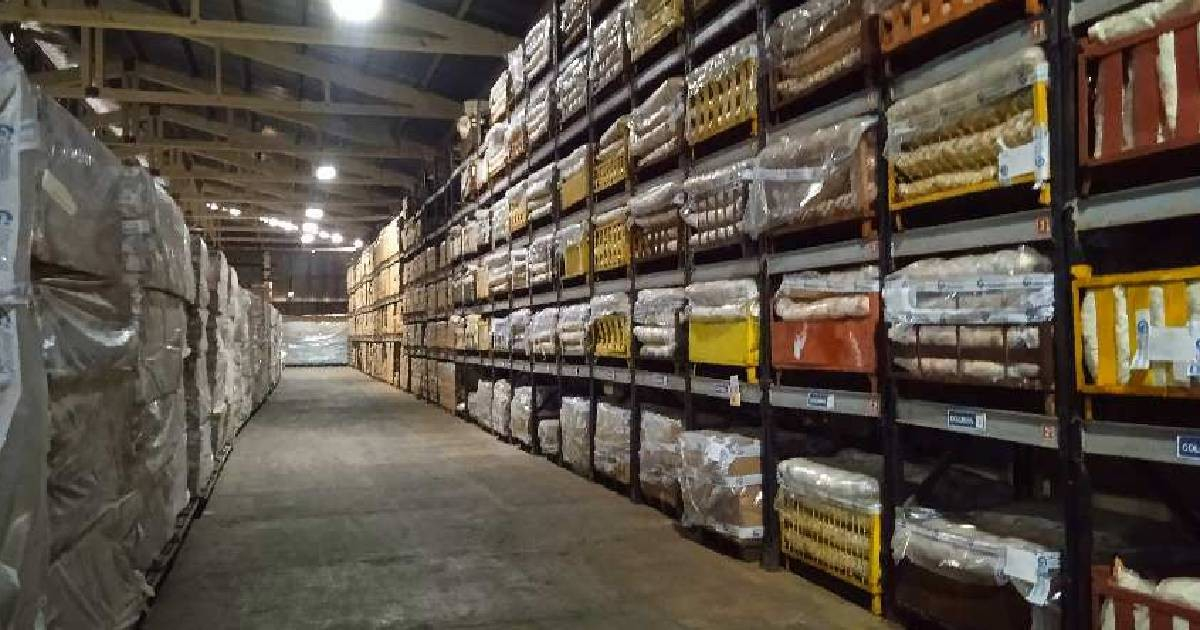
Leaked Images Reveal GAESA Warehouse Full of Mattresses and Hygiene Products
Leaked images from an Almacenes Universales warehouse in Cienfuegos reveal that GAESA, Cuba’s military-run conglomerate, is stockpiling massive quantities of mattresses and hygiene products while millions of citizens face chronic shortages. The discovery highlights a stark divide between state reserves and a population devastated by the aftermath of Hurricanes Oscar and Melissa.
The contrast is visceral. On one side of the warehouse doors are hileras of pallets stacked with mattresses wrapped in transparent stretch film, branded “GARSO” and marked with the initials “GI.” On the other side are Cuban citizens sleeping on deteriorated foam or bare floors, waiting for government promises that never materialize.
This isn’t just a failure of logistics. It is a systemic crisis of distribution and transparency.
The Human Cost of State Hoarding
For the people of Cuba, a mattress is not a luxury; it is a basic necessity for survival and dignity. This reality became painfully clear following the devastation of Hurricane Oscar in October 2024 and Hurricane Melissa in November 2025. Thousands of displaced families spent weeks in a state of limbo, waiting for the state-promised bedding that was supposed to facilitate their recovery.

While the government claimed scarcity, the reality in the healthcare system told a different story of neglect. At the Juan Bruno Zayas hospital, for instance, only 100 mattresses were donated to fill a requirement of 800 beds. In the Hospital Docente Mártires de Bolivia, elderly patients were forced to remain on decayed mattresses without sheets, enduring conditions that border on the inhumane.
When basic infrastructure collapses to this degree, the role of medical equipment providers and independent health logistics becomes a lifeline for the vulnerable, filling gaps that the state deliberately leaves open.
Inside the GAESA Fortress
The images, disseminated by journalist Mario J. Pentón under the hashtag #denunciaciudadana, provide a rare glimpse into the operations of GAESA. This military conglomerate is not merely a business entity; it is the shadow engine of the Cuban economy, controlling between 40% and 70% of all economic activity and dominating the majority of foreign currency transactions.
The warehouse in Cienfuegos is a physical manifestation of this imbalance. The photographs show a vast industrial space with metal beam ceilings and concrete floors, where orange and brown cardboard boxes of hygiene products fill industrial shelving from floor to ceiling. Some images were digitally pixelated to hide the identities of those inside, suggesting the high level of secrecy surrounding these reserves.
With estimated reserves exceeding $18 billion, GAESA operates with a level of opacity that shields it from public accountability. This lack of transparency ensures that resources intended for disaster relief or public health are instead treated as strategic assets for the military elite.
A Cycle of Corruption and Illegal Resale
The stockpile in Cienfuegos is only one part of a larger pattern of diversion. Resources that should have reached the most desperate are frequently siphoned off into the black market.

In Guantánamo, reports indicate that some of the mattresses promised to disaster victims were instead sold at prices reaching 3,730 pesos. In Santiago de Cuba, the situation was even more brazen, with documented cases of mattresses being seized and diverted specifically for illegal resale.
This diversion creates a secondary crisis: the erosion of trust. When a citizen sees a “free” government resource being sold by a middleman, the social contract is completely severed. Navigating the legal fallout of such systemic corruption often requires the expertise of international human rights lawyers to document abuses and seek accountability for the misappropriation of humanitarian aid.
The logistical pipeline from the port to the citizen is broken.
The Macro-Economic Implication
The hoarding of basic goods by a military entity during a humanitarian crisis is more than an ethical failure; it is a macroeconomic distortion. By controlling the supply of essential goods, GAESA can effectively manipulate market prices and maintain a grip on the population through the rationing of survival.
International observers have long noted the contradictions of the Cuban model, where state-run enterprises are tasked with social welfare while operating as profit-driven conglomerates. The Reuters and Associated Press have frequently reported on the widening gap between the military’s wealth and the civilian’s poverty.
As the humanitarian situation worsens, the reliance on civic relief organizations grows. These entities often uncover themselves competing with state-run monopolies for the ability to get aid into the hands of those who actually need it, rather than into the warehouses of the military.
The Price of Opacity
The images leaked from the Cienfuegos warehouse serve as a mirror to the current state of the nation. They reveal a government that possesses the means to alleviate suffering but chooses the security of the stockpile over the welfare of the people.
The “GARSO” mattresses sitting in a climate-controlled warehouse are not just pieces of furniture; they are symbols of a calculated indifference. Every mattress left in a pallet is a patient in a hospital sleeping on a concrete floor; every box of hygiene products left on a shelf is a family without basic sanitation after a hurricane.
The enduring question is not whether Cuba has the resources to help its people, but who truly owns those resources and why the military is the only entity permitted to be prepared for the crisis. As this story evolves, the need for verified, transparent reporting remains the only tool capable of piercing the veil of GAESA’s secrecy. For those seeking to support recovery efforts or navigate the complexities of international aid in the region, finding vetted global logistics and humanitarian consultants is the only way to ensure that aid reaches the destination it was intended for, rather than another locked warehouse.