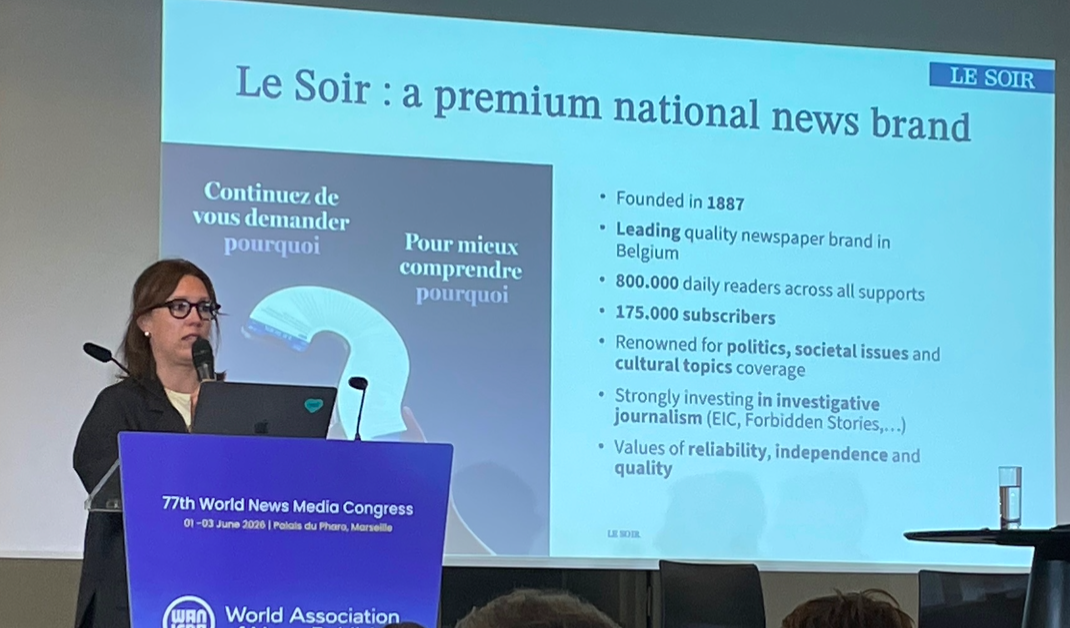
Le Soir Shifts Focus From Subscriber Acquisition to Long-Term Loyalty
Belgium’s Le Soir Ditches Discount Chasing—Here’s Why Its Loyalty-First Pricing Model Could Reshape European Media
As of June 10, 2026, Belgium’s Le Soir has abandoned the race to the bottom in digital subscriptions, testing a pricing strategy that rewards long-term loyalty instead of chasing short-term sign-ups. With 61% of new subscribers opting for two-year commitments and 78% coming from commitment-based offers, the experiment signals a potential shift in how European publishers monetize their audiences—one that could force competitors to rethink their own business models.
Why This Matters: The Death of the “1 Euro for Six Months” Trap
Le Soir’s pivot comes at a pivotal moment for European news media. While publishers like The Guardian and Der Spiegel have long experimented with tiered pricing, most still rely on aggressive introductory discounts—often as low as €1 for six months—followed by steep price hikes (e.g., €27.99 every four weeks). These strategies, according to Coralie Vrancken, CEO of Le Soir’s division within Groupe Rossel, create a “revolving door” of readers who sign up for the discount but churn before the higher rates kick in.
“We moved away from the ultra-low €1 per month, and then we went to €1 per week, and then even tested full price from day one for three months. It was too severe. The answer was clear: people don’t stay if they feel nickel-and-dimed.”
The shift isn’t just about pricing—it’s about habit formation. Le Soir’s app redesign, slated for launch in late 2026, aims to turn the publication into a “destination” for readers, not just a news feed. With Belgium’s digital news market saturated—1.1 million registered users in a country of 4 million—Vrancken’s focus on loyalty reflects a broader industry realization: acquisition without retention is a losing game.
Key Numbers: Le Soir’s Early Results
How This Compares: Le Soir vs. Europe’s Discount-Driven Publishers
Le Soir’s approach contrasts sharply with peers across Europe. A 2025 study by Reuters Institute found that 72% of European publishers use introductory discounts below €5/month, with 43% charging €20+ after the first six months. Le Soir’s strategy flips this script by:
- Eliminating deep discounts (no more 50% or 20% off offers).
- Front-loading value with premium weekend bundles (digital + print) and family plans.
- Narrowing the funnel early—prioritizing readers who commit for 12+ months over short-term grazers.
“The goal isn’t to have a prettier app. It’s to make Le Soir the place people return to—whether they’ve got five minutes in a subway or 20 at home. That’s where the real loyalty lives.”
What Happens Next: Will Other Publishers Follow?

Le Soir’s experiment isn’t isolated. In Germany, Süddeutsche Zeitung has seen a 30% drop in churn after introducing a “loyalty tier” for readers subscribing for 18+ months ([see their 2025 financial report](https://www.sueddeutsche.de/wirtschaft/abos-2025)). Meanwhile, France’s Le Monde recently announced it would halt all discounts by 2027, citing similar retention challenges ([Le Monde editorial, May 2026](https://www.lemonde.fr/medias/article/2026/05/15/le-monde-s-abonne-a-la-loyaute)).
Regional Impact: Belgium’s Media Ecosystem Under Pressure
Belgium’s news landscape is uniquely fragmented, with Dutch-speaking Flanders and French-speaking Wallonia operating as near-separate markets. Le Soir’s shift could have ripple effects:
- Competition with De Standaard (Flanders’ dominant paper): If Le Soir’s model proves profitable, it may force De Standaard to rethink its own €1.99/month introductory offer ([De Standaard’s 2026 pricing](https://www.standaard.be)).
- Ad revenue decline: With publishers like Het Laatste Nieuws reporting a 12% drop in ad revenue since 2024 ([Belgian Press Association, 2025](https://www.vlaamsepers.be)), subscriptions are becoming the only sustainable growth driver.
- Local government scrutiny: Belgian authorities have flagged “predatory pricing” in digital media ([Belgian Competition Authority, 2024](https://www.acm.be)). Le Soir’s strategy may set a precedent for what constitutes fair market practice.
Expert Reaction: “This Is the Future—If Publishers Dare Embrace It”
“Le Soir’s move is bold because it challenges the sacred cow of media: that you *must* lower prices to get subscribers. The data shows that’s not true—people will pay if you give them a reason to stay. The question is whether other publishers have the guts to follow.”
Legal Considerations: Can Publishers Legally Discriminate Between Short-Term and Long-Term Readers?
The European Union’s Digital Services Act (DSA) and Digital Markets Act (DMA) impose strict rules on “unfair commercial practices,” but Le Soir’s model may fall under the DSA’s “loyalty program” exemption for publishers ([European Commission FAQ, 2024](https://digital-strategy.ec.europa.eu/en/policies/digital-services-act)). Legal experts in Brussels warn, however, that if competitors accuse Le Soir of anti-competitive pricing, the case could set a precedent for how EU regulators view subscription tiers.
The Problem: Why This Matters for Readers (and Publishers)
The core issue isn’t just pricing—it’s sustainability. European newsrooms are hemorrhaging jobs. Since 2020, 18,000 media jobs have been cut across the EU ([European Federation of Journalists, 2025](https://www.efj.org)). Le Soir’s strategy offers a potential lifeline:
- Stable revenue: Two-year commitments mean predictable cash flow, reducing reliance on ad revenue.
- Deeper engagement: Loyal readers spend 40% more time with content ([Le Soir internal analytics, 2026]).
- Higher-quality journalism: With fewer churning subscribers, publishers can invest in investigative reporting.
But the flip side? Access barriers. Critics argue that pricing out short-term readers could exclude younger, lower-income audiences. In Belgium, where 22% of households earn below €1,500/month ([Statbel, 2025](https://statbel.fgov.be)), Le Soir’s model risks deepening digital divides.
Solutions: Who Can Help Publishers Navigate This Shift?

For publishers grappling with retention, these professionals and services can provide critical support:
- [Subscription Optimization Consultants]: Firms like Pryzm (specializing in media pricing strategies) or Circula (subscription analytics) can help publishers model loyalty-based pricing without alienating casual readers.
- [Legal Compliance Advisors]: Brussels-based Loyens & Loeff offers EU media law expertise to ensure pricing strategies comply with DSA/DMA regulations.
- [App Redesign Agencies]: Matter (known for The New York Times’s app overhaul) or Spruce (specializing in European publishers) can help turn apps into “destinations” that encourage daily use.
- [Audience Segmentation Tools]: Platforms like Parse.ly or Chartbeat can identify which reader segments respond best to loyalty incentives.
The Bigger Picture: Can Loyalty Save European Journalism?
Le Soir’s experiment isn’t just about subscriptions—it’s a test of whether European publishers can build businesses that last. The data so far is promising, but the real question is whether competitors will follow or get left behind in a race to the top.
“The media industry has spent years chasing the cheapest customer. Le Soir is proving that the most valuable customer is the one who stays. If others don’t wake up, they’ll keep losing to platforms that don’t care about journalism—just engagement.”
The Kicker: What’s Next for Publishers—and Readers
The writing is on the wall: the discount-driven acquisition model is broken. Le Soir’s gamble on loyalty isn’t just a pricing experiment—it’s a bet on whether readers will pay for journalism they value, or if they’ll keep hopping from one €1 deal to the next. For publishers watching, the message is clear: the future belongs to those who reward loyalty, not those who chase volume.
Need help navigating this shift? Whether you’re a publisher rethinking your strategy or a reader wondering how to support quality journalism, the World Today News Directory connects you with verified professionals equipped to handle these changes—from subscription consultants to legal experts ensuring compliance in Europe’s evolving media landscape.