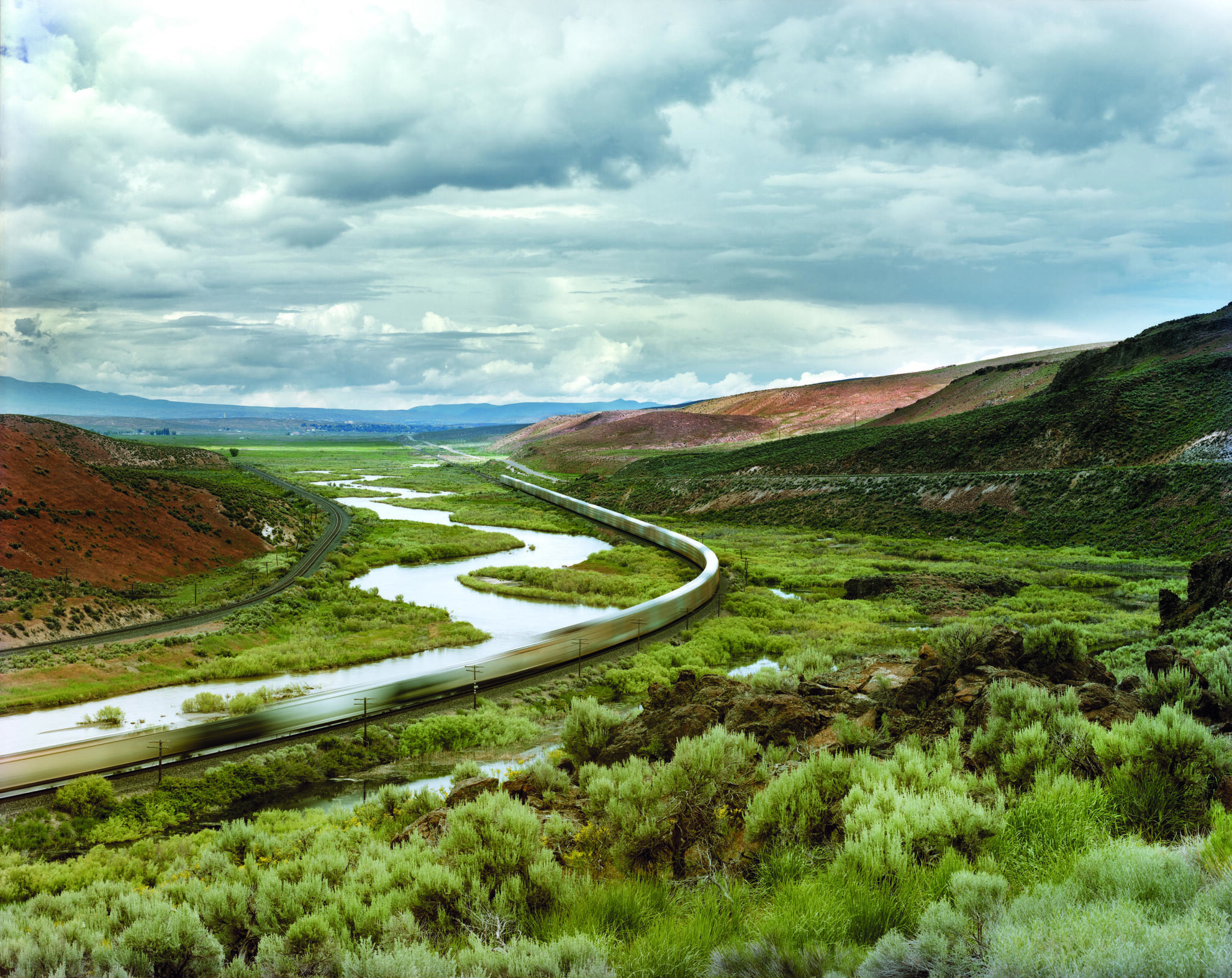
Laura McPhee’s Silence So Deep It Rings Great Basin Desert Chronicle
Photographer Laura McPhee is documenting the environmental and historical transformations of the Great Basin in her new book, Silence So Deep It Rings: A Desert Chronicle.
The work covers a 200,000-square-mile region spanning most of Nevada and Utah, along with parts of California, Oregon, Idaho, and Wyoming. McPhee uses a large-format Deardorff camera to capture the landscape, a process that involves laborious setup and framing.
The book’s title comes from a line by McPhee’s father, John McPhee, whose writing accompanies the images.
McPhee’s photography explores the intersection of human activity and a changing climate within a fragile ecosystem. Her images record evidence of Indigenous peoples alongside the results of resource extraction and settler empire building.
The photographer has resided in the Great Basin for an extended period. She previously wrote The Home and the World: A View of Calcutta in 2014.
In a discussion with Ian Frazier and her father, McPhee reflected on the fleeting nature of the landscape. She stated, “Now, I believe that all the elements in a landscape coalesce once, and then they’re gone.”
John McPhee described the area as being “held together by its concealed water.” This characteristic has drawn photographers to locations such as the Utah Bonneville Salt Flats and Nevada’s Ruby Valley.
The region is situated between the Sierra Nevada and Rocky mountains. It consists of geothermal hot springs, alpine ridges, and high desert lands where surface water does not reach the sea.
While the region contains natural landmarks like the Ruby Valley in Nevada and the Bonneville Salt Flats in Utah, McPhee’s work also highlights ecological degradation. The collection includes visual records of strip mines, rusted automobiles, and areas used for nuclear weapons testing and mineral extraction.
One photograph depicts a juniper tree, a species used by the Shoshone and other Indigenous groups to make bows, positioned near a coal-fired electrical power plant emitting sulfurous smoke.
The book also connects the landscape to McPhee’s personal history, including her great-grandmother’s move from Ohio to the Inland Empire a century ago. McPhee, who lives in rural Idaho, uses the project to register how modern politics and collective complacency have reached the limits of ecological sustainability.
This vast territory functions as the largest area of contiguous endorheic watersheds in North America, characterized by a landscape where surface water finds no outlet to the ocean. Instead, precipitation within the Great Basin either evaporates, sinks underground, or flows into saline lakes.
The region’s diverse geography includes a basin and range topography that spans from the low point at Badwater Basin in Death Valley to the summit of Mount Whitney, less than 100 miles away.
“Now, I believe that all the elements in a landscape coalesce once, and then they’re gone,” McPhee said in a conversation with her father and writer Ian Frazier.