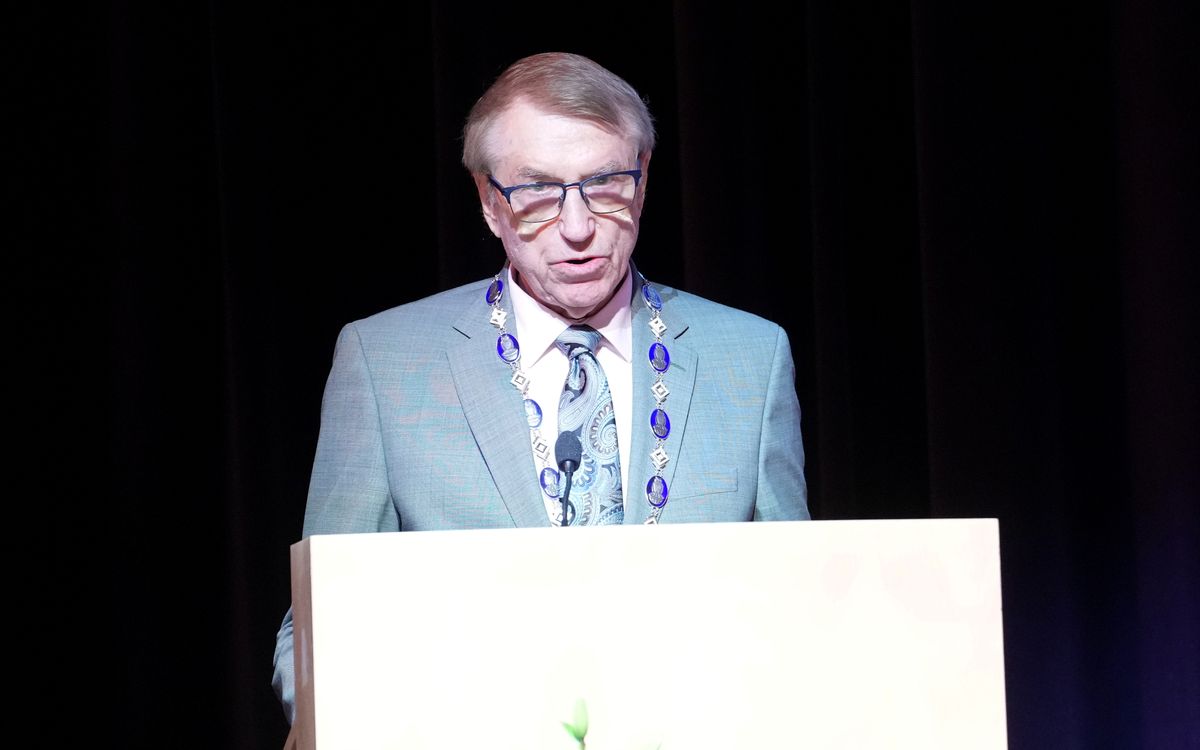
Latvian Academy of Sciences Defeats Ouster Vote for Ivars Kalviņš
Latvian Academy of Sciences President Ivars Kalviņš survived an ouster attempt on Thursday after a general assembly failed to reach the two-thirds threshold required to remove him from office.
Out of 182 ballots cast in the academy’s first-ever removal vote for a sitting president, 110 participants voted to recall Kalviņš while 61 voted against, with 11 ballots declared invalid, according to [lsm.lv]. [Diena] said that Kalviņš has held the post since 2020 and was re-elected in late 2024 to a second four-year term running through 2028.
The vote followed a controversy surrounding a recommendation letter sent in the academy’s name for Indian citizen Divya Vishwanathan to receive Latvian citizenship. The outgoing Saeima granted the citizenship on October 15, 2026, but reversed it a week later after doubts emerged regarding her academic credentials, [lsm.lv] and [Diena] reported.

Kalviņš asked the academy to vote on his removal after Senate Chairwoman Tatjana Koķe reported that his letter harmed the institution’s credibility by creating the false impression that the entire academy endorsed the citizenship, [lsm.lv] reported. Kalviņš defended his actions by stating he wanted to attract private pharmaceutical investments and trusted his partners too much, telling the assembly that he recognized his mistake and took responsibility for it.
The academy’s presidium previously defended the recommendation letter as having been prepared in good faith based on the information provided to Kalviņš, maintaining that he acted within his authority, [Diena] reported.
Physicist Vjačeslavs Kaščejevs said that international researchers evaluate individuals by their achievements rather than academy affiliation, meaning the incident lacked broad resonance abroad, though he acknowledged it negatively impacted the reputations of both the state and the institution, according to [lasi.lv].

Ahead of the assembly, more than 70 full and corresponding academy members signed a petition requesting a confidence vote, [lasi.lv] reported. Physicist Andris Ambainis argued that the incident severely discredited the academy and required a new president to restore its reputation, [lsm.lv] reported.
“Es šodien balsošu par akadēmiķa Ivara Kalviņa atsaukšanu no akadēmijas prezidenta amata, jo uzskatu, ka notikušais ir smagi diskreditējis gan viņu personiski, gan akadēmiju kopumā, un vienīgais ceļš, kā akadēmija var atgūt savu reputāciju, ar jaunu prezidentu,” Andris Ambainis said.
The Latvian Academy of Sciences serves as the official science academy of the country, functioning as a primary association for Latvia’s foremost scientists. This national institution plays a central role in organizing and advancing scholarly research across various disciplines, maintaining its influence through a structured internal organization.
As of 2019, the institutional framework of the Latvian Academy of Sciences consists of four specialized units: the Division of Agriculture and Forestry Sciences; the Division of Physics and Technical Sciences; the Division of Chemical, Biological and Medical Sciences; and the Division of the Humanities and Social Sciences. These divisions collectively oversee the academy’s scientific output and represent the diverse expertise of its members within the broader Latvian scientific community.
Meanwhile, the Prosecutor General’s Office has launched an inspection into the citizenship acquisition process, examining the academy’s role and evaluating factors surrounding the citizenship granted to Vishwanathan’s husband, Kananan Vishwanathan, in 2023, according to [Diena]. The Ministry of Education and Science has also submitted a draft order to establish an inter-institutional commission to evaluate the legal status and functions of the academy, with a report due to the government by May 31, 2027.