Large Loan Balances Raise Risks in Non-QM and HELOC Securitizations
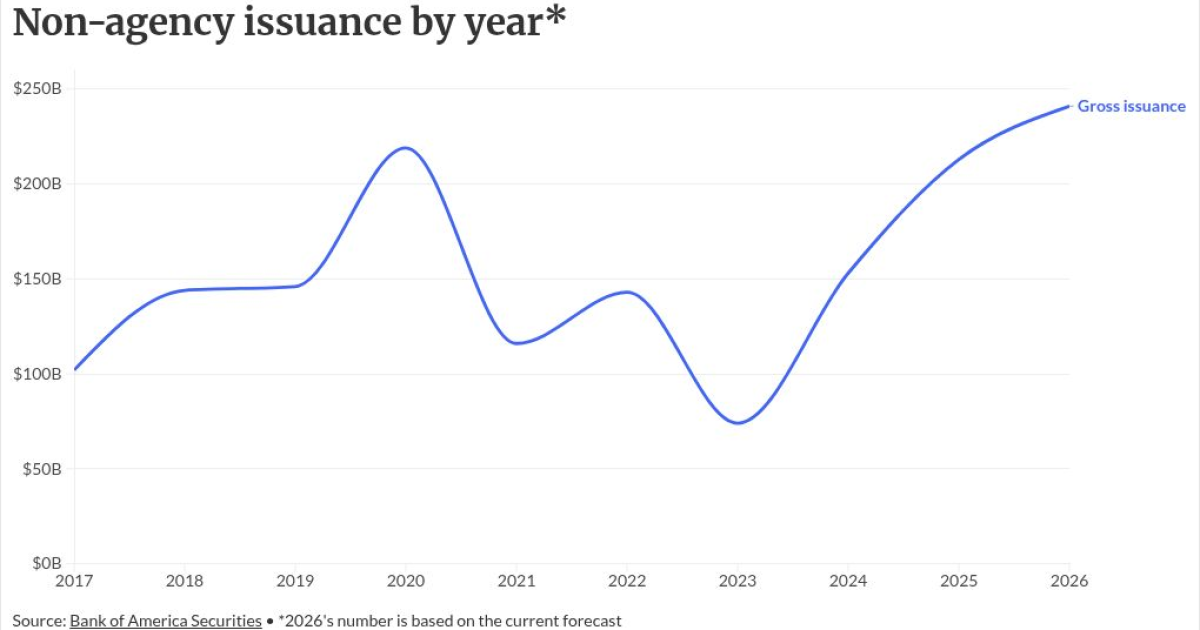
Non-QM and HELOC securitizations are seeing a surge in jumbo loan concentrations as borrowers seek flexibility outside traditional agency guidelines. This shift increases prepayment volatility and delinquency risks for institutional investors, forcing a recalibration of risk-weighted assets and credit enhancement strategies across the global mortgage-backed securities (MBS) market.
The plumbing of the residential mortgage market is leaking. For years, the “Jumbo” designation was a badge of prestige—high-net-worth borrowers with stable, if unconventional, income streams. Now, these high-balance loans are migrating into non-QM (non-qualified mortgage) and Home Equity Line of Credit (HELOC) pools. This isn’t just a shift in loan sizing; We see a fundamental change in the risk profile of the underlying collateral. When a $1.5 million loan defaults, the systemic shock to a trust is exponentially higher than a dozen $100k loans failing simultaneously.
The fiscal problem is clear: concentration risk. As the average loan balance creeps upward, the “cliff effect” of defaults becomes steeper. Asset managers are now staring at portfolios where a handful of high-balance borrowers can swing the internal rate of return (IRR) of an entire security. To mitigate this, firms are aggressively seeking risk management consultants to stress-test their portfolios against aggressive interest rate pivots.
The Yield Curve Trap and the Non-QM Migration
We are witnessing a convergence of quantitative tightening and a stubborn refusal of mortgage rates to normalize. Borrowers with significant equity but non-traditional tax returns—consider entrepreneurs or K-1 income earners—are fleeing the rigid constraints of Fannie Mae and Freddie Mac. They are landing in the non-QM space, bringing massive loan balances with them. This creates a paradoxical environment: higher yields for investors, but a terrifying increase in prepayment risk if rates eventually drop, or catastrophic delinquency if the luxury housing market corrects.
Looking at the broader macro picture, the Federal Reserve’s Monetary Policy Reports indicate a prolonged period of “higher for longer” rates. This puts immense pressure on the debt-service coverage ratios of jumbo borrowers. While these individuals often have high liquidity, their leverage is concentrated in trophy assets that are less liquid than entry-level housing. If the luxury market freezes, the exit strategy for these loans vanishes.
“The migration of jumbo balances into non-QM pools is a double-edged sword. We are seeing attractive spreads, but the granularity of the risk is disappearing. We are moving from a diversified pool of risk to a concentrated bet on the continued solvency of the upper-middle class.” — Marcus Thorne, Chief Investment Officer at Vanguardia Capital Markets.
Liquidity is the only metric that matters when the volatility spikes.
Deconstructing the Risk: The Macro Explainer
To understand why this trend is rattling the boardroom, we have to glance at the mechanics of securitization. When jumbo loans enter HELOC or non-QM pools, they alter the behavior of the entire security. Here are the three primary ways this trend is rewriting the industry playbook:
- Prepayment Velocity: High-net-worth borrowers are more likely to refinance or sell as soon as a market window opens. This “call risk” erodes the expected yield for the investor, effectively shortening the duration of the asset and forcing a search for new yield in an already tight market.
- LTV Erosion: HELOCs are essentially second liens. When jumbo balances are layered on top of existing mortgages, the Total Loan-to-Value (TLTV) ratios become precarious. A 10% dip in luxury home prices can instantly push these loans into negative equity, triggering a wave of strategic defaults.
- Credit Enhancement Costs: To make these “jumbo-heavy” securities palatable to institutional buyers, originators must provide more “overcollateralization” or “first-loss pieces.” This increases the cost of capital for the lender, squeezing the margins of the originators.
This margin squeeze is driving a desperate require for operational efficiency. Lenders are no longer just looking for borrowers; they are looking for enterprise fintech solutions that can automate the underwriting of complex K-1 income streams to reduce the manual overhead of non-QM processing.
The Balance Sheet Reality
The data from the SEC’s EDGAR database, specifically within the 10-Q filings of major non-bank lenders, reveals a growing trend: an increase in “allowances for credit losses” tied specifically to high-balance portfolios. While the headline delinquency rates remain deceptively low, the weighted average loss given default is climbing. The industry is essentially trading a high volume of little risks for a low volume of systemic risks.

Consider the impact on basis points. A 50-basis point move in the benchmark Treasury yield can trigger a massive wave of refinancing in the jumbo sector. For a portfolio manager, Here’s a nightmare scenario where the most profitable assets disappear the fastest.
“We are seeing a structural shift in how credit is priced. The ‘Jumbo’ premium is no longer just about the loan size; it’s about the volatility of the borrower’s behavior. The market is finally pricing in the risk of the ‘wealthy but cash-poor’ borrower.” — Elena Rodriguez, Senior Strategist at Global Credit Insights.
The risk is no longer theoretical; it is embedded in the coupons.
The Path Forward: Navigating the Volatility
As we move into the next fiscal quarters, the focus will shift from originations to performance. The “honeymoon phase” of non-QM growth is ending, and the era of the “workout” is beginning. We expect to see a surge in demand for specialized corporate law firms specializing in distressed debt and securitization litigation as the first wave of jumbo-heavy HELOCs hits the stress test of a stagnant real estate market.
For the institutional investor, the play is no longer about chasing the highest yield, but about understanding the granularity of the pool. The winners will be those who can distinguish between a borrower with a diversified portfolio and one whose entire net worth is tied up in a single, overpriced piece of real estate.
The trajectory is clear: the blurring of lines between traditional and non-traditional lending is creating a new class of hybrid risk. As these complexities mount, the ability to vet partners—from auditors to legal counsel—becomes the ultimate competitive advantage. To find the specialized providers capable of navigating this volatility, the World Today News Directory remains the gold standard for connecting corporate leadership with vetted B2B excellence.