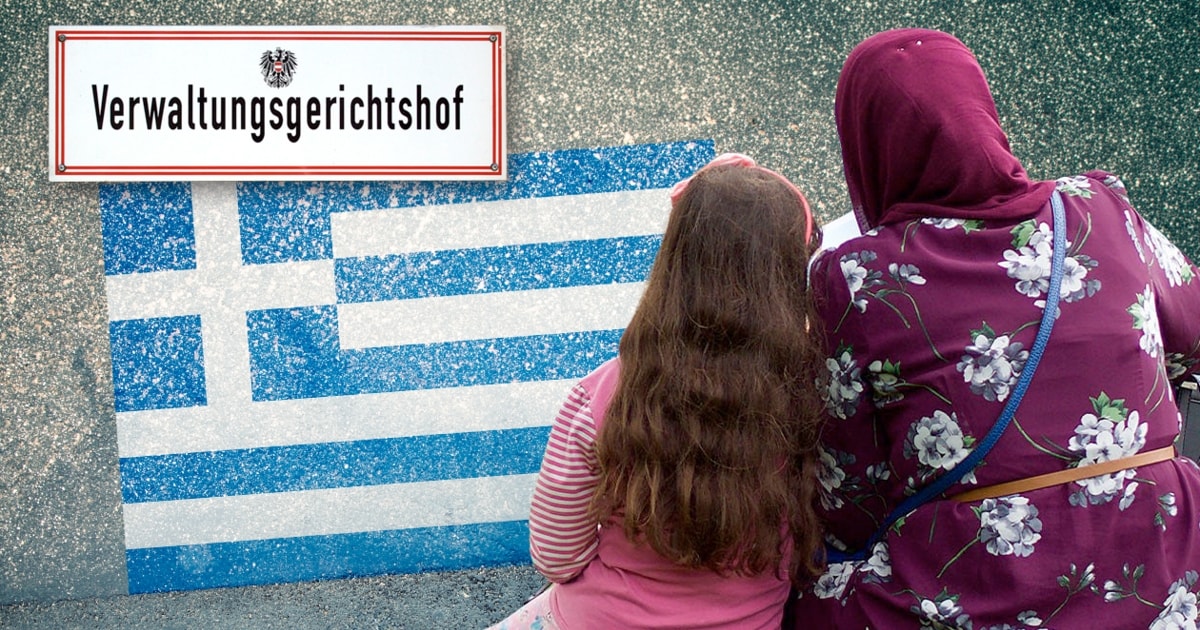
Landmark Rulings: Afghan Families Must Leave Austria
Austrian courts have issued landmark rulings ordering Afghan families to leave the country, signaling a rigorous shift in asylum interpretations. These decisions, centered on the perceived safety of specific regions in Afghanistan, create an immediate legal crisis for hundreds of residents facing deportation to a volatile regime.
This isn’t just a legal technicality. It is a systemic pivot.
The core of the problem lies in the “internal flight alternative”—the legal theory that a person can be safely relocated to a different part of their home country. By designating certain Afghan provinces as “safe,” the Austrian judiciary is effectively dismantling the protection status of families who have spent years integrating into Viennese and regional communities. The human cost is staggering: children born in Austria, parents with stable employment, and deep-rooted social ties are suddenly rendered “removable.”
For those caught in the crosshairs, the immediate require is no longer integration, but survival. The complexity of challenging these “landmark” rulings requires immediate intervention from specialized immigration attorneys who can navigate the nuances of European human rights law.
The Legal Mechanism of Displacement
The rulings stem from a restrictive reading of the EU Asylum Procedures Directive. The Austrian Federal Administrative Court is increasingly applying a standard that prioritizes geopolitical “snapshots” over the lived reality of those fleeing the Taliban. By claiming that certain urban centers or specific provinces in Afghanistan no longer pose an existential threat to all demographics, the court is narrowing the window for “subsidiary protection.”
This creates a dangerous precedent. If the court decides a province is “safe” based on a lack of reported violence in a specific quarter, it ignores the systemic persecution of women and ethnic minorities that permeates every corner of the country.
“We are witnessing a judicial trend where ‘safety’ is defined by the absence of active war, rather than the presence of fundamental human rights. For an Afghan family, the difference between a ‘safe zone’ and a death sentence is often just a few miles of road.”
The impact is felt most acutely in cities like Vienna, Graz, and Linz, where municipal social services are now scrambling to support families in psychological distress. Local infrastructure is strained as NGOs attempt to provide emergency housing and legal aid to those whose residency permits have been revoked overnight.
The Macro-Economic and Social Ripple Effect
Beyond the moral imperative, there is a practical economic disruption. Many of these families have filled critical gaps in the Austrian labor market—from healthcare assistance to logistics. Forced departures lead to a sudden loss of skilled labor and a breakdown in community stability.
When a family is evicted and deported, the ripple effect touches everyone: the landlords who lose stable tenants, the schools that lose students, and the local businesses that lose employees. To manage the fallout of these sudden legal shifts, municipal governments are increasingly relying on community advocacy groups to mediate between the state and the affected populations.
Consider the timeline of this shift:
| Phase | Legal Action | Human Impact |
|---|---|---|
| Initial Ruling | Court identifies “Safe Zones” in Afghanistan | Immediate revocation of residency permits |
| Appeal Window | Filing for hardship or human rights exceptions | Extreme psychological stress; legal fee burdens |
| Enforcement | Deportation orders executed by authorities | Family separation and loss of integrated livelihoods |
The “Information Gap” here is the silence regarding the actual conditions in these so-called safe zones. While the courts cite reports of stability, AP News and other international monitors continue to document the systematic erasure of women’s rights under the Taliban. The gap between judicial “fact” and ground “reality” is where the danger resides.
Navigating the Crisis: A Path to Resolution
The legal battle is now moving toward the European Court of Human Rights (ECHR). Advocates argue that Austria is violating Article 3 of the European Convention on Human Rights, which prohibits torture and inhuman or degrading treatment. But, the ECHR process is slow, and the deportation orders are prompt.
Families are now forced to seek “hardship” exemptions, proving that their specific circumstances—such as a child’s medical condition or a parent’s role in the community—outweigh the state’s desire for removal. What we have is a high-bar legal maneuver. It requires meticulously documented evidence and a deep understanding of Austrian administrative law.
Given that the state’s machinery is moving with such aggression, the only viable defense is a proactive one. Families are not just looking for lawyers; they are seeking strategic migration consultants who can identify alternative pathways to residency or find sanctuary in other jurisdictions before the deportation window closes.
This is a logistical minefield. One missed deadline or one incorrectly filed document can result in an immediate flight to Kabul.
The Long-Term Implications for European Asylum
Austria is not acting in a vacuum. This trend mirrors a broader European shift toward “externalization”—the practice of pushing asylum seekers back to their countries of origin or third-party nations. If these rulings hold, Austria becomes a blueprint for other EU nations to tighten their borders by redefining “safety” in volatile regions.
The danger is that we are creating a “legal fiction” of safety to justify political goals. When the law ceases to reflect the reality of the refugee’s experience, the law becomes a tool of displacement rather than a shield of protection.
The tragedy of these Afghan families is that they are being asked to return to a world that no longer exists, based on a version of a country that the courts have imagined into existence. As the legal landscape shifts, the necessity for verified, expert guidance becomes the only line of defense between a stable life in Europe and an uncertain future in a conflict zone.
The tragedy of this moment is not just the loss of residency, but the loss of trust in the judicial promise of safety. As these families fight for their lives, the only way to navigate this volatility is through the expertise of professionals who understand the intersection of geopolitics and law. Whether it is finding an emergency legal stay or securing social support, the World Today News Directory remains the essential bridge to the verified professionals capable of managing this crisis.