
Lamborghini 2025 Results: Revenue Up, Profit Down – US Tariffs & EV Shift Impact
Lamborghini reported record revenue of €3.2 billion in 2025, a 3.3% increase, even as operating profit declined to €768 million, according to company statements. The results reflect a complex year for the Italian supercar manufacturer, marked by record deliveries of 10,747 vehicles alongside pressures from U.S. Tariffs, currency fluctuations, and a strategic shift away from fully electric vehicle development.
The revenue figure represents a historical high for the brand, driven by increased sales volume. However, the operating profit represents a decrease from €835 million in 2024. This decline indicates that sales growth alone was insufficient to offset mounting pressures on profit margins.
U.S. Tariffs significantly impacted Lamborghini’s financial performance, as the United States remains a key market. Despite price increases implemented in the previous year, the company was unable to fully pass on the additional costs to consumers. Management acknowledged the limitations of this strategy, opting against further price hikes due to concerns about negative market reaction. The operating margin decreased from 27% to 24%, signaling a broader deterioration in profitability.
Currency exchange rate volatility and write-downs related to the discontinuation of a fully electric supercar project similarly contributed to the financial challenges. This decision was part of a broader strategic reassessment in response to shifting demand for electric vehicles. While many automakers continue to invest heavily in electric technologies, Lamborghini opted for a temporary pause on previously announced plans, citing weak customer interest and doubts about the return on investment.
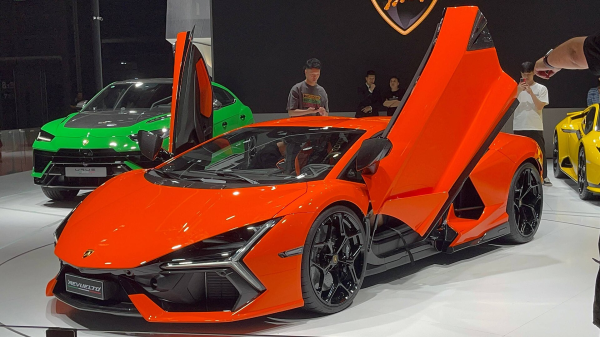
Lamborghini partially mitigated these external challenges through internal optimization efforts. Strict cost control measures and a focus on selling higher-priced models helped maintain financial stability. The Revuelto, a supercar priced at over €500,000, performed particularly well, as did the company’s vehicle personalization programs. Nearly every vehicle sold in 2025 included personalized elements, increasing the average transaction value and preserving the brand’s appeal in the premium segment.
Geopolitical instability also presents a risk to the luxury automotive market. Armed conflicts in the Middle East, impacting oil supplies and logistics, add further uncertainty. The luxury segment is particularly sensitive to economic fluctuations, with demand for high-complete vehicles directly tied to consumer confidence and the global economic outlook.
A key strategic decision involved abandoning plans for a fully electric supercar initially slated for 2030. Company leadership cited skepticism regarding the target audience for such a vehicle, noting that customer expectations were not fully met during trials. This prompted a reevaluation of the product strategy.
Instead, Lamborghini is prioritizing hybrid technology. The company already offers hybrid models and plans to expand this range with the launch of a new “2+2” vehicle, the Lanzador, featuring a plug-in hybrid powertrain. This approach aims to balance innovation with the brand’s traditional characteristics, including power, engine sound, and an engaging driving experience.
Lamborghini continues to invest in electric technology development, signaling a long-term commitment and willingness to adapt to potential future shifts in demand. However, in the short term, the company is prioritizing more established solutions. The Revuelto, a V12 hybrid, exemplifies this approach, delivering 1,015 PS and accelerating from 0 to 62 mph in 2.5 seconds, according to Motor1.com.