
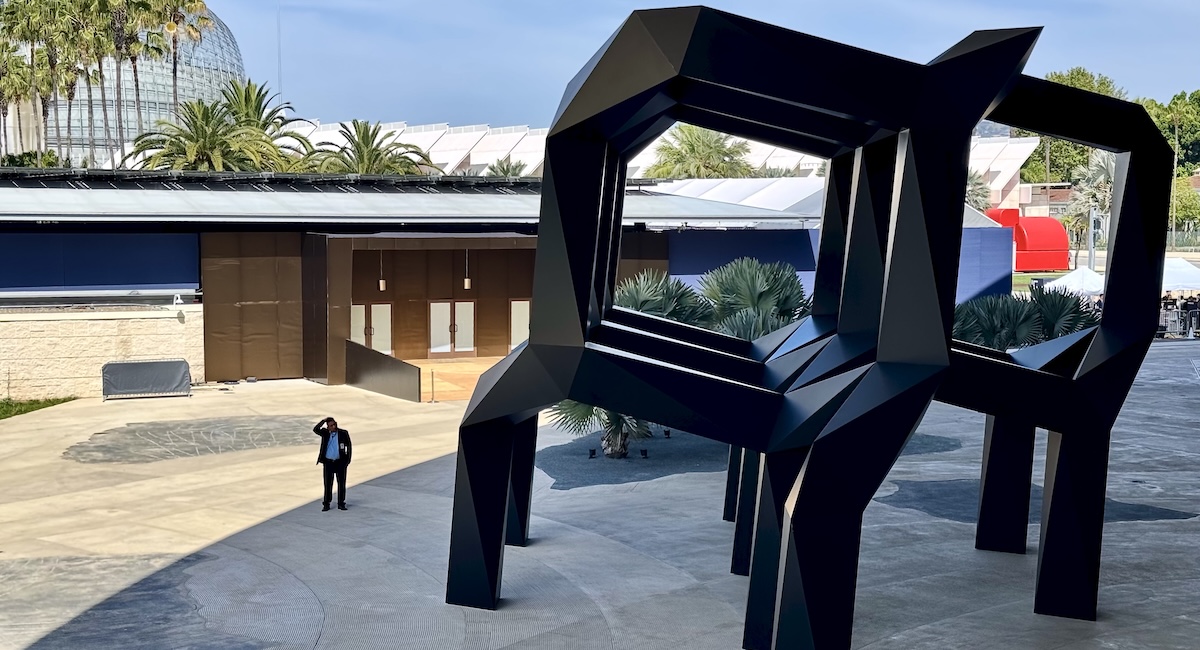
LACMA Unveils David Hockney Exhibition After Six Years of Construction and Nearly Two Decades of Planning
On April 19, 2026, the Los Angeles County Museum of Art (LACMA) unveiled the David Geffen Galleries, a $750 million expansion that redefines the museum’s physical and cultural footprint after six years of construction and nearly two decades of planning. This transformative project, designed by renowned architect Peter Zumthor, replaces four aging buildings with a single, sinuous structure spanning Wilshire Boulevard, creating 60,000 square feet of fresh gallery space dedicated to modern and contemporary art. The inauguration marks not just a architectural milestone but a pivotal moment for Los Angeles’ cultural economy, positioning LACMA as a global destination while raising urgent questions about urban integration, public access and the long-term sustainability of such monumental investments in public institutions.
The David Geffen Galleries represent more than an aesthetic upgrade; they signal a strategic shift in how LACMA engages with its audience and the city at large. By situating the new galleries over Wilshire Boulevard—a major arterial road—the project creates a covered pedestrian promenade that connects Hancock Park to the museum’s eastern campus, effectively turning infrastructure into public space. This design choice addresses a long-standing criticism of LACMA’s isolated, car-dependent layout, which has historically limited walkability and community engagement. Yet, the project’s scale and cost have sparked debate over whether such resources might be better allocated to address pressing social needs in a city grappling with housing insecurity and underfunded public schools.
“This isn’t just about displaying art—it’s about reimagining the museum as a civic connector,” said Los Angeles City Councilmember Nithya Raman, whose District 4 includes the LACMA campus. “The promenade creates a rare piece of uninterrupted public realm along Wilshire, but we must ensure it doesn’t become a gated cultural enclave. Access must remain democratic, especially for neighboring communities that have historically felt excluded from these spaces.” LACMA’s official site confirms free general admission for LA County residents after 3 p.m. On weekdays, a policy aimed at broadening access, though critics argue timing and transportation barriers still limit true inclusivity.
Historically, LACMA’s evolution reflects broader shifts in museum philosophy. Founded in 1961 as the county’s first major art institution, it grew through decades of philanthropic expansion, most notably the Ahmanson Building (1965) and the Art of the Americas Building (1974). The Geffen Galleries, yet, mark the first major expansion driven not by collection growth but by experiential innovation—a response to declining museum attendance nationally and the rise of immersive, digital-first art experiences. According to the National Endowment for the Arts, U.S. Museum attendance dropped by 30% between 2019 and 2023, prompting institutions to rethink their role as social hubs rather than mere repositories.
The project’s funding model also invites scrutiny. While David Geffen’s $200 million gift covered naming rights and a significant portion of construction, the remainder came from a mix of private donations, municipal bonds, and state cultural grants. Los Angeles County contributed $50 million through the Regional Park and Open Space District, a decision that drew legal scrutiny from taxpayer watchdogs who argued the funds should prioritize regional parks over institutional expansions. The Los Angeles County Controller’s Office later confirmed the expenditure complied with Proposition A guidelines, which allow cultural institutions to access regional open space funds if they provide demonstrable public benefit—a determination LACMA supported with projected annual visitor increases of 1.2 million.
For local businesses and urban planners, the expansion presents both opportunity and complexity. The new galleries are expected to stimulate foot traffic along the Miracle Mile corridor, benefiting nearby restaurants, hotels, and retail establishments. However, increased visitor volume raises concerns about traffic congestion, parking strain, and pressure on municipal services. Urban designers note that the project’s success hinges on complementary investments in public transit and pedestrian infrastructure—areas where Los Angeles has historically lagged. “Cultural investments like this only thrive when integrated with mobility planning,” observed Jennifer Torres, a senior planner at the Southern California Association of Governments. “Without coordinated improvements to bus lanes, bike paths, and pedestrian safety along Wilshire, we risk creating a elegant destination that’s inaccessible to the very public it aims to serve.”
“We’re not just building a gallery—we’re testing whether Los Angeles can evolve from a car-centric metropolis into a walkable, culture-driven city. This project is a stress test for that vision.”
The ripple effects extend into the legal and civic sectors. As LACMA redefines its role as a public-facing institution, questions arise about liability, accessibility compliance, and community benefits agreements. Organizations specializing in civil rights law firms may find increased demand for counsel on ADA compliance and equitable access policies, particularly if disability advocacy groups challenge aspects of the new design. Meanwhile, urban planning consultants are likely to be engaged by city departments seeking to align the LACMA expansion with broader mobility and equity goals outlined in the city’s Mobility Plan 2035 and Equity Index.
From an economic standpoint, the Geffen Galleries reinforce Los Angeles’ position as a global cultural capital, competing with institutions like SFMOMA and the Broad for international art tourism. The Getty Foundation reports that cultural tourism generates over $4 billion annually for LA County, a figure poised to grow with LACMA’s enhanced capacity to host major exhibitions. Yet, this prosperity must be balanced against the risk of cultural gentrification—where rising property values near cultural hubs displace long-term residents. Community land trusts and affordable housing advocates are already monitoring the Miracle Mile corridor for signs of displacement pressure, calling for inclusive development agreements tied to future cultural investments.
As the David Geffen Galleries open their doors, they do more than display art—they reflect a city in negotiation with itself. LACMA’s gamble is that a breathtaking architectural gesture can rekindle public passion for the arts in an age of distraction. But the true measure of success will not be found in attendance figures or critical acclaim, but in whether this expansion fosters deeper connection—not just between visitor and artwork, but between the museum and the myriad communities that call Los Angeles home. For those seeking to understand, engage with, or shape this evolving cultural landscape, the World Today News Directory offers a curated pathway to verified experts, civic leaders, and local institutions equipped to navigate the complexities of art, urbanism, and public life in the 21st century.