
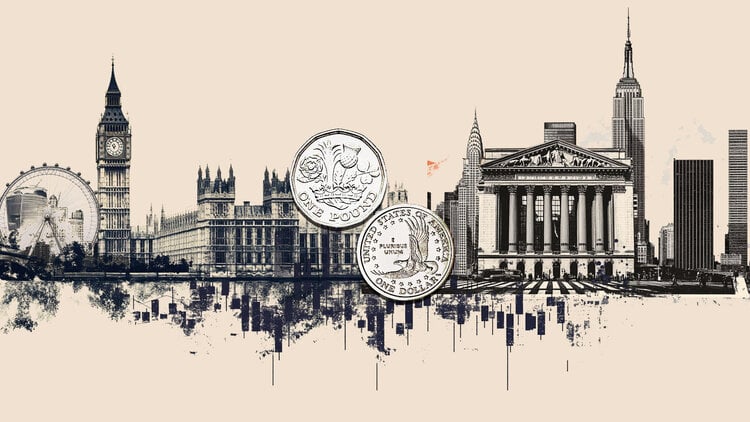
Labour Party Hit in UK Local Elections as Reform UK and Greens Gain
British Prime Minister Keir Starmer’s Labour Party suffered significant losses in recent local elections, while Nigel Farage’s Reform UK and the Green Party made notable gains. Despite this political volatility, the British Pound (GBP) has remained resilient against the US Dollar (USD), supported by the stability of the Bank of England (BOE).
Political instability usually triggers a market exodus, but the current climate in the United Kingdom is defying the traditional script. While the electoral map is shifting—with a surge in support for populist and environmentalist factions—the currency markets are treating the noise as a secondary concern. This disconnect between the ballot box and the exchange rate suggests a growing investor confidence in the UK’s institutional guardrails, specifically the independence of its monetary policy.
The Paradox of Political Volatility and Currency Stability
The recent local elections have sent a clear signal of disillusionment. Keir Starmer’s Labour Party, tasked with steering the nation through a period of recovery, has seen its support erode in key regions. Simultaneously, the rise of Reform UK, led by Nigel Farage, and the expansion of the Green Party indicate a fracturing of the traditional political center. In many jurisdictions, this shift isn’t just about party preference; it is a fundamental reallocation of local power that could alter municipal priorities for years to come.

Normally, such a “shock” to the governing party’s mandate would lead to a sell-off of the Pound. However, the GBP/USD pair has held its ground. Analysis from Commerzbank and FXStreet suggests that the market is prioritizing macroeconomic fundamentals over short-term political drama. The resilience of the Pound is largely attributed to the Bank of England’s commitment to inflation targeting and the relative stability of interest rate differentials compared to the United States.
“The market is currently distinguishing between political sentiment and economic reality. While the local election results reflect a deep-seated frustration with the establishment, the Pound is being supported by the perceived reliability of the BOE’s monetary framework, which remains insulated from the immediate electoral fallout.”
For businesses operating across borders, this resilience is a double-edged sword. While it prevents a currency crash, the underlying political fragmentation creates a complex regulatory environment. Companies are increasingly relying on foreign exchange specialists to hedge their risks and manage the volatility that often follows such electoral shifts.
Institutional Anchors in a Shifting Landscape
The Bank of England (BOE) continues to act as the primary anchor for the UK economy. By maintaining a steady hand on interest rates, the BOE provides a level of predictability that offsets the unpredictability of the local government results. When the political center weakens, the role of independent institutions becomes paramount in preventing market panic.
However, the rise of the Green Party and Reform UK introduces new variables into the local economic equation. In areas where these parties have gained ground, we can expect shifts in local infrastructure spending, environmental regulations, and municipal tax policies. This localized instability means that the “national” resilience of the Pound does not necessarily translate to “local” stability for businesses.
Navigating these localized shifts requires more than just financial hedging; it requires a deep understanding of changing regional laws. Many firms are now engaging regulatory compliance lawyers to ensure their operations remain viable as new local authorities implement different ideological agendas.
Macro-Economic Outlook: Beyond the Local Ballots
To understand why the Pound is resisting the “election shock,” one must look at the broader global landscape. The US Dollar’s own fluctuations, driven by Federal Reserve policy, have played a role in keeping the GBP/USD ratio stable. If the US economy shows signs of cooling, the Pound appears more attractive, regardless of who controls a local council in England.
We must also consider the long-term implications of this electoral trend. If the momentum for Reform UK and the Green Party continues toward the next general election, the market may eventually stop ignoring the political noise. A potential shift in national governance could lead to radical changes in trade agreements or fiscal policy, which would inevitably impact the currency.
For now, the UK is in a state of “managed tension.” The political landscape is cracking, but the financial foundation is holding. For organizations looking to expand or protect their assets in the UK, securing vetted strategic business consultants is the most effective way to bridge the gap between current market resilience and future political uncertainty.
The resilience of the Pound is a testament to the strength of the UK’s financial institutions, but it should not be mistaken for political harmony. The disconnect between the voters and the markets is a gap that will eventually need to be closed. Whether that closure happens through a policy pivot by the Labour Party or a broader shift in the national electorate remains to be seen. In the meantime, the only certainty is that the intersection of politics and finance will remain volatile. Finding verified professionals through the World Today News Directory is the best way to ensure your business is equipped to handle whatever the next election cycle brings.