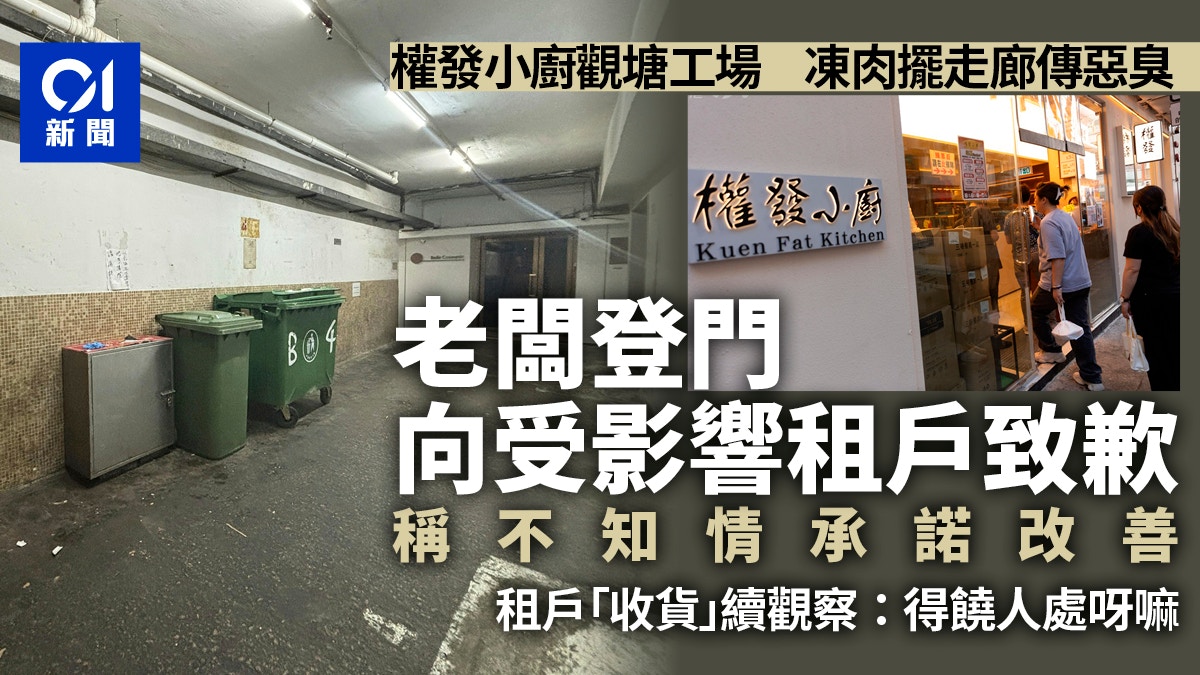
Kwun Tong Restaurant Owner Negotiates With Tenants Over Frozen Meat Odor
Quan Fa Kitchen, a prominent two-dish rice chain, faced severe backlash on April 5, 2026, after tenants at its Kwun Tong food factory reported frozen meat left in corridors. The resulting foul odors and leakage sparked community outrage, prompting the owner to intervene and negotiate with affected neighbors.
This is more than a simple disagreement between neighbors in a commercial building. It is a flashpoint for the growing tensions between Hong Kong’s rapid “two-dish rice” business expansion and the aging infrastructure of its industrial hubs. When the logistics of mass food production spill into public corridors, the result is a volatile mix of public health risks and degraded living conditions for surrounding tenants.
The situation reached a breaking point when a tenant took to the social media platform Threads to expose the conditions at the Kwun Tong facility. The report painted a grim picture: frozen meat, intended for the chain’s various outlets, was being staged in the building’s hallways and near elevator entrances. In the humid, oppressive heat of the district, this meat began to thaw, leaving trails of “stinky water” across the floors.
For the neighbors, the experience was visceral. The scent of decaying meat reportedly permeated their private units, turning a professional workspace into an olfactory nightmare. Photos shared online revealed wooden pallets stacked with cardboard boxes and plastic bags of marinated meat, sitting precariously alongside large trash bins. The irony was not lost on observers; notices on the walls pleaded with staff to place cardboard in the bins because the smell was “affecting hygiene,” yet the practice continued unabated.
The human cost of this negligence was felt most acutely in the interactions between the tenants and the factory staff. The complainant noted that attempts to resolve the issue “amicably” were met with hostility, with employees reportedly shouting and reacting aggressively when asked to clear the corridors. Even the intervention of the building’s management office failed to produce a permanent change, leaving the tenants to endure the stench for months before taking the matter public.
This failure in basic operational hygiene points to a systemic issue in how “food factories” are managed within converted industrial spaces. Many of these facilities operate on thin margins and high volumes, often prioritizing throughput over the stringent logistics required for cold-chain management. When a business fails to manage its waste and storage, the burden shifts to the community.
For businesses operating in such high-density environments, the risk of a public relations disaster is only half the battle. The other half is the legal and regulatory fallout. Property managers and business owners are increasingly turning to commercial real estate attorneys to navigate the complex lease violations and liability claims that arise when one tenant’s operational failures infringe upon the rights of another.
A Pattern of Negligence in Kwun Tong
The Quan Fa Kitchen incident does not exist in a vacuum. Kwun Tong has become a focal point for food safety enforcement in Hong Kong. The district’s industrial nature makes it an attractive hub for food processing, but it also makes it a prime target for the Food and Environmental Hygiene Department (FEHD).
Recent enforcement actions in the same district reveal a troubling trend of deceptive practices and hygiene failures. In late 2024 and mid-2025, the FEHD conducted raids on other Kwun Tong food outlets, discovering massive quantities of frozen meat being sold as fresh. In one instance on Rui He Street, 315 kilograms of suspected frozen beef and lamb were destroyed. Another raid on Hip Wo Street resulted in the destruction of over 500 kilograms of frozen beef that was being misrepresented to consumers.
Whereas the Quan Fa Kitchen case is about storage and corridor hygiene rather than consumer fraud, the underlying theme is the same: a disregard for the standards of the GovHK health guidelines. Whether it is mislabeling meat or letting it rot in a hallway, these actions signal a breakdown in the professional standards expected of large-scale food providers.
The owner of Quan Fa Kitchen eventually stepped in, visiting the aggrieved tenants to negotiate a resolution. While the gesture of “sincere negotiation” may calm the immediate anger, it does not erase the months of discomfort or the potential health hazards created by the runoff of thawing meat in a shared public space.
To prevent such occurrences, companies must move beyond reactive apologies. Implementing rigorous HACCP (Hazard Analysis and Critical Control Points) protocols is essential. Many expanding chains are now hiring food safety consultants to audit their logistics chains, ensuring that the transition from the delivery truck to the freezer happens in minutes, not hours spent in a corridor.
the physical cleanup of such sites requires more than a mop and bucket. The organic residue from thawing meat can seep into porous concrete, leaving permanent odors and attracting pests. This necessitates the intervention of specialized industrial cleaning services capable of deep-sanitizing commercial corridors to restore a habitable environment.
The Cost of Convenience
The “two-dish rice” phenomenon has democratized affordable dining in Hong Kong, providing a lifeline to thousands of workers. Though, this convenience comes with a hidden cost. The pressure to keep prices low often leads to shortcuts in the “back end” of the business—the warehouses, the factories, and the loading docks.
When the pursuit of scale outpaces the commitment to hygiene, the community pays the price. The Quan Fa Kitchen controversy serves as a warning to all urban food operators: the walls of your factory do not shield you from the expectations of the public. In the age of instant social media exposure, a single leaking cardboard box in a hallway can tarnish a brand’s reputation more effectively than any competitor’s marketing campaign.
As Kwun Tong continues to evolve from an industrial wasteland into a mixed-use commercial hub, the friction between industrial operations and professional office tenants will only increase. The resolution of these conflicts requires a combination of strict regulatory oversight and a fundamental shift in corporate culture—one where “sincere negotiation” happens before the smell becomes unbearable.
For those currently dealing with the fallout of commercial negligence or seeking to safeguard their business from similar pitfalls, finding verified professionals is the only way to ensure long-term stability. Whether you necessitate to resolve a tenant dispute via the Law Society of Hong Kong standards or require professional sanitization, the World Today News Directory remains the definitive resource for connecting with the experts equipped to handle the complexities of urban commercial crises.