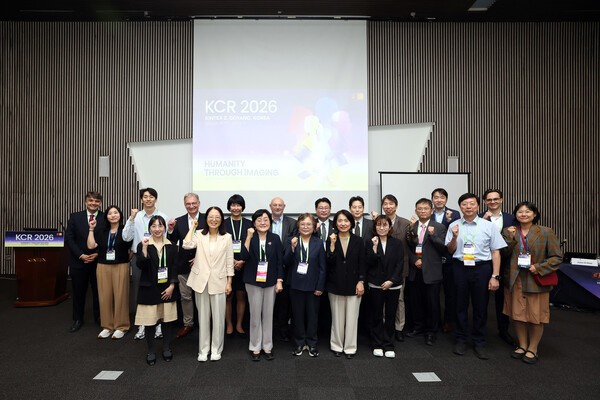
Korean Society of Radiology launches patient advisory group KSR-PAG
The Korean Society of Radiology launched its first patient advisory group, named KSR-PAG, at the international medical congress ‘KCR 2026’ held at Kintex in Ilsan, bosa.co.kr reported on October 28. While European imaging specialists have integrated structured patient panels into academic frameworks over the past decade, Korean clinical departments have historically operated primarily behind closed reading-room doors.
Key Clinical Takeaways:
- The Korean Society of Radiology established KSR-PAG during the KCR 2026 conference to bridge the communication gap between imaging specialists and patients.
- A survey conducted prior to the launch revealed that 72.8% of physicians and 73.7% of radiologic technologists spend less than 3 minutes on pre- and post-test patient communication.
Launching the First Patient Advisory Group at KCR 2026
The establishment of KSR-PAG marks a ten-year progression for the Korean Society of Radiology. At the KCR 2026 event last month, that decade-long observation materialized into an official domestic initiative. Unlike specialty-specific disease cohorts that risk political polarization or narrow advocacy, the newly formed Korean panel deliberately recruited consumer representatives, media professionals, legal experts, and health communication specialists for its initial roster.
European leadership welcomed the broader multi-disciplinary composition. European Society of Radiology President Matthias Prokop noted during his congratulatory remarks that expanding the advisory structure to include media and consumer advocates represents a progressive step beyond current European frameworks. Prokop emphasized the role of radiologists in delivering precise information regarding cancer diagnoses and overdiagnosis risks so patients can make informed decisions. European Society of Radiology Patient Advisory Group Chair Steve Ebdon-Jackson also advised the society to secure dedicated budgetary and temporal resources for the panel while proposing a co-produced Korean-language edition of patient information posters.
Executing Academic, Content, and Policy Objectives
KSR-PAG operates as an active execution body rather than a passive discussion forum. The group will coordinate patient-centered academic sessions during major scientific meetings such as KCR and KSSR. Members will review health literacy materials and patient guidance documents, while contributing patient perspectives to safety, accessibility, and research guidelines.
During its inaugural year, the advisory panel intends to formally announce its patient-centered mandate while establishing sustainable administrative workflows and easy-to-understand educational literature. Regular and ad-hoc meetings are designed to maintain transparent decision-making loops across the society’s internal committees. Hansongyi stated that the objective is to adapt European principles into an effective execution model tailored to local clinical realities.
Quantifying the Communication Deficit in Diagnostic Imaging
Structural barriers continue to restrict patient engagement inside active hospital departments. The findings demonstrated that 72.8% of surveyed physicians and 73.7% of technologists spend under three minutes explaining diagnostic procedures to patients. Also, 42.7% of doctors and 31.9% of technologists reported spending less than one minute on these explanations.
When asked to identify primary prerequisites for communication improvement, radiologic technologists pointed to staffing, time, and space allocation at 71.4%. In contrast, physicians prioritized dedicated reimbursement structures for explanation activities at 49.7%, alongside clearer workload division with referring clinical departments at 48.3%. Also, 70.6% of responding physicians indicated that the general public lacks a clear understanding of their professional roles.
Addressing Artificial Intelligence and Modern Diagnostic Demands
Panel discussions during the launch event addressed growing pressures from generative artificial intelligence and shifting patient expectations. Korea Consumer Federation President Kang Jeong-hwa emphasized the necessity for expert intervention against distorted online medical information, urging the advisory group to monitor consumer friction arising when AI reading results diverge from physician conclusions.
Jung Seung-eun concluded that the society will refine future survey methodologies to incorporate direct feedback from the general public and patients, working incrementally to foster visible, patient-facing radiology practices.
Disclaimer: The information provided in this article is for educational and scientific communication purposes only and does not constitute medical advice. Always consult with a qualified healthcare provider regarding any medical condition, diagnosis, or treatment plan.