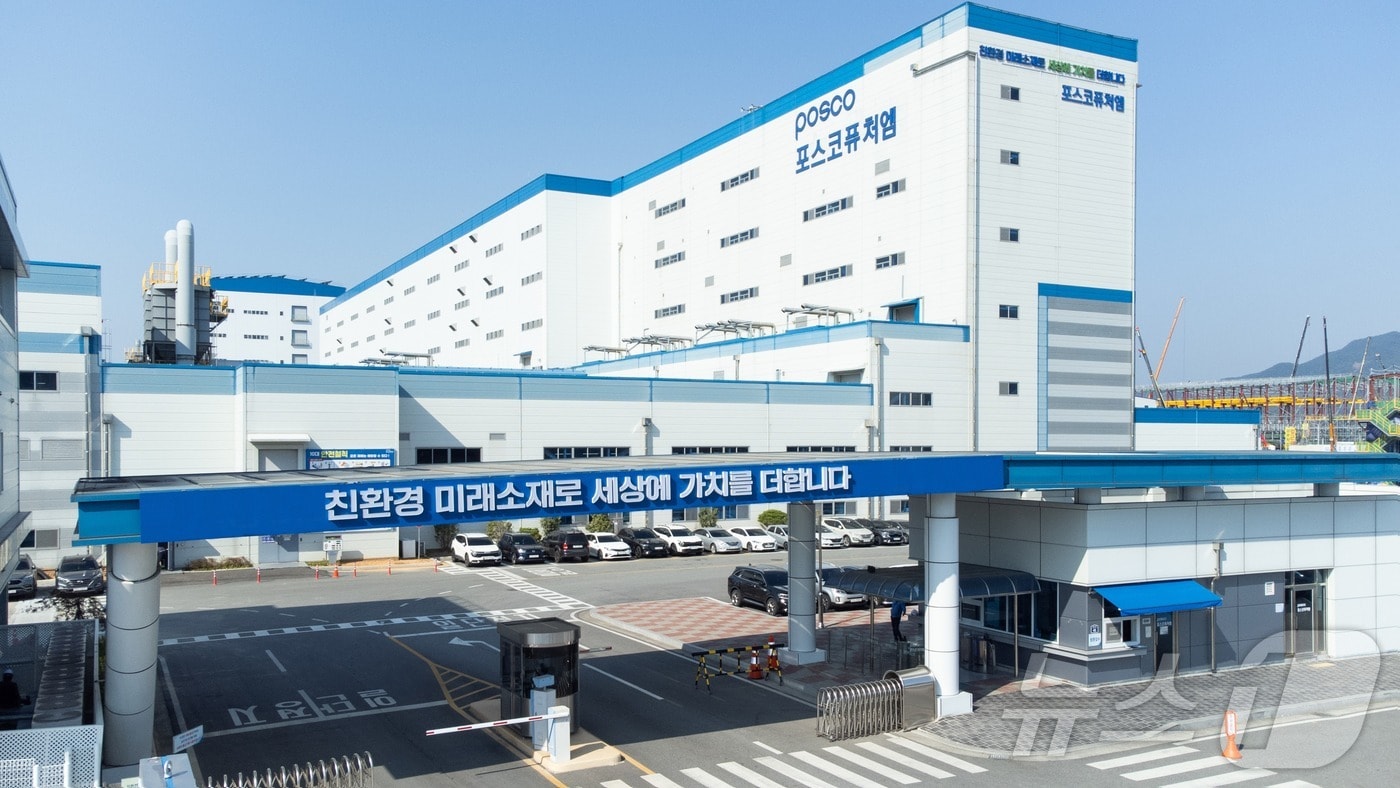
Korean Battery Material Giants Pivot Strategies for Global Competitiveness
On April 17, 2026, South Korean battery material producers L&F, POSCO Future M, and EcoPro BM announced divergent strategic pivots to recover from declining lithium-ion battery cathode profits, with L&F doubling down on lithium iron phosphate (LFP) technology, POSCO Future M pursuing non-Chinese anode materials, and EcoPro BM expanding European production—signaling a broader industry shift away from China-centric supply chains amid weakening EV demand and rising trade friction.
The problem is clear: South Korea’s dominant position in battery materials is eroding as Chinese competitors achieve scale advantages in LFP and integrated production, whereas Western automakers demand localized, de-risked supply chains under new trade policies like the U.S. Inflation Reduction Act and EU Battery Regulation. This isn’t just a corporate earnings story—it’s a geopolitical realignment with direct consequences for industrial policy, manufacturing jobs, and clean energy transitions across Asia, Europe, and North America.
For years, South Korea’s battery material triumvirate—LG Chem, Samsung SDI, and SK On—relied on Chinese raw material processing and component sourcing to maintain cost competitiveness. But that model is fracturing. In 2025, China supplied over 70% of global LFP cathode material and 60% of synthetic graphite anodes, according to BloombergNEF. Now, with U.S. And EU subsidies favoring domestically produced or friend-shored materials, Korean firms are being forced to innovate or lose market share.
L&F’s LFP Gamble: Betting on Chemistry Over Geography
L&F’s decision to lead with LFP isn’t just tactical—it’s a recognition that the future of mass-market EVs may favor iron-based cathodes over nickel-heavy alternatives. LFP batteries, while lower in energy density, offer superior safety, longer cycle life, and critically, avoid nickel and cobalt—minerals subject to volatile pricing and ESG scrutiny.
Historically, L&F was a latecomer to LFP, having focused on NMC (nickel-manganese-cobalt) cathodes for high-performance EVs. But with Tesla’s widespread adoption of LFP in standard-range Models 3 and Y, and Ford and Stellantis following suit, global LFP demand is projected to grow at a CAGR of 28% through 2030, per S&P Global Commodity Insights.
What the source doesn’t say: L&F is reportedly constructing a 50,000-ton-per-year LFP cathode plant in Gyeonggi Province, near Pyeongtaek, leveraging existing infrastructure from its former NMC lines. Local officials confirm the project has received fast-tracked environmental review under Gyeonggi’s Green Industrial Zone initiative.
“We’re not just building a factory—we’re aligning with national strategy to reduce reliance on Chinese precursor materials,” said Kim Hyun-joo, Vice Governor for Economic Policy at Gyeonggi Provincial Government. “This plant will source lithium hydroxide from Australian and Canadian suppliers and use domestically processed iron phosphate, creating a semi-domesticated supply chain resilient to trade shocks.”
The move could revitalize aging industrial corridors in Korea’s Gyeonggi region, where former semiconductor and display panel plants are being repurposed for battery materials. Municipal planners in Ansan and Siheit are already drafting zoning amendments to accommodate hazardous material storage and wastewater treatment needs specific to LFP production.
For communities affected by this transition, the solution lies in workforce retraining and environmental compliance. Displaced workers from legacy electronics manufacturing may locate new roles in battery material handling—requiring certified technical upskilling programs focused on chemical safety and process engineering. Meanwhile, industrial environmental consultants will be critical in ensuring new LFP facilities meet Korea’s stringent Air Quality Preservation Act standards, particularly regarding fluoride emissions from phosphate processing.
POSCO Future M’s Anode Play: Breaking the Graphite Monopoly
While L&F bets on cathode chemistry, POSCO Future M is attacking the anode bottleneck. Over 90% of natural and synthetic graphite used in lithium-ion anodes is processed in China, creating a single point of failure that Western governments now classify as a national security risk.
POSCO Future M’s strategy centers on sourcing coated spherical graphite from alternatives like Madagascar and Mozambique, then applying its proprietary purification and coating technology in Pohang and Gwangyang. The company claims its “non-Chinese graphite” can achieve 99.95% purity—matching Chinese specifications—while reducing logistics exposure.
This isn’t theoretical. In Q1 2026, POSCO Future M announced a supply agreement with Volvo Cars’ battery subsidiary for anode materials destined for its new Swedish gigafactory, marking the first major European automaker deal for non-Chinese anode material from Korea.
The ripple effects are already visible in Pohang, where the city’s steel-dependent economy is diversifying into advanced materials. The Pohang Iron and Steel Company (POSCO) has allocated 200 billion won to retrofit former coke plant sites for graphite processing, creating an estimated 1,200 new jobs by 2027.
“Here’s about economic sovereignty as much as it is about batteries,” said Park Min-jae, Professor of Industrial Policy at POSTECH. “If Korea can control even 15% of the global anode market outside China, it gains leverage not just in EVs, but in grid storage and defense applications.”
For Pohang’s workforce, the transition from steelmaking to precision materials demands new competencies. Labor unions are negotiating with POSCO Future M for joint apprenticeship programs with polytechnic institutions to certify workers in powder metallurgy and surface engineering—skills transferable to aerospace and semiconductor sectors.
Legally, companies navigating this shift must comply with both Korea’s Foreign Trade Act and evolving U.S. Entity List restrictions. Firms seeking to verify the origin of their graphite or qualify for IRA subsidies are turning to specialized trade compliance attorneys who can audit supply chains and structure transactions to meet foreign entity scrutiny.
EcoPro BM’s European Push: Localizing for the Long Haul
EcoPro BM’s decision to localize production in Europe is perhaps the most consequential—not just for the company, but for the globalization of Korea’s battery supply chain. In March 2026, EcoPro BM broke ground on a 30,000-ton LFP cathode plant in Debrecen, Hungary, its first overseas manufacturing site.
The move responds directly to EU Battery Regulation requirements, which mandate that by 2027, 60% of the value of batteries sold in Europe must originate from within the continent or free trade partners. EcoPro BM’s Hungarian plant will supply Northvolt and Volkswagen’s PowerCo, helping them meet local content rules.
Debrecen, already a hub for Korean investment thanks to LG Energy Solution’s nearby battery cell plant, is seeing accelerated infrastructure development. The Hungarian government has upgraded rail links to the Danube Black Sea Canal and expanded industrial water capacity to support the plant’s needs.
Critically, EcoPro BM is sourcing lithium hydroxide from a joint venture with Albemarle in Nevada and iron phosphate from a new facility in Poland—creating a transatlantic supply chain that bypasses China entirely for cathode production.
This strategy has broader implications: it signals that Korean firms now view Europe not as an export market, but as a production base. Similar moves by SK On in Finland and Samsung SDI in Indonesia suggest a emerging “friend-shored” battery belt stretching from North America to Southeast Asia.
For Debrecen and the surrounding Hajdú-Bihar region, the arrival of EcoPro BM means more than jobs—it means technology transfer. Local technical colleges are partnering with the company to develop curricula in ceramic engineering and kiln operation, essential for cathode sintering processes.
Communities hosting these facilities will need robust municipal planning departments to manage increased traffic, housing demand, and utility loads. industrial permitting specialists will be essential in navigating EU Seveso III directives and Hungarian environmental licensing procedures, particularly given the use of high-temperature kilns and nitrogen-based reagents in LFP synthesis.
The economic ripple extends to Korea itself. As production shifts overseas, domestic suppliers of precursor materials—like lithium hydroxide refiners and cathode coating specialists—face pressure to innovate or follow their customers abroad. This could accelerate the hollowing out of Korea’s mid-tier materials sector unless countered by aggressive R&D incentives.
What we’re witnessing is not merely a quarterly earnings recovery plan—it’s the deliberate decoupling of Korea’s battery industry from China’s gravitational pull. L&F’s LFP bet, POSCO Future M’s anode diversification, and EcoPro BM’s European factory are three arrows in the same quiver: reduce vulnerability, capture policy-driven demand, and preserve technological relevance in a fragmented global order.
The real test will come in 2027, when the full impact of the U.S. Inflation Reduction Act and EU Battery Regulation hits. Will these strategies yield market share, or merely slow the decline? And what happens to the thousands of engineers and technicians whose expertise was built on the old China-dependent model?
For businesses, workers, and communities navigating this transition, the path forward requires more than optimism—it demands access to verified expertise. Whether you’re a plant manager in Pohang needing compliance guidance, a worker in Gyeonggi seeking retraining, or a Debrecen official overseeing industrial growth, the World Today News Directory connects you to the professionals who understand both the technical realities and the regional stakes of this transformation.