
Korea Expands Free Flu Vaccination to Age 14 for 2026-2027 Season
The South Korean government has expanded its national influenza immunization program for the 2026–2027 season to include adolescents up to 14 years old, lowering the vulnerability threshold for school-aged populations. According to the Korea Disease Control and Prevention Agency (KDCA), the state-funded vaccination campaign runs from September 21, 2026, through April 30, 2027, offering free inoculations for eligible children, pregnant individuals, and adults aged 65 and older.
- The KDCA extended free flu shot eligibility from 13 years old down to 14 years old (born between January 1, 2012, and August 31, 2026) for the 2026–2027 season.
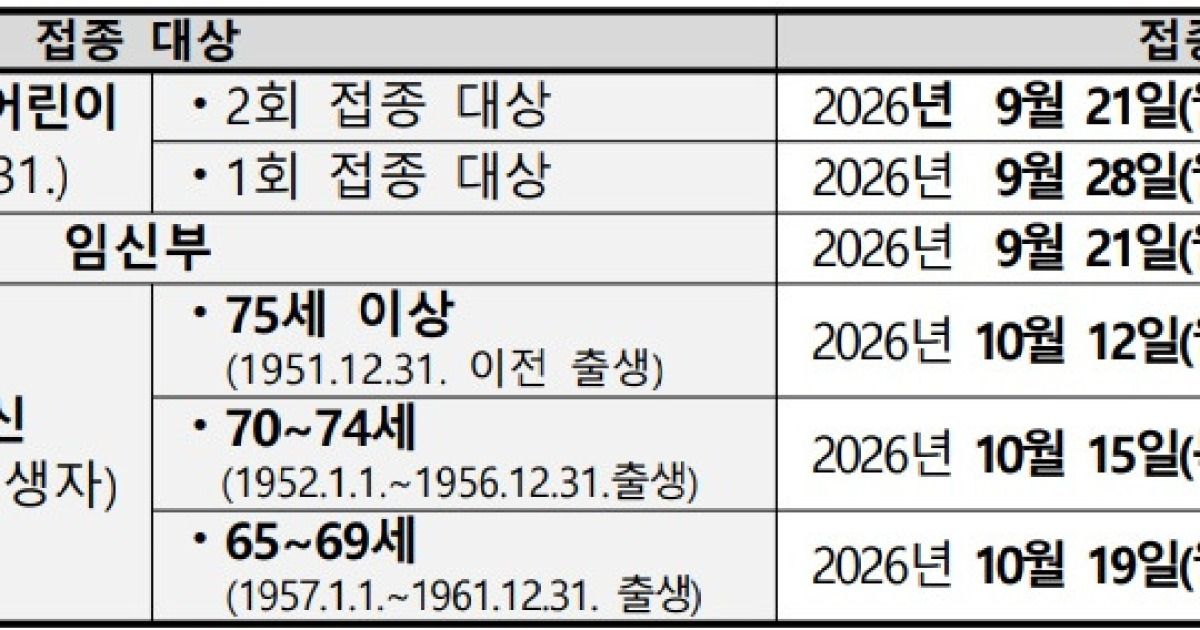
- Vaccinations begin on September 21, 2026, rolling out sequentially for young children, school-aged students, and older adults through April 30, 2027.
- All state-supported programs utilize a trivalent influenza vaccine containing virus strains recommended by the World Health Organization.
Expanding Protection for School-Aged Children and Adolescents
The policy shift targets middle school-aged children to curb viral transmission within dense educational settings. By raising the age ceiling to 14 years old, health authorities aim to protect both the students and their vulnerable household contacts. KDCA Commissioner Lim Seung-kwan noted that widening the national immunization scope effectively lowers overall disease burden, hospital admissions, and mortality risks across high-risk demographics.
Unvaccinated children between six months and nine years old who are receiving a flu shot for the first time require two distinct doses administered four weeks apart to build adequate humoral immunity.
Phased Rollout Schedule Across Designated Healthcare Providers
The campaign kicks off on September 21, 2026, focusing on pregnant individuals and young children aged six months to under nine years who require a two-dose series. One-dose regimens for eligible children up to 14 years old start on September 28, 2026.
Adults aged 65 and older follow beginning October 12, 2026, with the oldest cohorts prioritized first. To maximize public health efficiency, the KDCA recommends the simultaneous administration of seasonal influenza and COVID-19 vaccines for seniors. Citizens can receive their injections regardless of residential jurisdiction at any of the approximately 23,000 contracted private medical clinics nationwide or local public health centers.
Vaccine Composition and Clinical Efficacy Considerations
The 2026–2027 seasonal immunization utilizes a trivalent formulation incorporating specific viral antigens matched to projections from global surveillance networks. Inoculated individuals typically generate protective neutralizing antibodies approximately two weeks post-injection. While real-world effectiveness fluctuates annually based on antigenic drift and individual immune status, epidemiological data confirms that vaccination substantially reduces severe morbidity and hospitalization rates.
Individuals not covered under the national free support program can still receive the vaccine out-of-pocket at certified clinical facilities. Because regional municipalities frequently operate supplementary subsidy programs, patients are advised to verify local health authority guidelines.
*Disclaimer: The information provided in this article is for educational and scientific communication purposes only and does not constitute medical advice. Always consult with a qualified healthcare provider regarding any medical condition, diagnosis, or treatment plan.*
Related reading