
Kneecap‘s Glastonbury Set Ignites Debate Amidst Political and Legal scrutiny
Table of Contents
- Kneecap’s Glastonbury Set Ignites Debate Amidst Political and Legal scrutiny
- Controversy and Political Backlash
- Legal Battles and On-Stage Statements
- BBC’s Broadcasting Dilemma
- Performance Highlights
- Key Details of Kneecap’s Glastonbury Performance
- Evergreen Insights: The Intersection of Music and Politics
- Frequently Asked Questions About Kneecap and the Glastonbury Controversy
- What genre of music does Kneecap perform?
- Has Kneecap faced controversy before?
- what is the potential impact of the terrorism charge on Kneecap’s future performances?
- How does this controversy compare to other instances of censorship in music?
- What are the long-term implications for the BBC’s coverage of politically charged performances?
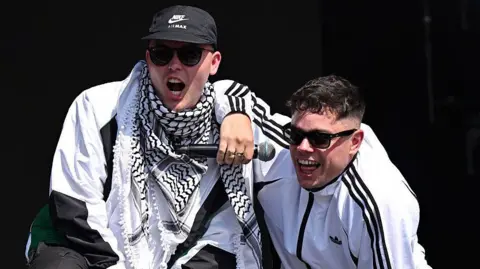
The Glastonbury Festival’s West Holts stage became a battleground of music and politics as belfast rap group Kneecap delivered a charged performance,directly challenging Prime Minister Sir Keir starmer with explicit chants. The Irish-language band has been under intense scrutiny following terrorism charges against one of its members.
Controversy and Political Backlash
The appearance of Kneecap at glastonbury followed recent headlines regarding rapper Liam Óg Ó hAnnaidh, also known as Mo Chara. He faces a terrorism offense for allegedly displaying a Hezbollah flag at a concert the previous year, a charge he denies. According to UK law, support for proscribed organizations can carry severe penalties including imprisonment.
Last week, Sir Keir Starmer publicly stated that Kneecap’s performance at the festival was “not appropriate,” adding fuel to the already fiery debate. On stage, the band responded by thanking Glastonbury for their continued support, emphasizing that the “prime minister of your country, not mine, said he didn’t want us to play.”
Did You Know? Hezbollah was proscribed as a terrorist organization in the UK in 2008.
Legal Battles and On-Stage Statements
Ó hAnnaidh is currently on bail following a court hearing in London just two weeks prior to the festival. During the set, the rapper, wearing a Palestinian keffiyeh, proclaimed, “Glastonbury, I am a free man!” His bandmate Naoise Ó Cairealláin, known as Móglaí Bap, described the case as “a trumped up terrorism charge,” drawing parallels to past injustices against Irish people within the British legal system.
Ó Cairealláin urged fans to attend Ó hAnnaidh’s next court appearance at Westminster Magistrates’ Court in August, rallying support for their bandmate amidst the ongoing legal challenges.
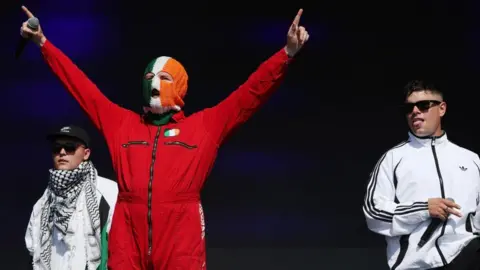
BBC’s Broadcasting Dilemma
Kneecap’s Glastonbury performance presented a complex challenge for the BBC, forcing them to navigate impartiality guidelines and offensive language concerns. While the set was not live-streamed, the broadcaster intended to provide highlights on demand later on Saturday.
A BBC spokesperson stated, “Whilst the BBC doesn’t ban artists, our plans ensure that our programming meets our editorial guideline. We don’t always live stream every act from the main stages and look to make an on-demand version of Kneecap’s performance available on our digital platforms, alongside more than 90 other sets.”
During the performance, Ó hAnnaidh acknowledged the presence of Palestinian flags in the audience, quipping that “the BBC editor is going to have some job,” highlighting the tightrope the broadcaster was walking.
Pro Tip: Broadcasters often use a delay of several seconds on live broadcasts to censor inappropriate language or content.
Performance Highlights
Despite the controversies, Kneecap’s set was described as a high-energy, fast-paced display of dance-rap, drawing one of the largest crowds to the West Holts stage at this year’s festival. The group’s ability to blend political commentary with engaging music resonated with many attendees.
Did You Know? Glastonbury Festival hosts over 200,000 attendees each year, making it one of the largest music festivals in the world.
Key Details of Kneecap’s Glastonbury Performance
| Aspect | Details |
|---|---|
| Band | Kneecap |
| Stage | West Holts |
| Controversy | PM’s disapproval, terrorism charge against member |
| BBC Coverage | Highlights on-demand, no live stream |
| Key Moment | Band criticizing PM, member declaring “I am a free man!” |
Evergreen Insights: The Intersection of Music and Politics
The controversy surrounding Kneecap’s Glastonbury performance underscores the enduring relationship between music and political expression. Throughout history,artists have used their platforms to challenge authority,voice dissent,and advocate for social change. from Woody Guthrie’s protest songs during the Great Depression to Rage Against the Machine’s anti-establishment anthems, music has served as a powerful tool for political commentary.
Festivals like Glastonbury often become focal points for these expressions, providing a stage for artists to connect with audiences on both musical and political levels. The decisions made by broadcasters and festival organizers regarding which artists to platform reflect broader societal debates about free speech,censorship,and the role of art in shaping public discourse.
Frequently Asked Questions About Kneecap and the Glastonbury Controversy
What genre of music does Kneecap perform?
Kneecap performs Irish-language rap music, blending hip-hop beats with traditional Irish cultural elements.
Has Kneecap faced controversy before?
Yes,Kneecap has faced controversy related to their political views and lyrical content,notably concerning Irish nationalism and their stance on British politics.
what is the potential impact of the terrorism charge on Kneecap’s future performances?
The terrorism charge against Liam Óg Ó hAnnaidh could lead to restrictions on the band’s ability to travel and perform, depending on the outcome of the legal proceedings.
How does this controversy compare to other instances of censorship in music?
This situation echoes historical instances where artists faced censorship or blacklisting due to their political views, highlighting ongoing tensions between artistic freedom and societal norms.
What are the long-term implications for the BBC’s coverage of politically charged performances?
The BBC’s handling of Kneecap’s performance may set a precedent for how the broadcaster approaches similar situations in the future, balancing its commitment to impartiality with its role in showcasing diverse artistic voices.
Disclaimer: This article provides factual reporting and does not constitute legal advice. Consult with a legal professional for guidance on specific legal matters.
What are your thoughts on the intersection of music and politics? Share your opinions in the comments below!
