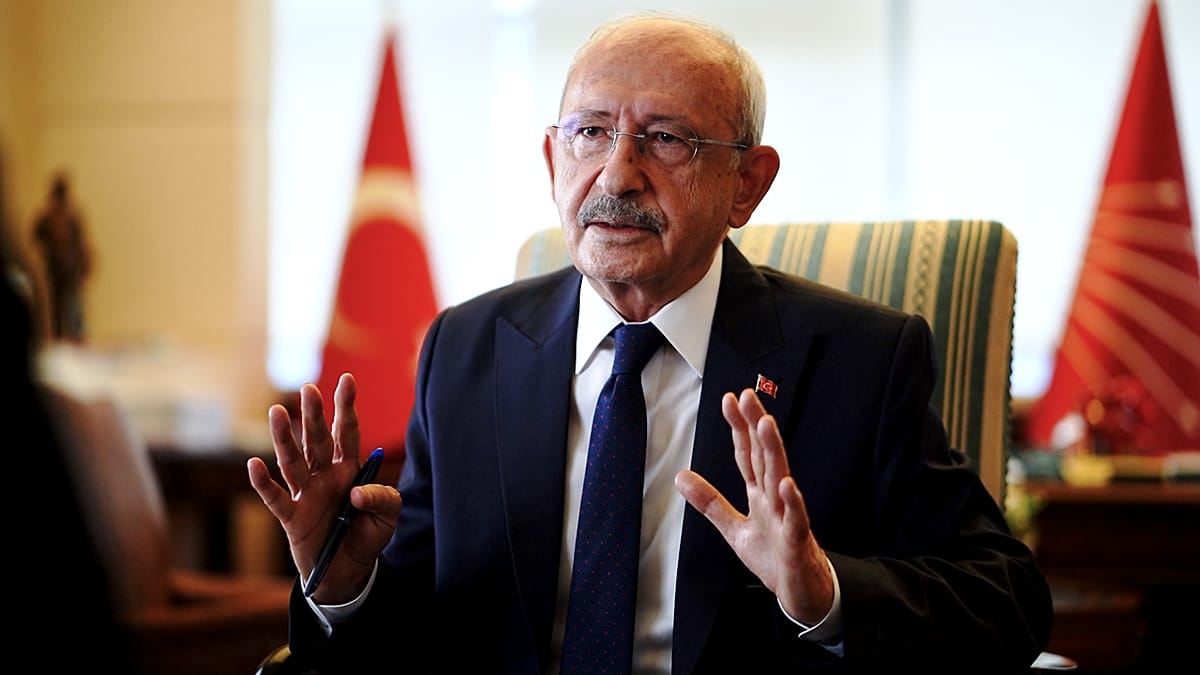
Kılıçdaroğlu Defends CHP Return and Opens Door to İmamoğlu Presidential Bid
Re-emerging in Turkish national politics following a court-ordered reinstatement, Republican People’s Party Chairman Kemal Kılıçdaroğlu stated in an exclusive September 2026 interview with Euronews that he remains open to backing suspended Istanbul Metropolitan Municipality Mayor Ekrem İmamoğlu in a future presidential bid, while maintaining that İmamoğlu is not formally a political prisoner.
The political landscape within Turkey’s primary opposition bloc shifted sharply following legal challenges and internal realignment. Kılıçdaroğlu, who returned to the CHP leadership after a court nullified the party’s November 2023 38th Ordinary Convention, addressed the contentious relationship between ongoing judicial investigations and future electoral candidacy. Speaking from the CHP headquarters to Euronews, Kılıçdaroğlu drew a distinct line between İmamoğlu’s legal battles and his viability as a challenger to the ruling government.
Separating Judicial Proceedings from Presidential Ambitions
According to the Euronews interview, Kılıçdaroğlu rejected the characterization of İmamoğlu as a political prisoner, asserting that the mayor’s detention stems from specific municipal corruption allegations rather than his political views. At the same time, Kılıçdaroğlu reaffirmed his opposition to the initial detention itself, noting that while public officials must always be prepared to account for their administrative actions, pre-trial detention in this instance was unwarranted.
This nuanced stance builds upon statements Kılıçdaroğlu previously made during a live broadcast on Sözcü TV, where he emphasized that the Republican People’s Party operates through institutional, democratic processes rather than autocratic selection. In that appearance, Kılıçdaroğlu noted that the party’s presidential nominee could ultimately be İmamoğlu or another qualified candidate chosen by competent internal bodies.
“The candidate will be determined by the competent bodies when the time comes,” Kılıçdaroğlu stated during his Sözcü TV appearance, highlighting the party’s traditional culture of debate. “It could be İmamoğlu, or it could be someone else. There are many potential candidates.”
Building Opposition Coalitions for Electoral Viability
Looking ahead to future national ballots, Kılıçdaroğlu emphasized that any successful challenge against the ruling Justice and Development Party requires broad-based cooperation across the political spectrum. Citing the mathematics required to cross the threshold in national voting, Kılıçdaroğlu stressed the necessity of formal alliances.

When questioned about potential coordination if İmamoğlu’s legal impediments are cleared and he emerges as a presidential contender, Kılıçdaroğlu indicated a willingness to engage in dialogue. Securing complex political coalitions and protecting institutional governance requires rigorous administrative coordination.
Kılıçdaroğlu acknowledged that recent departures—including Özgür Özel and associated figures establishing a new political movement—introduce structural friction, conceding that the division will cause a temporary loss of party strength. However, he expressed confidence that the opposition base will absorb the realignment over time.
Navigating Legal Frameworks and Municipal Governance
The intersection of Turkish municipal administration and high-stakes national politics continues to generate intense debate among legal scholars and civil society organizations.

Kılıçdaroğlu noted that during his own political career, he routinely submitted to judicial processes and appeared before courts to answer allegations, maintaining that public servants must stand ready to account for every expenditure. Yet, he reiterated to Euronews that judicial investigations should not preclude elected officials from fulfilling their administrative mandates while due process runs its course.
As Turkey’s opposition parties realign ahead of upcoming electoral cycles, the durability of these newly formed political coalitions and the resolution of pending court cases will dictate the primary contours of the nation’s political future. The path to establishing a unified front against the current administrative regime hinges on whether opposition leaders can successfully bridge institutional divisions before voters return to the ballot box.