
Ketamine Crisis: How Drugs are Sold Like Amazon Products Online
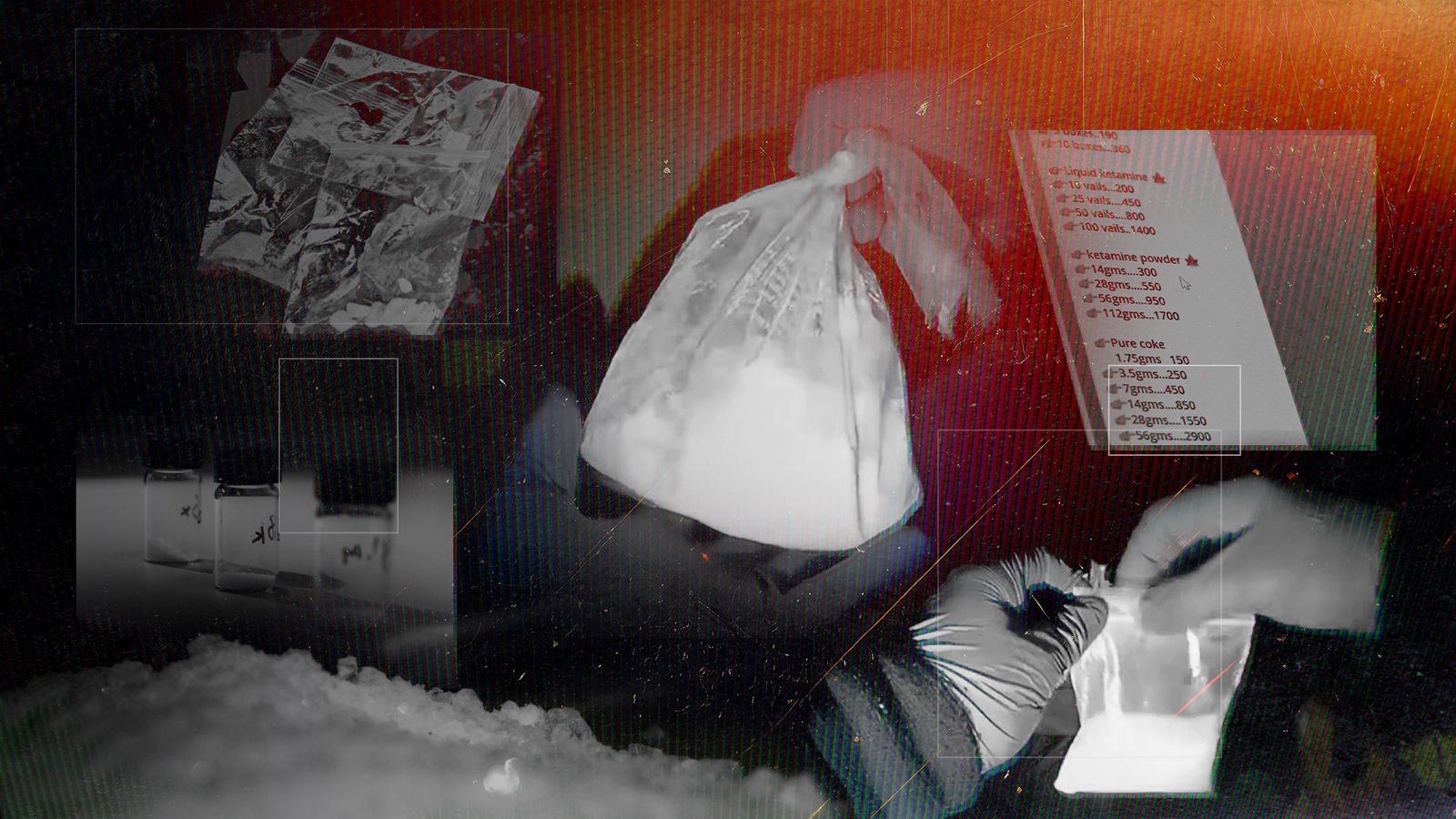
A social media investigator with Greater Manchester Police (GMP) demonstrated to Sky News how easily ketamine can be purchased online, mirroring the ease of buying legitimate goods on platforms like Amazon. The revelation comes as police forces across the country grapple with a surge in ketamine use, including among children as young as ten.
“It’s effectively run like a legitimate business in the way that Amazon sells legitimate items,” the investigator, part of a two-officer team specializing in tracking online drug sales, told Sky News. He explained that criminals are utilizing platforms like Snapchat, Telegram and WhatsApp to evade traditional policing methods. “It’s basically trying to catch up with criminals. If you place it in terms of cars, criminals are driving around in sports cars and things like that,” he said. “Police are driving round in Fiestas and Astras… But we only have to be lucky one day, they have to be lucky every day.”
The increasing accessibility and low cost of ketamine are driving factors in its rising popularity, particularly among young people, according to Detective Superintendent Joseph Harrop, who leads GMP’s serious organised crime division. “I think one of the issues is that it’s readily available and it’s really cheap, which is why I think it’s attractive to children and young people,” Harrop stated. “There is a worrying trend that younger and younger children are using it. We’ve got children as young as 10, either with ketamine or involved in the supply of ketamine.”
Beyond domestic use, GMP has observed organised crime groups profiting by exporting ketamine to countries with stricter regulations. In the financial year prior to 2025, GMP seized 50kg of the drug, a figure Harrop believes increased substantially as the force prioritized tackling ketamine supply. Seizures have risen “exponentially,” accompanied by a “massive rise” in intelligence gathered on the drug, he added.
The shift to online sales presents unique challenges for law enforcement. Traditional intelligence streams are disrupted by the anonymity afforded by the internet. “You’ve not got that traditional street supply,” Harrop explained. “So that does impact on some of our intelligence streams. We see all online, so there’s a sense of anonymity, and you’ve kind of got to get behind another layer before you can see who’s truly involved, but we’ve adapted to that.”
GMP’s adaptation includes tracking online “stores” curated by drug dealers, complete with menus, customer reviews, and even perks like free sweets included with purchases. Transactions are often conducted using cryptocurrency, offering a degree of anonymity, and drugs are delivered via post rather than couriers. When investigators identify an account, they flag it to the platform owners, with varying degrees of success. “Some companies are brilliant,” the investigator said. “Within 24 hours they’ll get back to me… We agree and they’ll remove that account.” Others are less responsive.
A recent dawn raid in Salford, conducted during a nationwide county lines week of action, resulted in the arrest of two men linked to the supply of ketamine, alongside other drugs like cannabis, cocaine, and MDMA. The officer in charge of the warrant noted the prevalence of party drugs in areas with large student and young professional populations. “Notice multiple people that are known to us, continuously supplying drugs. We’re working hard to disrupt this criminality, executing lots of warrants and getting these guys inside and remanded,” he said. “So with ketamine, it’s a drug well-used by students, so the younger target market here is rife.”
GMP is too focusing on harm reduction, collaborating with Manchester Drug Analysis and Knowledge Exchange (Mandrake), England’s first publicly-funded drug testing facility. Samples seized during raids are sent to Mandrake for analysis, with the results shared with police, councils, and health bodies to issue public warnings. In the last 12 months, ketamine has been the second or third most frequently submitted sample to Mandrake, according to Dr. Oliver Sutcliffe, who leads the team.
Recently, Mandrake issued a public health warning regarding ketamine contaminated with medetomidine, a potent sedative used in veterinary medicine. Dr. Sutcliffe demonstrated that visually identical samples of ketamine could vary significantly in purity, with some containing the dangerous contaminant. “It’s an anaesthetic and if you combine that with another aesthetic, then what you get is a synergistic effect. So that enhances the sedation,” he explained. “And that potentially might put you in positions where if you’re more sedated, you might have an accident.”
Reflecting a shift in approach, Harrop described a recent case where, instead of pursuing prosecution, GMP sent a recovered powder to Mandrake for testing following a near-fatal overdose. “You can’t arrest your way out of people using drugs,” he said. The results of that test are pending. Sky News reported on the GMP’s efforts on March 22, 2026.