
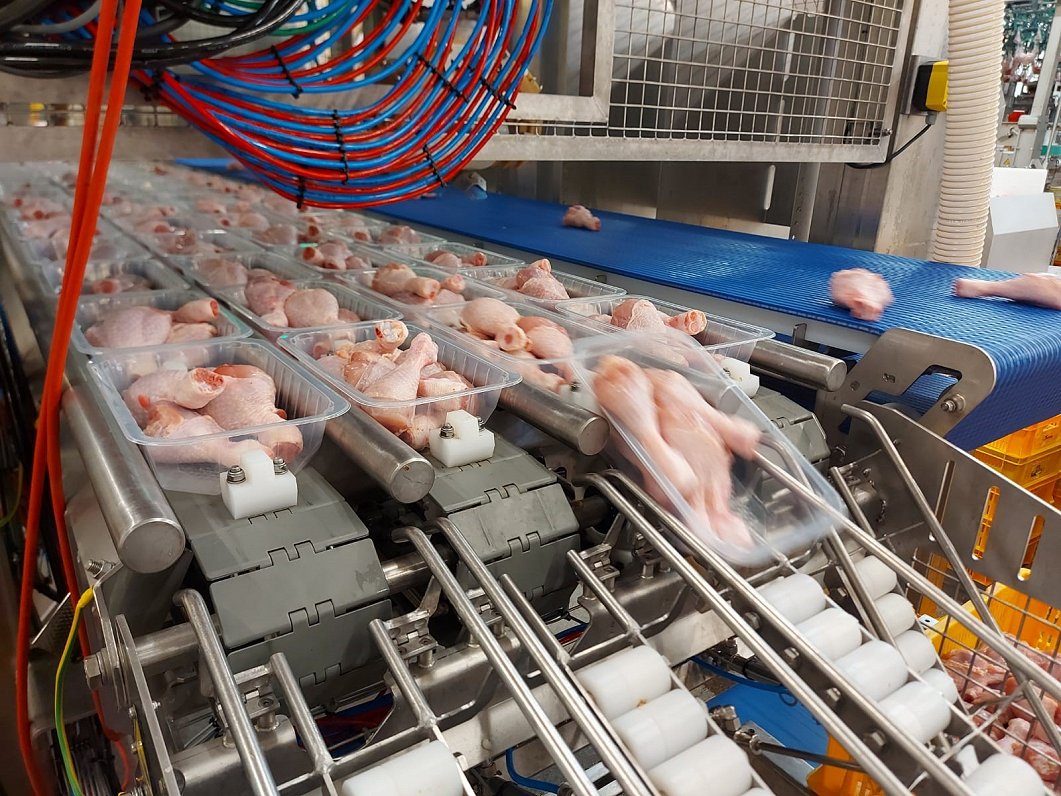
Europe’s poultry meat market is experiencing a sustained deficit, now entering its second year, according to Andrius Pranckevičius, CEO of Ķekava Foods, a leading Latvian poultry producer. The shortfall is driven by widespread avian influenza outbreaks, the adoption of “slow-growing” farming practices in some countries, and limited capacity for rapid expansion of production facilities, Pranckevičius told the LETA news agency.
The persistent supply issues have kept poultry prices elevated across Europe, remaining higher in both 2024 and 2025 than average levels seen over the preceding six to seven years. Simultaneously, demand continues to grow at a steady rate of approximately 3-4% annually, exacerbating the market pressures, Pranckevičius stated.
Ķekava Foods, formerly known as Putnu Fabrika “Ķekava,” completed a reorganization and rebranding in early 2026, according to a report by 1188.lv. The restructuring, initially planned for completion by July 2025, consolidated the company and its affiliated businesses under the new name, Ķekava Foods.
Despite the broader market challenges, Ķekava Foods is reporting a positive financial performance for the first half of its 2025/2026 financial year, which began in July 2025. Pranckevičius indicated the company is currently operating with a profit, with key performance indicators exceeding initial projections, particularly in broiler production.
A significant factor contributing to Ķekava Foods’ success is lower feed costs. Grain prices have fallen compared to the previous two years, resulting in competitive feed prices. Crucially, all feed used by Ķekava Foods is sourced domestically from its own feed production facility in Bauska, Latvia.
Favorable energy prices are also bolstering the company’s financial position. Gas prices have remained relatively stable, and even decreased in the previous month. While labor costs are increasing, Pranckevičius characterized the overall business environment as positive.
Looking ahead, Ķekava Foods anticipates continued stability in costs, at least until the new harvest season in August or September. The company has already secured most of its grain needs through purchases and long-term contracts, mitigating the risk of price increases. The price of soy, a non-local component, is also stable, further aided by the European Commission’s decision to postpone a planned tax on soy imports until January 1, 2026.
The European poultry market’s deficit is multifaceted. In addition to avian influenza, which saw cases double in Europe in the autumn of 2025 compared to the previous year, the rise of “slow-growing” initiatives is impacting supply. Some countries, including the United Kingdom, the Netherlands, and Denmark, are requiring producers to raise broilers for a longer period, exceeding standard cycles.
While proponents of “slow-growing” methods cite animal welfare concerns, Pranckevičius questioned the evidence supporting these claims. He noted that the approach reduces the amount of meat produced per unit of land, further tightening supply. Latvia, along with other Baltic states, has not adopted these practices.
The limited capacity to build new poultry farms in densely populated areas of Europe is also contributing to the supply constraints. Ķekava Foods, as a member of the European Poultry Association, has discussed these challenges at industry conferences, with a consensus emerging that the current situation is unsustainable.
Demand for poultry meat remains robust, growing at a consistent rate of 3-4% annually. This equates to approximately 400,000 tonnes of additional demand each year across the European Union, a figure ten times greater than Ķekava Foods’ total annual production of around 40,000 tonnes.
Consumers are increasingly prioritizing poultry produced without antibiotics. Ķekava Foods was among the first companies in the Baltic Sea region to initiate raising poultry without antibiotics in 2017, a practice that now serves as a key selling point. This is particularly valued by retailers like Maxima, which offers products without antibiotics under its “Well Done” brand.
Demand is also growing for convenient, ready-to-eat or ready-to-cook poultry products. Ķekava Foods is responding by continuously innovating and introducing two to three new products each year, including seasonal offerings for grilling and the holiday season.
While price remains a key factor for consumers, local origin and quality are also highly valued. Ķekava Foods leverages its Latvian origin and commitment to antibiotic-free production to appeal to these preferences. Recent reports of salmonella contamination in Polish poultry products have further heightened consumer awareness of origin and safety.
The company maintains strong relationships with retailers across Latvia, including Rimi, Maxima, and Lidl, as well as smaller chains. A memorandum of understanding regarding pricing was recently signed, but Pranckevičius indicated it has not significantly impacted the company’s negotiations with retailers, which are primarily driven by market forces.
Looking ahead, Ķekava Foods is considering investments in new broiler farms to address the limited domestic supply of poultry. The company is currently evaluating potential locations, but acknowledges the challenges of building new facilities in Latvia. Recent investments have focused on upgrading existing infrastructure, including electrical systems, water supply, gas connections, freezing capacity, and processing equipment.
The largest challenge facing poultry producers in 2026, Pranckevičius stated, is understanding the new equilibrium between supply and demand. While Ķekava Foods is currently performing well, the volatility of sales prices remains a key concern. The company is prepared for potential market fluctuations, but the long-term outlook remains uncertain.
