
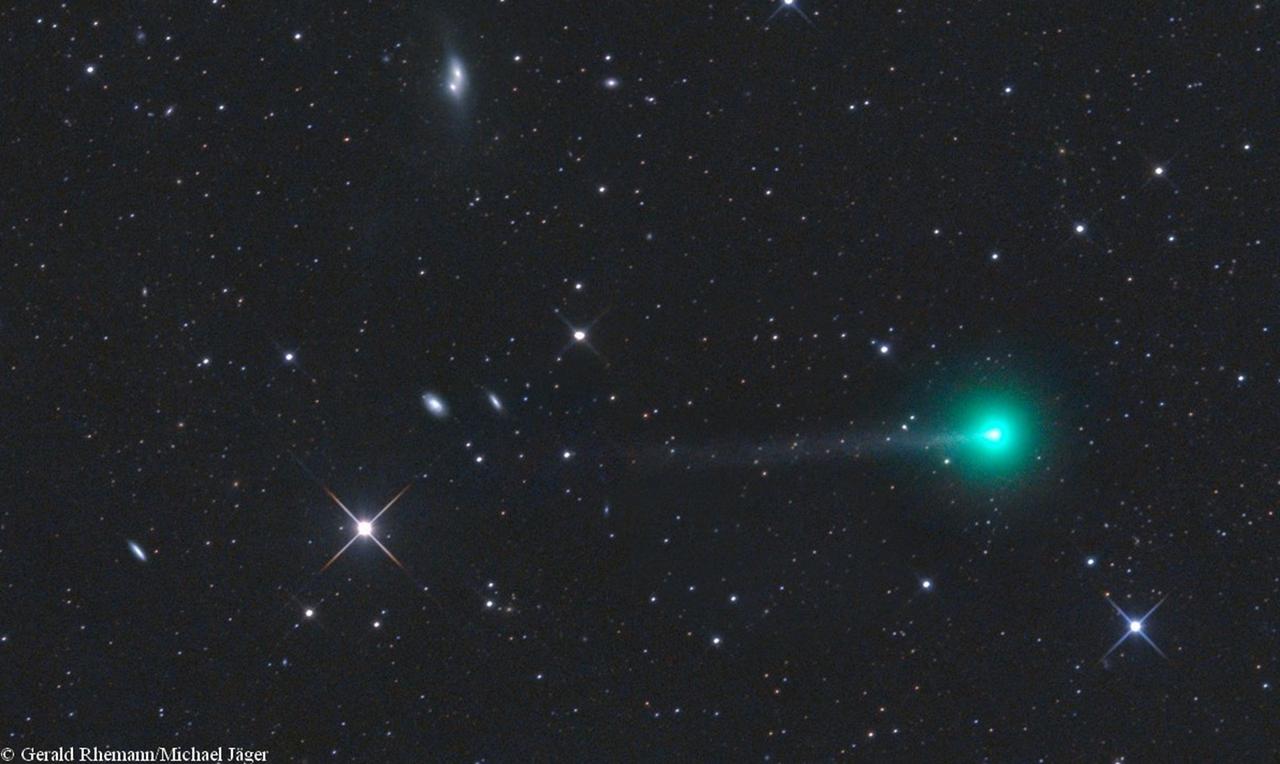
Kamikaze Comet Approaching Sun May Break Apart
Astronomers are monitoring a comet on a trajectories that will bring it extremely close to the Sun, with models indicating a high probability of fragmentation during perihelion. The object, classified as a sungrazing comet, is expected to reach its closest approach to the solar surface within days, presenting a rare opportunity to observe the disintegration of a celestial body in real time.
Reports from scientific outlets indicate that the comet’s orbital path places it within the Roche limit of the Sun, where tidal forces exceed the structural integrity of the nucleus. As the object plunges into the solar corona, temperatures will rise sufficiently to vaporize ices and dust, creating a prolonged tail that may become visible to observers on Earth using appropriate solar filtration. The phenomenon has drawn attention from both professional observatories and amateur astronomy communities, who are coordinating efforts to document the event before the object is potentially lost.
Observational Constraints and Safety
While the prospect of witnessing a comet break apart offers significant visual interest, safety protocols remain paramount. Direct observation of the Sun without specialized equipment can cause permanent eye damage. Experts emphasize that any attempt to view the comet must utilize certified solar filters or projection methods that block harmful radiation. The visibility of the comet depends heavily on atmospheric conditions and the density of the debris cloud generated during the breakup.

Space-based assets, including solar observatories positioned at Lagrange points, are tracking the object continuously. These instruments provide data不受 atmospheric interference, capturing wavelengths that ground-based telescopes cannot detect. The combination of space and ground data allows researchers to reconstruct the comet’s composition and trajectory with higher precision than either method could achieve alone.
Scientific Implications of Fragmentation
Sungrazing comets belong to specific families, often sharing similar orbital elements that suggest a common progenitor. The Kreutz sungrazers, for example, are fragments of a much larger comet that broke apart centuries ago. When a member of this family approaches the Sun, the event provides data on the internal structure of cometary nuclei. Understanding how these bodies respond to extreme thermal and gravitational stress helps refine models of solar system formation and evolution.
If the comet survives perihelion, it may emerge on a new orbital path, potentially becoming a periodic visitor. However, statistical analysis of similar objects suggests that survival is unlikely for comets penetrating this deeply into the solar atmosphere. The majority of sungrazers observed in recent decades have disintegrated completely, leaving behind trails of dust that eventually dissipate or merge with the solar wind.
Coordination Among Research Teams
International astronomy groups are sharing telemetry to ensure comprehensive coverage of the event. Data sharing agreements allow institutions to pool resources, reducing gaps in observation caused by Earth’s rotation or weather patterns. This collaborative approach ensures that if the breakup occurs during a window when one observatory is offline, another facility may capture the critical moments.
The focus remains on capturing the light curve of the object as it fades. A sudden drop in brightness often signals structural failure, while a gradual decline may indicate steady ablation. These metrics are essential for distinguishing between different breakup mechanisms, such as thermal fracture versus tidal disruption.
Next Steps in Monitoring
Observation schedules are locked in through the expected time of perihelion. Teams have allocated telescope time specifically for this window, prioritizing high-cadence imaging to capture rapid changes in the comet’s morphology. Post-event analysis will initiate immediately after the closest approach, regardless of whether the object survives.
Research teams are prepared to issue updates based on the initial data downlink from solar monitoring satellites. Until those telemetry packets are processed and verified, the exact outcome of the encounter remains uncertain. Observatories will maintain tracking protocols until the object is confirmed lost or emerges on the outbound leg of its orbit.