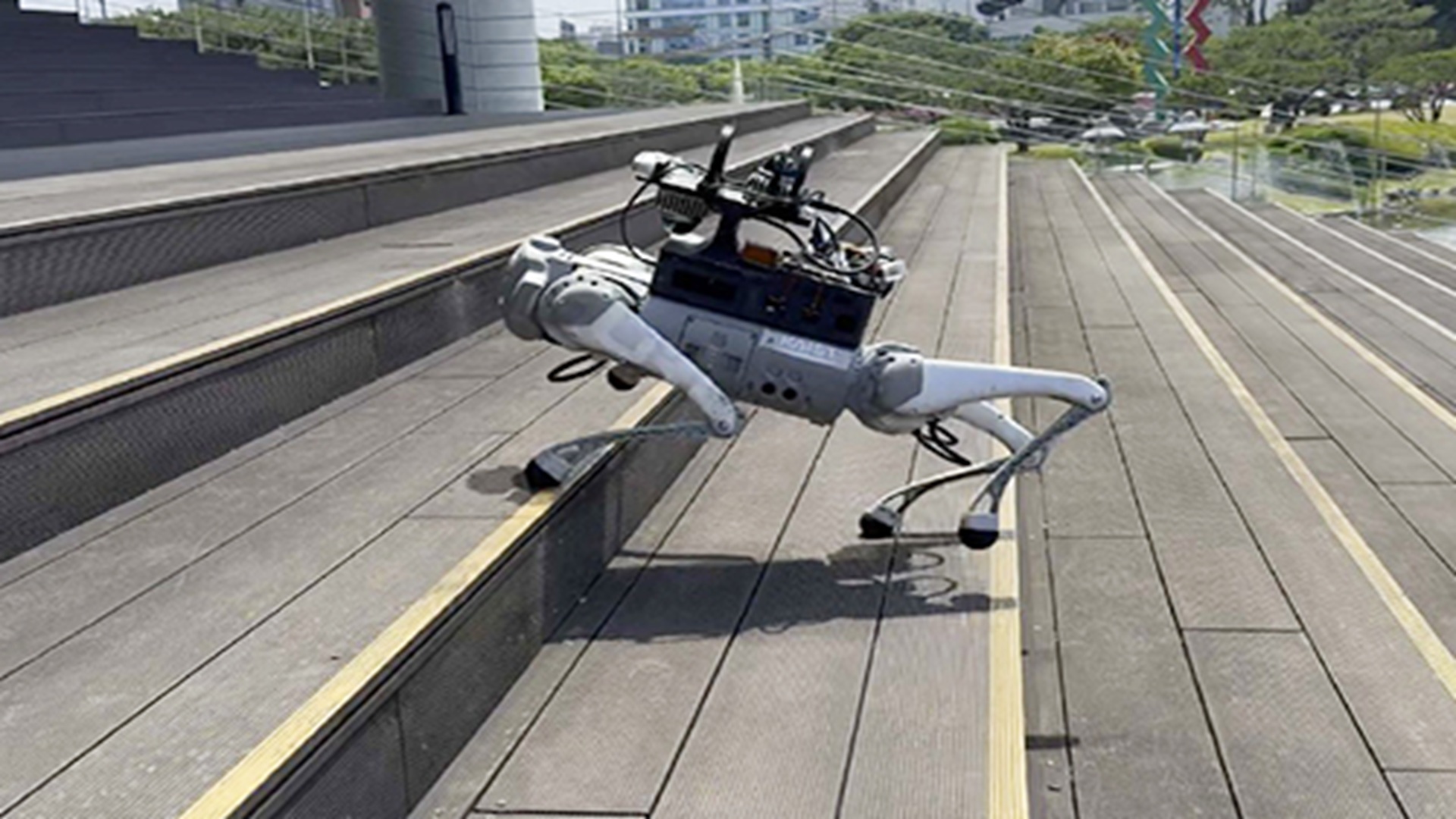
KAIST’s DreamWaQ++ Robot: AI-Powered Animal-Like Terrain Navigation
KAIST researchers have developed DreamWaQ++, a quadruped robot utilizing integrated vision, LiDAR, and AI to navigate complex terrains with animal-like agility. By processing real-time environmental data, the robot solves the “blind locomotion” problem, offering a breakthrough in autonomous mobility for industrial, cinematic, and search-and-rescue applications.
As the industry prepares for the spring festival circuit and the inevitable rush of tech-integrated cinema, the arrival of DreamWaQ++ isn’t just a win for robotics; it’s a disruption of the production pipeline. For decades, the “animal” in a high-budget feature was either a temperamental live creature, a clumsy animatronic, or a post-production CGI asset that drained the backend gross through endless rendering cycles. We are now entering an era where the physical prop possesses the cognitive autonomy of a living thing.
The business problem here is clear: the volatility of live animal performers. Between the stringent regulations of the American Humane Association and the astronomical costs of specialized trainers, studios are desperate for a scalable, predictable alternative. However, introducing autonomous AI into a closed set creates a new nightmare for regional event security and A/V production vendors who must now manage the kinetic risks of a robot that “thinks” for itself in real-time.
The Mechanical Shift: Redefining the Virtual Production Pipeline
The integration of LiDAR and vision-based AI represents a pivot from scripted movement to emergent behavior. In the current SVOD landscape, where streaming platforms like Netflix and Disney+ demand “hyper-realism” to maintain brand equity, the ability to capture a robot navigating a real forest or rocky cliff without the “uncanny valley” jitter of traditional remote-control rigs is a game-changer. This isn’t just about a robot walking; it’s about the intellectual property of movement.
Looking at the official research data from KAIST, the DreamWaQ++ outperforms previous iterations by synthesizing sensory input into a unified navigation map. In the world of high-finish production, this means the “digital double” is no longer just a post-production fix. We are seeing a convergence where the physical stunt double and the CGI asset merge into a single, autonomous entity.
“The industry is moving toward a ‘zero-latency’ production model. When the hardware can perceive the environment as well as a biological entity, we stop filming ‘scenes’ and start capturing ‘behaviors.’ This fundamentally alters the role of the cinematographer and the stunt coordinator.” — Marcus Thorne, Senior Technical Director at a leading VFX House.
This shift creates a massive vacuum in the legal sphere. Who owns the “performance” of an AI-driven robot? If a robot’s autonomous navigation creates a visually stunning, unplanned sequence, does that fall under the director’s vision or the software’s algorithmic output? These are the types of nuances that keep elite IP lawyers and entertainment litigators awake at night, as the industry grapples with copyright infringement in the age of generative physical movement.
How Autonomous Robotics Disrupts the Production Economy
To understand the scale of this shift, we have to look at the logistical burden of traditional creature effects. Based on industry benchmarks reported by Variety and The Hollywood Reporter, the cost of maintaining live animal troupes on location can exceed the budget of several mid-tier indie features. The DreamWaQ++ model suggests a future where the “animal” is a leased asset with a predictable daily rate.
- The Death of the ‘Clean Plate’: Traditionally, robots were filmed in isolation and composited later. With real-time terrain adaptation, robots can now interact with human actors in a single take, drastically reducing the require for expensive post-production “clean plates” and reducing the overall production budget.
- The Insurance Pivot: The risk profile of a set changes when you replace a unpredictable animal with a LiDAR-equipped machine. While the risk of a “bite” vanishes, the risk of a systemic AI failure leading to equipment damage increases, forcing a rewrite of standard production insurance policies.
- Syndication and Asset Reuse: Unlike a live animal that ages or a CGI model that looks dated within two years, an autonomous robotic asset can be upgraded via software. This allows studios to maintain visual consistency across a franchise’s backend gross for decades.
When a production experiences a catastrophic failure—say, a prototype robot malfunctions and destroys a million-dollar set piece—the fallout isn’t just financial; it’s a PR disaster. In these moments, the studio’s immediate move is to deploy crisis communication firms and reputation managers to frame the incident as a “technological leap” rather than a safety lapse.
The New Creative Zeitgeist: From Puppetry to Partnership
We are witnessing a transition from the era of the “puppet master” to the era of the “curator.” The director no longer tells the robot where to step; they tell the AI what the *intent* of the scene is, and the DreamWaQ++ determines the most efficient path to achieve that emotion. This is a fundamental shift in the creative hierarchy of the set.
“We are no longer animating; we are directing intelligence. The challenge isn’t making the robot look real—it’s making the robot’s ‘choices’ perceive cinematic.” — Elena Rossi, Award-winning Creature Designer.
As we track the social media sentiment across platforms like X and LinkedIn, the discourse is shifting from “will robots replace actors” to “how will robots expand the canvas of the possible.” The brand equity of a studio now depends on its ability to integrate these “intelligent assets” without losing the human soul of the story. The winners will be those who can bridge the gap between the ruthless business metrics of AI efficiency and the ephemeral magic of cinema.
The arrival of the DreamWaQ++ is a signal that the physical world is finally catching up to the digital one. As these machines move from the lab to the soundstage, the industry must evolve its legal, logistical, and creative frameworks to keep pace. Whether you are a showrunner eyeing a futuristic epic or a producer managing a complex global shoot, the need for vetted, high-tier professional support has never been more acute. From the legal architects securing the IP to the PR specialists managing the narrative, the World Today News Directory remains the definitive source for the professionals who turn these technological disruptions into cinematic gold.
Disclaimer: The views and cultural analyses presented in this article are for informational and entertainment purposes only. Information regarding legal disputes or financial data is based on available public records.