
JupiterS Birth Date Revealed, Rewriting Solar System History
Kyoto, Japan - Scientists have pinpointed the birth of Jupiter, resolving a decades-long mystery surrounding the formation of our solar system and the origin of ancient space rocks called chondrules. A new study, published August 25, 2025, in Scientific Reports, suggests Jupiter’s formation triggered a wave of chondrule creation, providing a crucial timeline for planetary development.
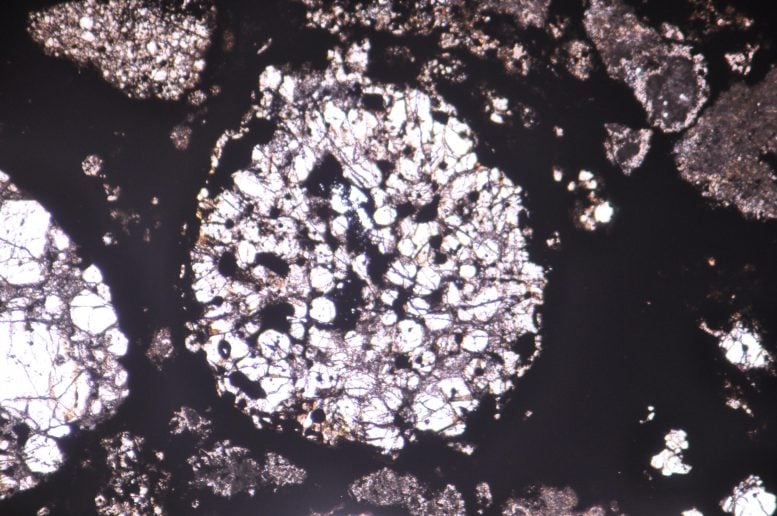
Chondrules – millimeter-sized, glassy spheres found within meteorites – are among the oldest materials in the solar system, predating the planets themselves. Their varying ages have puzzled researchers for years, challenging existing models of solar system formation. The research team, lead by Sin-iti Sirono and Diego Turrini, proposes that Jupiter’s rapid growth created violent collisions between planetesimals containing volatile compounds, initiating the widespread formation of these chondrules. However, the brief period of chondrule production linked solely to Jupiter’s birth doesn’t fully account for the diversity of chondrule ages observed.
The study indicates that the formation of Saturn, and possibly other giant planets, also sparked chondrule creation, explaining the range of ages found in meteorites. By analyzing chondrules of different ages,scientists can now trace the birth order of the planets and gain a deeper understanding of the dynamic processes that shaped our solar system. This research also has implications for understanding planet formation around other stars, suggesting similar violent processes may be common throughout the galaxy.
The work was supported by JSPS KAKENHI Grant Number 25K07383,the Italian Space Agency (ASI-INAF contracts 2016-23-H.0 and 2021-5-HH.0), and the European Research Council via the horizon 2020 Framework Program ERC Synergy “ECOGAL” Project GA-855130.
Reference: ”Chondrule formation by collisions of planetesimals containing volatiles triggered by Jupiter’s formation” by Sin-iti Sirono, and Diego Turrini, 25 August 2025, Scientific Reports. DOI: 10.1038/s41598-025-12643-x.
