Julia M. Zichello Uses Dead Starlings to Study Species Adaptation
Evolutionary biologist Julia M. Zichello received five dead starlings from the U.S. Department of Agriculture in 2014 to study the species’ rapid adaptation across North America, she writes in a new book excerpt published Saturday.
The birds arrived in a box labeled “Honey Baked Ham” after Zichello emailed the USDA Animal Control Unit requesting specimens. A wildlife specialist on the phone “cautiously (but professionally) sounded as though they didn’t understand why anyone would want these birds,” Zichello writes. “The starlings were, quite literally, trash.”
Discovering the Founder Effect
The founder effect, a process where a new population is established by a small subset of individuals, often reduces genetic variation. Zichello notes this effect in starlings, which originated from the roughly 100 birds Schieffelin released in Central Park. She studies how this limited genetic diversity shaped the species’ rapid expansion.
Mutation Creates Variation
Mutation acts as a creative force, generating new versions of genes that may be advantageous in a specific environment. Each time a new starling is born, a few novel mutations arise, which may be beneficial, harmful, or neutral, making each individual slightly different.
In the United States, it is not illegal to kill a starling without a permit, unlike most other bird species.
Zichello, an evolutionary biologist and author of “Bird on the Street: The Unnatural History of Starlings” (Columbia University Press, 2026), uses the specimens to investigate how the founder effect — the establishment of a new population by a small number of individuals — shaped the species’ genetic and physical diversity.
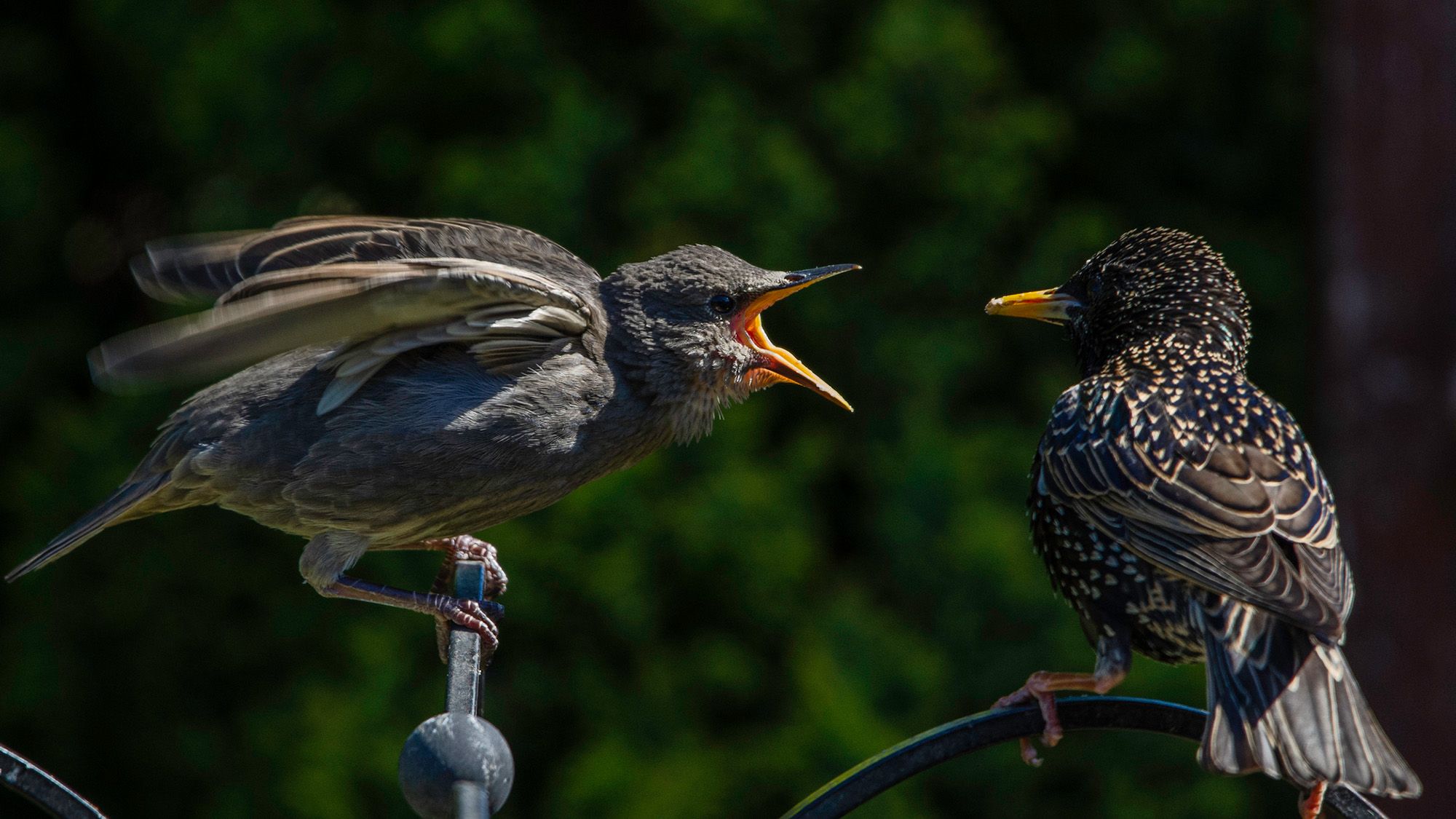
Eugene Schieffelin, chairman of the American Acclimatization Society, released around 100 European starlings (Sturnus vulgaris) in New York City’s Central Park in the late 19th century.
The birds spread across the continent within decades.
“It was evolution in a garbage bag,” Zichello writes of the shipment. She plans to dissect the birds, extract DNA, and preserve them as research specimens to quantify intraspecific diversity — the slight anatomical differences between individuals of the same species that signal evolutionary history.
“Determining the strength and contribution of each of these evolutionary forces to the genetic and physical variation we observe within a species is one of the most longstanding and fundamental questions in all of evolutionary biology,” Zichello writes.