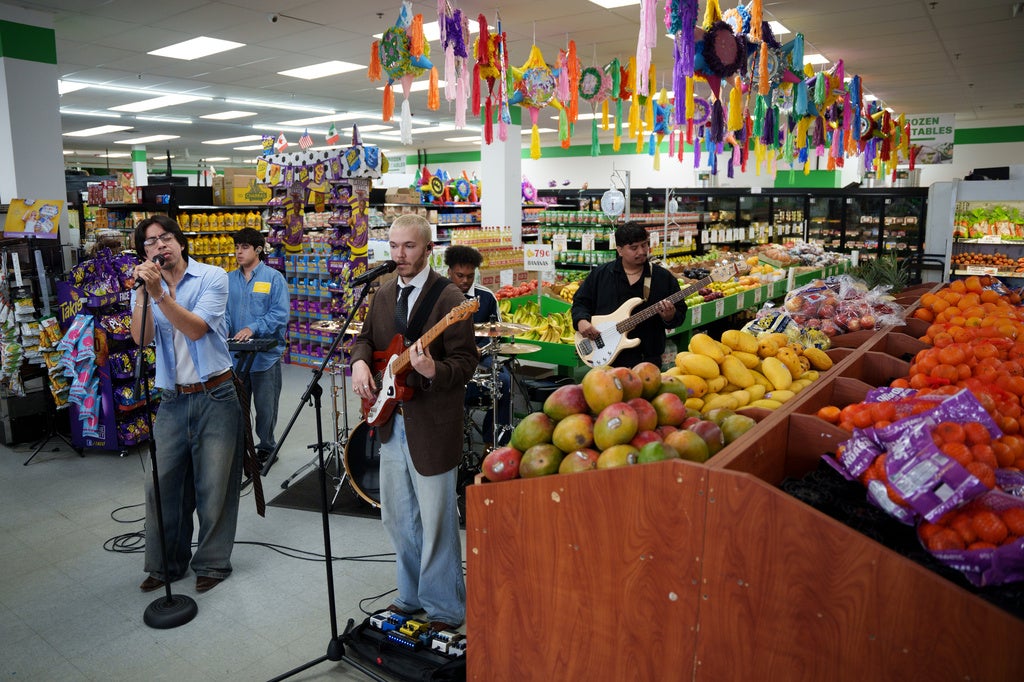
Jose Luis Aguilar Garcia Launches Tiny Desk-Inspired Concert Series at Fiesta Fresh Market
In New Castle, Delaware, Fiesta Fresh Market is redefining the boundaries of experiential retail through its “Mercadito Concerts.” Inspired by the lo-fi intimacy of NPR’s Tiny Desk series, co-owner Jose Luis Aguilar Garcia has transformed the grocery store’s produce aisle into a live music stage, capturing national attention through viral digital content that bridges the gap between community grocery shopping and independent music discovery.
The traditional retail landscape is currently facing a tectonic shift. As e-commerce continues to erode the necessity of the physical storefront, brick-and-mortar establishments are being forced to evolve from mere points of transaction into hubs of cultural significance. This is the era of “retailtainment,” where brand equity is no longer built solely on product availability or price competitiveness, but on the ability to curate unique, unrepeatable moments that drive organic social media engagement.
Fiesta Fresh Market’s pivot toward live performance is a masterclass in leveraging niche cultural aesthetics to build community loyalty. By installing a stage amidst the fruits and vegetables, the store has tapped into a specific brand of authenticity that high-budget, polished marketing campaigns often fail to replicate. The “Mercadito Concerts” series does not attempt to mimic the grandiosity of a stadium tour; instead, it embraces the raw, immediate energy of a local session, a move that resonates deeply with the current consumer preference for “authentic” and “unfiltered” digital content.
The “Tiny Desk” Blueprint and the Rise of Lo-Fi Branding
The influence of NPR’s Tiny Desk Concerts on this initiative cannot be overstated. For years, the music industry has watched as the “unplugged” and “intimate” formats have become the gold standard for showcasing true artistry. For a family-owned business like Fiesta Fresh Market, adopting this aesthetic provides a low-barrier entry into the content-to-commerce pipeline. They are not just selling produce; they are producing media.
When a brand decides to integrate live entertainment into its operational footprint, the transition from a retail model to a media-adjacent model requires sophisticated coordination. While the setting may appear casual, the logistical reality of hosting talent in a high-traffic grocery environment involves complex considerations of sound engineering, crowd control and safety. Organizations looking to replicate this level of engagement often find themselves sourcing specialized event management and production services to ensure that the musical experience does not disrupt the primary retail function of the space.
The success of these sessions is measured not just in foot traffic, but in the digital footprint left behind. As the Mercadito Concerts’ videos gain traction across social platforms, the store is effectively turning its produce section into a content studio. This creates a secondary revenue stream of attention, where the “product” being sold is the cultural vibe of the establishment, which in turn drives the sale of physical goods.
Cultivating Local Talent and the Micro-Agency Ecosystem
The Mercadito Concerts serve as a vital incubator for regional artists. The appearance of the bilingual alternative pop band Luna Luna in the produce aisle is a prime example of how these micro-stages provide high-value exposure for emerging talent. For an artist, the ability to perform in a setting that is being documented and distributed globally offers a unique form of syndication that traditional local venues may lack.
This intersection of retail and music creates a specialized demand within the entertainment sector. As these small-scale activations grow in frequency and complexity, the need for professionalized support becomes evident. We are seeing a rise in the necessity for talent agencies and artist management to navigate these unconventional performance opportunities, ensuring that local musicians are properly compensated and that their intellectual property is protected during these live-to-digital sessions.
- Brand Authenticity: Utilizing existing retail spaces to host culturally relevant events.
- Content Syndication: Converting live, in-store experiences into shareable digital assets.
- Community Integration: Strengthening the bond between local businesses and the creative class.
- Experiential ROI: Measuring success through a combination of social sentiment and physical foot traffic.
The economic implications for the local community are significant. When a local business becomes a cultural landmark, it creates a halo effect that benefits surrounding businesses, from local hospitality to service-based industries. However, as these “pop-up” cultural moments become more frequent, the legal and logistical frameworks surrounding them must also mature.
The Business of Authenticity: Scaling the Unconventional
As the Mercadito Concerts continue to garner national interest, the question for the industry becomes one of scalability. Can this model be replicated by larger grocery chains, or is its power derived specifically from its “small-business” soul? The risk for larger corporations attempting to mimic this trend is the “uncanny valley” of marketing—where a manufactured attempt at authenticity feels hollow and performative, ultimately damaging brand equity.

For Fiesta Fresh Market, the challenge will be maintaining the delicate balance between being a functional grocery provider and a cultural destination. Managing the influx of fans and digital creators requires a proactive approach to digital marketing and content strategy to ensure the brand narrative remains controlled and the retail experience remains seamless for the everyday shopper.
The Mercadito Concerts represent a broader shift in how we define “place.” In the digital age, a place is no longer defined by its physical coordinates alone, but by the shared experiences that occur within it. Whether This proves a produce aisle in Delaware or a studio in Washington, D.C., the most successful brands of the next decade will be those that understand how to curate culture as effectively as they curate their inventory.
As the lines between retail, media, and community continue to blur, businesses must prepare for a landscape where being “just a store” is no longer enough. To thrive, they must become creators, curators, and hosts. For those looking to navigate this complex intersection of commerce and culture, the World Today News Directory remains the premier resource for finding the vetted professionals—from legal experts to event producers—required to turn a simple idea into a cultural phenomenon.
*Disclaimer: The views and cultural analyses presented in this article are for informational and entertainment purposes only. Information regarding legal disputes or financial data is based on available public records.*