
The One Point Slam: A Tennis Experiment That Redefined Underdog Success
Melbourne, Australia – January 19, 2026 – The Australian Open isn’t just about Grand Slam titles and established stars anymore. This year, a revolutionary exhibition event, dubbed the “One Point Slam,” captivated audiences and challenged conventional notions of success in professional tennis.what began as an innovative concept hatched by Australian Open tournament director Craig Tiley, quickly evolved into a festivity of the underdog spirit, and a testament to the egalitarian potential within the sport.
Beyond the Baseline: The Genesis of a Groundbreaking Event
The One Point Slam,a novel addition to the Australian Open schedule,presented a compelling twist on traditional tennis. Rather than a multi-set match, the entire competition was decided by a single point. Players, including top-ranked professionals like Jannik Sinner, faced off in a high-stakes, winner-take-all scenario for a substantial prize pool. This format drastically reduced the impact of experience and ranking,leveling the playing field and opening the door for an improbable victory. The driving force behind the creation of the event, according to reports, was a desire to bridge the gap between the elite level of the sport and the passion of grassroots players .
Coco Gauff’s Unexpected Plea and the Rise of an Unlikely Champion
Perhaps the most poignant element of the story emerged before the competition even began. Two-time major singles champion Coco Gauff revealed that she didn’t want to win the One point Slam. In a display of remarkable sportsmanship, Gauff expressed a desire for an amateur player to claim the prize money, believing they would benefit more from a life-changing sum. This sentiment highlighted a growing awareness within the sport about accessibility and financial rewards within tennis.
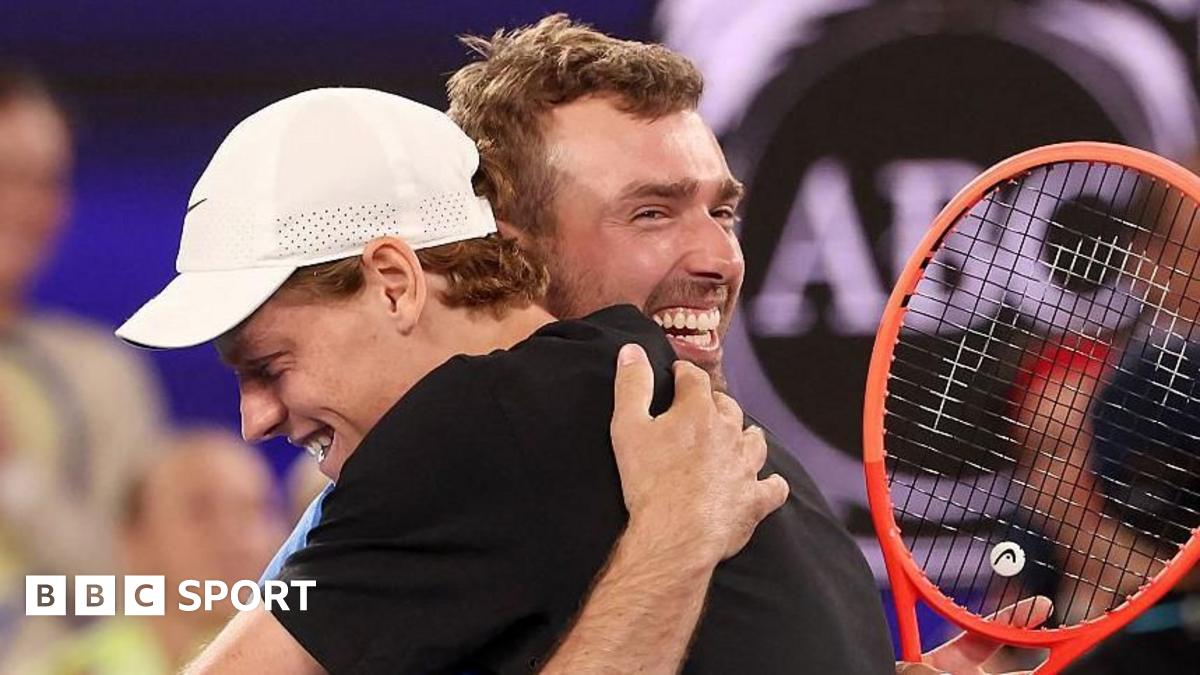
That wish, almost unbelievably, came true. Smith, an amateur player described as reserved and seemingly overwhelmed by the occasion, defied all expectations, navigating a field of seasoned professionals to emerge victorious. The BBC noted Smith was “genuinely lost for words” after each win, a testament to the shock and wonder of his improbable run . His calm demeanor, even while facing opponents like Sinner and competing for a substantial sum of money, became a defining narrative of the event. The win has dramatically altered his future prospects, with ownership of a home now within reach.
The Strategic brilliance of Craig Tiley and the Appeal of the Boom-or-Bust Format
The success of the One Point Slam is largely attributed to the vision of Craig Tiley, the Australian Open tournament director. Tiley conceived of an event that would inject excitement and unpredictability into the tournament, appealing to both die-hard tennis fans and a broader audience. The “boom-or-bust” nature of the single-point format created an electrifying atmosphere, attracting a nearly full arena and generating considerable buzz online.
The format proved to be a masterful stroke for several reasons:
- Increased Fan Engagement: The dramatic tension of a single-point match inherently draws viewers in, creating a compelling spectacle.
- Levelling the Playing Field: The format minimized the advantage held by higher-ranked players, allowing lesser-known competitors to shine.
- Financial Incentive: The substantial prize pool provided an added layer of motivation and risk for all participants.
- Positive PR for the Australian Open: The event generated meaningful media coverage and positioned the tournament as innovative and forward-thinking.
The Future of Tennis Innovation
The One Point Slam wasn’t simply a one-off spectacle; it represents a potential shift in how tennis events are conceived and presented. Tiley himself stated the concept “was a leveller between Grand Slams and grassroots” , suggesting a desire to make the sport more accessible and inclusive. The event’s success prompts the questions: Could similar “boom-or-bust” formats be implemented in other sports? Will we see more events designed to specifically empower underdog competitors?
The One Point Slam has demonstrated that innovation can revitalize interest in established sports, and that sometimes, all it takes is a single point to rewrite the narrative of success.
