
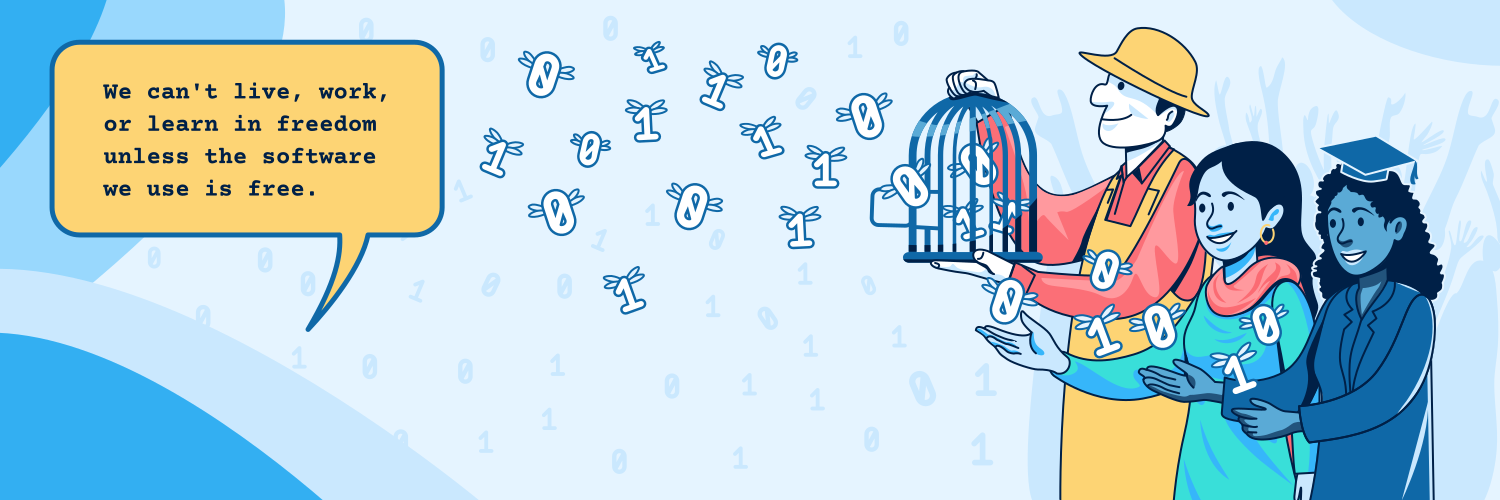
Join the FSF: 3 Days Left to Reach 100 New Members
Infrastructure Under Siege: The FSF’s 2026 Membership Drive and the Cost of Digital Sovereignty
The clock is ticking on the Free Software Foundation’s winter membership drive, with a hard deadline of January 16 to secure 38 recent associate members. While the public messaging frames this as a moral imperative for a “free society,” the underlying technical reality is far more pragmatic: the FSF is the primary maintainer of the legal and infrastructural guardrails that prevent proprietary lock-in from collapsing the open-source supply chain. Without the funding to maintain the GNU Licensing Lab and defend the Savannah infrastructure against increasingly sophisticated DDoS vectors, the ecosystem loses its central authority on compliance and freedom.
- The Tech TL;DR:
- Infrastructure Risk: The FSF’s Savannah hosting platform recently mitigated significant DDoS attacks; continued funding is required to scale mitigation bandwidth and maintain uptime for critical GNU projects.
- Compliance Bottleneck: The Licensing Lab remains the only authoritative body for GPL interpretation; corporate reliance on this free resource creates a single point of failure if underfunded.
- Supply Chain Security: The Free Software Directory acts as a verified whitelist for dependency management, crucial for avoiding proprietary backdoors in enterprise builds.
The narrative of “software freedom” often gets lost in ideological abstraction, but for a CTO managing a production environment, it translates directly to supply chain security and auditability. The FSF’s recent bulletin highlights a specific technical threat: the defense of the Savannah infrastructure from distributed denial-of-service attacks. In an era where code repositories are the new oil fields, the availability of these legacy systems is non-negotiable. When the FSF tech team mentions “protecting the infrastructure,” they are referring to the hardening of servers against layer-7 application attacks that target the very availability of the GNU toolchain. This isn’t just about philosophy; it’s about ensuring that the gcc compiler and core utilities remain accessible when proprietary alternatives might impose licensing fees or telemetry requirements.
Yet, the FSF cannot operate in a vacuum. The organization’s ability to maintain the Free Software Licensing and Compliance Lab is critical for enterprise adoption. Large-scale deployments often stumble over GPL compatibility and copyleft enforcement. Without the FSF’s legal engineering, companies risk massive liability or accidental IP leakage. This creates a specific triage scenario for enterprise IT: while the FSF provides the high-level legal framework, organizations often require immediate, localized assistance to audit their own codebases against these standards. This is where the gap between volunteer advocacy and corporate reality widens, necessitating the engagement of specialized software licensing compliance auditors who can translate FSF mandates into actionable internal policies.
“The sustainability of free software infrastructure is no longer just a community problem; it’s a national security issue. When we rely on volunteer-maintained repositories for critical infrastructure without a predictable funding model, we are effectively running our digital economy on technical debt.” — Dr. Elena Rossi, Chief Security Officer at OpenChain Initiative
The “Right to Repair” and “Surveillance” campaigns mentioned in the appeal are not merely political statements; they are responses to specific architectural shifts in hardware and software integration. The reference to self-driving cars and the inability to audit their software highlights a critical failure in the embedded systems market. As vehicles become software-defined, the lack of access to source code prevents independent safety verification. For automotive manufacturers and fleet operators, this lack of transparency introduces unacceptable latency in vulnerability patching. To mitigate this risk without waiting for legislative change, forward-thinking engineering teams are increasingly turning to embedded systems engineering firms that specialize in reverse engineering and custom firmware development to ensure their hardware remains auditable and repairable.
From a deployment perspective, the value proposition of the FSF Associate Membership ($12/month) is negligible compared to the cost of a single hour of legal consultation regarding GPL violations. Yet, the “Free Software Directory” remains an underutilized asset for DevOps teams. It serves as a curated registry of packages that meet the Free Software Definition, acting as a trust anchor in a sea of npm and PyPI dependencies that often harbor malicious or proprietary code. Integrating this directory into a CI/CD pipeline requires a shift in how we handle dependency management.
Implementation: Automating Freedom Checks in CI/CD
To operationalize the concept of “software freedom” in a modern build pipeline, teams can implement pre-commit hooks that verify license headers against the FSF’s standards. Below is a Bash script snippet designed to run in a Jenkins or GitHub Actions environment, ensuring no proprietary licenses slip into the build artifact before deployment.
#!/bin/bash # FSF Compliance Check for CI/CD Pipeline # Scans for non-free licenses in the dependency tree REPO_URL="https://directory.fsf.org/wiki/Main_Page" TARGET_DIR="./src" echo "Initiating FSF Compliance Scan..." # Check for common proprietary license identifiers if grep -r "All Rights Reserved" $TARGET_DIR || grep -r "Proprietary" $TARGET_DIR; then echo "[CRITICAL] Proprietary license detected in build artifact." echo "Action: Halting deployment. Consult legal team." exit 1 fi # Verify GPL compatibility for core modules if grep -r "GPL-3.0" $TARGET_DIR; then echo "[INFO] GPL-3.0 detected. Ensuring linking compatibility..." # In a real scenario, this would call an API to the Licensing Lab curl -s -o /dev/null -w "%{http_code}" "https://www.fsf.org/licensing/api/check-compatibility" fi echo "[SUCCESS] Build artifact passes initial freedom check." exit 0 The technical backbone of the free software movement relies on the same principles as any robust distributed system: redundancy, transparency, and community validation. However, the FSF’s current funding model relies heavily on the “associate member” tier, which acts as the heartbeat for their operational budget. The mention of “predictable funding” in their appeal underscores a common issue in open-source sustainability: the tragedy of the commons. When thousands of entities benefit from the GNU General Public License but only a fraction contribute to its maintenance, the system approaches a resource exhaustion state.
the surveillance campaign addresses the architectural reality of modern SaaS and cloud computing. The push for “end-to-end encryption” and the rejection of backdoors is a direct countermeasure to the zero-trust failures observed in government surveillance programs. For organizations handling sensitive PII or classified data, relying on proprietary software that may contain undisclosed telemetry is a compliance violation waiting to happen. Mitigating this requires a proactive security posture, often involving cybersecurity consultants who specialize in auditing third-party vendor code for hidden data exfiltration routines.
the FSF’s deadline is a reminder that “free” software is not free to produce. It requires capital for server hardening, legal defense, and developer advocacy. The 38 members needed to reach the goal represent a marginal cost for the immense value provided by the Licensing Lab and the Directory. For the enterprise, the calculation is simple: the cost of membership is a fraction of the risk premium associated with running an unaudited, proprietary-dependent stack. As we move further into 2026, the distinction between “open source” and “free software” will likely blur, but the need for a staunch defender of user rights—and the infrastructure to support them—remains a critical component of the global tech stack.
Disclaimer: The technical analyses and security protocols detailed in this article are for informational purposes only. Always consult with certified IT and cybersecurity professionals before altering enterprise networks or handling sensitive data.