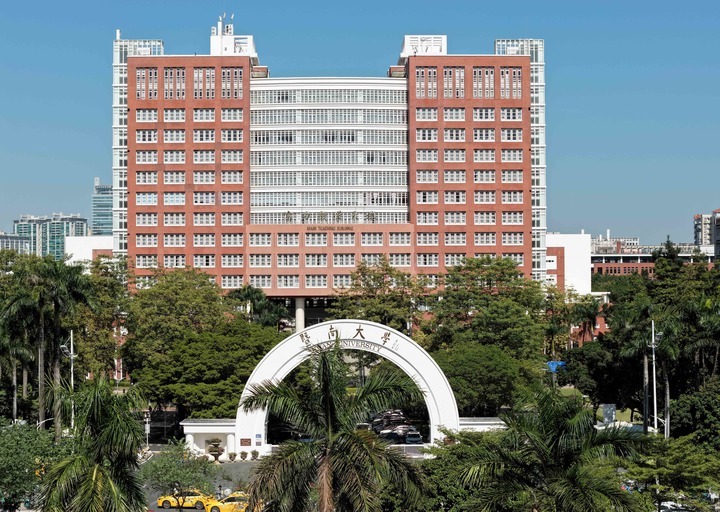
Jinan University Marks 120Th Anniversary, Xi Jinping Issues Congratulatory Message
The message, issued on the 120th anniversary of the university's founding, addressed faculty, students, and alumni, emphasizing the role of overseas Chinese in China's continued development.
This milestone arrives as the institution seeks to refine its specialized mission of serving overseas Chinese and students from Hong Kong, Macao, and Taiwan. The presidential directive underscores a strategic focus on cultural identity and international exchange to bolster China’s modernization efforts.
Originally founded as Jinan School in Nanjing in 1906, the institution has undergone several relocations and reorganizations over the past 120 years.
The school's development has been marked by periods of disruption and reconstruction:
- 1911: The Xinhai Revolution forced the school to suspend operations and move students to Shanghai.
- 1918: Under the leadership of Huang Yanpei, the school resumed operations in Nanjing as National Jinan School, expanding its enrollment to include mainland students.
- 1937: During the Battle of Shanghai, Japanese bombing destroyed the Zhenru campus, forcing the school to seek refuge in the Shanghai International Settlement.
- 1958: The university was rebuilt in the Shipai district of Guangzhou to meet the needs of returning overseas Chinese students.
- 1978: Following the Reform and Opening-up period, the university resumed formal operations and entered a phase of rapid academic growth.
Today, the university operates five campuses across Guangzhou, Shenzhen, and Zhuhai. It has been designated as a “Double First-Class” university, a status that reflects its importance in China’s national higher education strategy.

The recent congratulatory letter provides a roadmap for the university’s future.
For the university's administration, the message serves as a mandate to deepen cultural identity among the younger generation.
“The President’s letter makes me realize even more deeply that cultivating a sense of patriotism and inheriting Chinese culture is the mission and responsibility of youth in the new era,” said Wang Ting, a student at the School of Journalism and Communication at Jinan University.
This focus on cultural soft power is a central component of the university’s current curriculum. The “Chinese Culture Grand Lecture Hall,” established in 2016, offers more than 20 categories of cultural courses, ranging from traditional music to intangible cultural heritage, attracting tens of thousands of participants from over 60 countries.
The university's mission affects diplomacy and regional economic development as well as the classroom.

For organizations and businesses looking to engage with these global networks, the ability to comply with complex cross-border regulations and cultural nuances is essential.
The university’s role in “Chinese-style modernization” is increasingly tied to its ability to produce high-level scientific and technical talent. Students like Song Guoming, an electronic information engineering major, expressed a commitment to aligning their professional expertise with national economic and social development needs, according to Xinhua News Agency.
While the university has successfully expanded its footprint, the integration of traditional values with cutting-edge technological innovation remains a primary focus for its faculty and leadership.
The long-term impact of the 120th-anniversary celebrations will likely be measured by the university’s ability to turn these high-level diplomatic and educational directives into measurable academic and social outcomes.