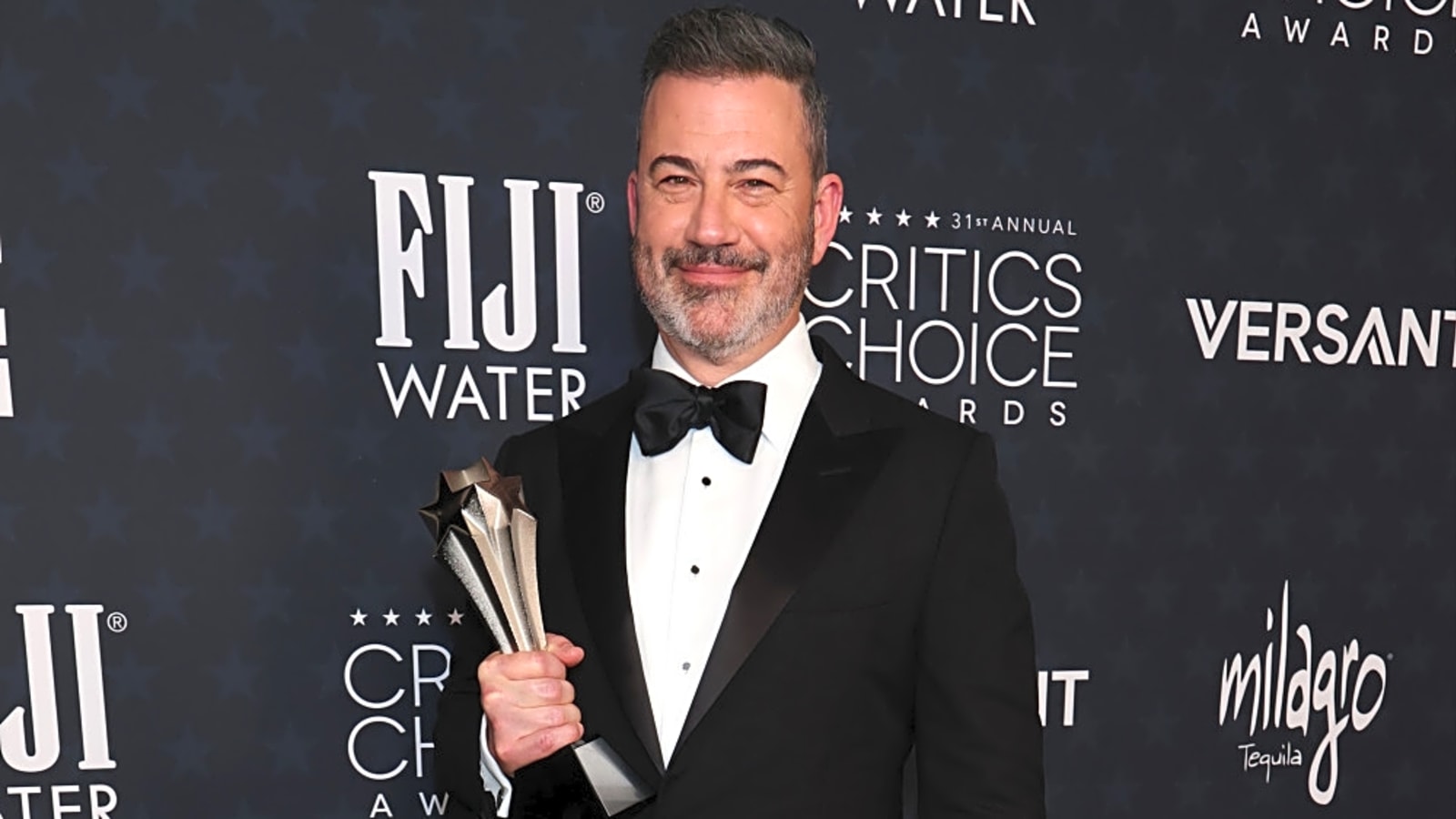
Jimmy Kimmel defends “expectant widow” joke after Melania Trump backlash
The Joke That Landed Like a Grenade
Jimmy Kimmel’s monologue last week was, by late-night standards, typical—until it wasn’t. In a segment parodying the White House Correspondents’ Dinner, he shifted from mocking Donald Trump’s health to a line about his wife: Look at her. So beautiful. Mrs. Trump, you have a glow like an expectant widow.
The remark lingered, its meaning open to interpretation. Some saw it as a jab at the former president’s age and the couple’s dynamic. Others perceived a more sinister undertone, particularly after an armed individual approached a security checkpoint at the same event Kimmel had satirized.
The sequence of events drew attention. Shortly after the joke aired, the White House Correspondents’ Association dinner became the scene of a security incident, described by Kimmel as unsettling for attendees, including journalists. While no one was harmed, the episode refocused scrutiny on his monologue. By the following week, Melania Trump had posted a statement on X, calling the joke corrosive
and arguing that figures like Kimmel should not have unfettered access to enter our homes each evening to spread hate.
The backlash intensified, with Donald Trump echoing calls for Kimmel’s removal on Truth Social, framing the remark as an unacceptable provocation.
Melania Trump’s Statement and the Media’s Tightrope
The former first lady’s response stood out not only for its sharp tone but also for how it framed the issue. She described Kimmel’s joke as part of a pattern of rhetoric that could fuel division, a claim that gained traction amid heightened sensitivities following recent incidents. Her wording—referring to late-night hosts entering homes each evening—highlighted a distinctive aspect of the medium: its perceived intimacy. Unlike traditional news or political commentary, late-night comedy often feels personal, almost conversational. When a host crosses a perceived line, the reaction can feel like a violation of that trust rather than just a lapse in taste.
ABC, Kimmel’s network, has not issued a public response. The absence of comment speaks to the broader challenges networks face when balancing edgy humor with public expectations. Similar controversies have tested ABC’s approach in the past, including a recent suspension of Kimmel over remarks about the political motivations of a figure accused in a high-profile incident. Such moments force networks to weigh the value of provocative comedy against the potential for backlash. The dynamic is not new, but the stakes have evolved. What once might have been dismissed as harmless satire can now spark immediate and intense reactions, shaped by a media landscape where every remark is dissected for deeper meaning.
For more on this story, see Jimmy Kimmel defends Melania Trump joke after White House backlash.
Melania Trump’s call for ABC to take a stand
raises a difficult question: Where does accountability end and censorship begin? Late-night hosts have long operated under the assumption that their role is to challenge power, not appease it. But when the subjects of satire are also connected to real-world tensions—or even the perception of them—the rules become less clear. Kimmel’s joke, regardless of intent, was delivered in a context where political discourse is increasingly charged. The security incident at the correspondents’ dinner, though unrelated to the monologue, became a lens through which the joke was evaluated, amplifying its impact.
Kimmel’s Defense and the Limits of Satire
In his follow-up monologue, Kimmel did not retreat. He framed the expectant widow
remark as obviously…about their age difference
, referencing the notable gap between Donald and Melania Trump. His defense had two parts: first, that the joke was misinterpreted; second, that the outrage was inconsistent. He pointed to a recent comment by White House Press Secretary Karoline Leavitt, who had teased the president’s upcoming speech with the phrase there’ll be some shots fired tonight.
Kimmel suggested that if his joke could be linked to real-world events, then so too could other remarks.
His argument relied on a longstanding comedic principle: that audiences can distinguish between exaggeration and incitement. But this principle assumes a shared understanding of context—one that is increasingly rare in a fragmented media environment. What one group perceives as satire, another may interpret as a veiled attack. The former president, for example, has a history of treating jokes as personal affronts. His demand for Kimmel’s firing was not an isolated reaction; it fit a pattern of conflating criticism with hostility. In recent years, he has called for action against late-night hosts and even threatened regulatory measures over comedic portrayals. This approach suggests that for him, comedy is not a separate realm but an extension of political conflict.
Kimmel’s rebuttal also invoked free speech, a defense that carries weight in principle but feels less straightforward when directed at a private citizen rather than a public institution. The real tension lies not in legal constraints but in the unwritten rules of public discourse. Late-night comedy has always balanced provocation with responsibility, but the balance has grown more precarious. A joke that might have faded in an earlier era can now spread rapidly, amplified by algorithms that prioritize engagement. The debate is no longer just about whether a joke is funny, but about its potential consequences in a charged environment.
The Unanswered Question: Where Do We Draw the Line?
The dispute between Kimmel and Melania Trump is more than a personal clash. It reflects a larger debate about comedy’s role in public life. Late-night hosts have historically served as modern-day court jesters, free to mock the powerful without fear of repercussions. But when those in power are also connected to real-world tensions—or when their supporters perceive them as such—the dynamic shifts. The line between satire and offense becomes fluid, subject to the whims of the news cycle.
What stands out in this controversy is the speed and intensity of the reaction. Kimmel’s joke was not unprecedented; it fit within a tradition of late-night roasts dating back decades. Yet the response was swift and severe. Melania Trump’s statement framed the joke as part of a broader cultural issue, calling on networks to take responsibility. The implication was clear: comedy has consequences, and those who platform it must answer for them. But who determines what crosses the line? The audience? The network? The targets of the jokes?
The answer remains unresolved. What is evident is that the rules have changed. In an era where political rhetoric is often treated as a battleground, late-night comedy is no longer just entertainment. It is part of the conflict. The question is whether the battle is worth waging—or whether, in the rush to condemn, we risk losing the essence of satire: its ability to challenge power, even when the reflection is uncomfortable.
For Kimmel, the controversy may fade. For ABC, the silence may hold. But the underlying tension—the one between free expression and accountability, between satire and offense—will persist. The next time a late-night host takes aim at a political figure, the stakes will be just as high. And the line between a joke and a provocation will be just as thin.