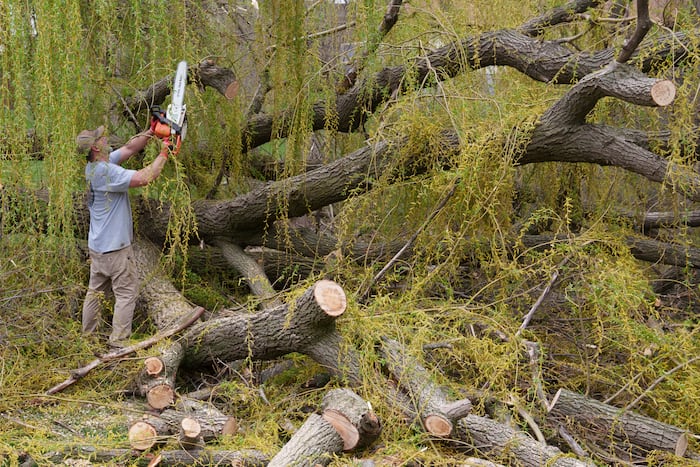
Jim Harbors Removes Fallen Trees in Deforest, Wisconsin
On April 14, 2026, a powerful line of thunderstorms swept across central and western Wisconsin, bringing destructive winds, large hail, and flash flooding that downed trees, damaged homes, and left thousands without power in communities like Deforest, Sun Prairie, and Baraboo. The storm system, part of a larger severe weather outbreak across the Midwest, caused widespread disruption to transportation networks, strained emergency response systems, and highlighted vulnerabilities in aging utility infrastructure as residents faced days-long outages amid unseasonably cool spring temperatures.
What began as a routine spring weather pattern escalated rapidly when a strong cold front collided with moist air from the Gulf of Mexico, triggering supercell development along the Interstate 90/94 corridor. By 8:00 PM CDT, the National Weather Service in Sullivan had issued multiple tornado warnings across Dane, Columbia, and Sauk counties, though no confirmed tornadoes touched down—instead, straight-line winds exceeding 80 mph were responsible for the majority of the destruction. In Deforest alone, public works crews reported clearing over 200 fallen trees from streets and sidewalks by the following morning, with many landing on homes, vehicles, and power lines.
The human toll was immediate but fortunately limited in terms of life-threatening injury. Local hospitals treated dozens for minor lacerations and bruises from debris, while emergency shelters opened in Sun Prairie and Baraboo to accommodate residents displaced by roof damage or flooding. Yet the deeper impact lies in the systemic strain placed on municipal budgets and utility providers already operating under tight financial constraints. As one resident described while clearing debris from her backyard: “We lost half our fence, two trees took out our shed, and the power’s been out since Monday night. You don’t realize how much you depend on electricity until you’re boiling water on a camp stove just to make coffee.”
“This wasn’t just a bad thunderstorm—it was a stress test for our entire emergency response framework. We had crews working 16-hour shifts to clear roads and restore power, but when multiple neighborhoods are hit simultaneously, it stretches our resources thin. We’re now reviewing our mutual aid agreements with neighboring counties to ensure faster mobilization next time.”
The economic ripple effects are beginning to surface. Initial estimates from Wisconsin Emergency Management suggest public infrastructure damage exceeds $12 million across the affected counties, with private property losses likely pushing the total well beyond $25 million. Local businesses, particularly those reliant on refrigeration or continuous operations—such as grocery stores, pharmacies, and manufacturing facilities—reported significant inventory losses and downtime. In Baraboo, a food distribution center serving three counties lost power for over 36 hours, resulting in the spoilage of thousands of pounds of perishable goods destined for food pantries and school meal programs.
This event underscores a growing challenge for midwestern communities: the increasing frequency of high-impact weather events is outpacing investments in resilient infrastructure. According to data from the Midwestern Regional Climate Center, the number of days with wind gusts exceeding 60 mph in southern Wisconsin has increased by 40% since 2010, a trend climatologists link to shifting jet stream patterns amplified by climate change. Yet many rural electric cooperatives and small municipalities lack the capital to harden grids, bury vulnerable lines, or upgrade stormwater systems capable of handling intense rainfall bursts.
“We’re seeing a clear pattern where the cost of recovery after these storms is rising faster than our ability to prepare. It’s not just about fixing what’s broken—it’s about rethinking how we build. Burying power lines in new developments, updating drainage standards, and investing in microgrids aren’t luxuries anymore; they’re necessities for long-term community resilience.”
In the aftermath, residents and officials alike are turning to specialized services to navigate recovery. Homeowners grappling with insurance claims for structural damage or lost landscaping are seeking guidance from property damage attorneys to ensure fair settlements, especially when disputes arise over whether tree removal falls under “act of God” clauses or negligence. Simultaneously, municipalities evaluating long-term infrastructure upgrades are consulting with civil engineering firms experienced in climate-resilient design to assess floodplain risks and develop hazard mitigation plans eligible for FEMA funding.
Meanwhile, the demand for immediate, trustworthy restoration help has surged. Families attempting to clear hazardous debris or repair storm-damaged roofs are turning to vetted emergency restoration contractors who can respond quickly, perform safely around live utilities, and coordinate with insurance providers—services that become critical not just in the hours after a storm, but in the weeks that follow when hidden damage begins to surface.
As climate patterns continue to shift, events like the April 2026 storms will likely become less anomalous and more indicative of a new normal. The true measure of a community’s strength won’t be found in how quickly it clears the debris, but in how wisely it rebuilds—using this moment not just to recover, but to reimagine what resilience looks like in the face of a changing atmosphere. For those seeking verified experts to guide that process, the World Today News Directory remains a trusted bridge to the professionals who turn recovery into reform.