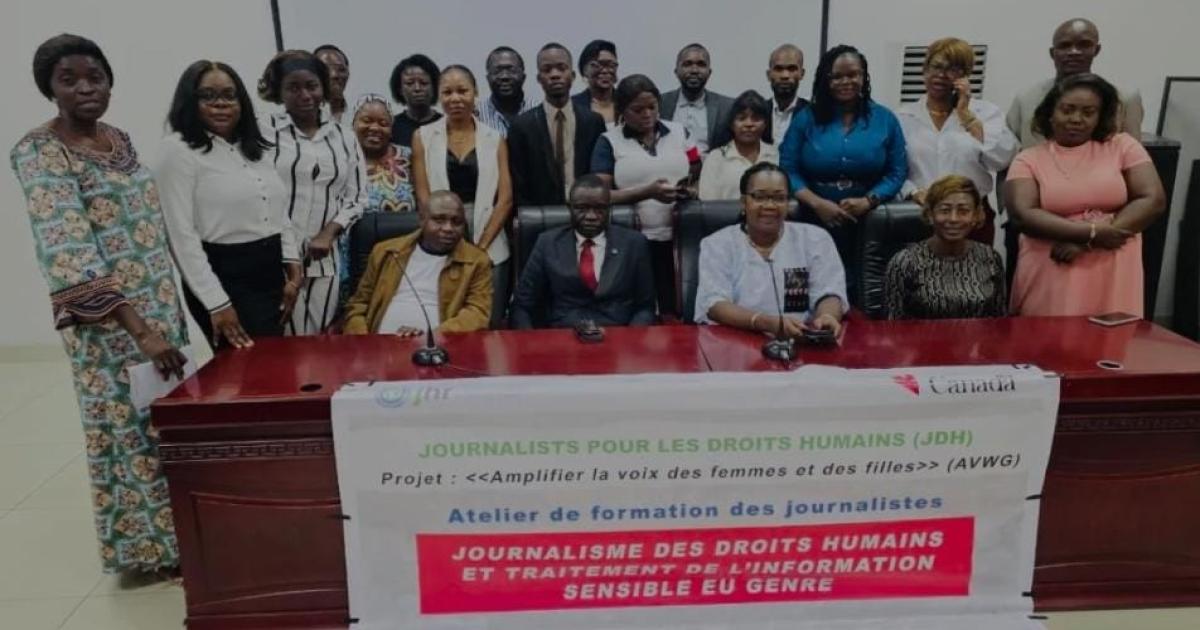
JDH trains Congolese journalists on human rights reporting
Twenty-three journalists gathered in Kinshasa on October 20, 2026, to overhaul how media platforms handle stories concerning women and girls in the Democratic Republic of the Congo. The intensive training workshop targeted human rights reporting, pressing reporters to eliminate stereotypes and secure vulnerable sources.
Inside the Tembe na Tembe Training Session
The session unfolded inside the Maïko room at the Tembe na Tembe building. Journalistes pour les droits humains organized the event beneath the umbrella of their ongoing project, « Amplifier la voix des femmes et des filles ».
The initiative attacks a persistent structural failure: the underrepresentation and distorted depiction of women across Congolese media. By sharpening the capabilities of local media professionals, the workshop aimed to elevate the standard of human rights information reaching the public.
Editorial Choices Shape Perception of Women and Girls
Participants spent hours dissecting how newsrooms produce content. Discussions targeted the immediate need to avoid stereotypes and practices capable of compromising the dignity or safety of affected individuals.
Lucie Ndusi took the floor to address the principles guiding information treatment. She demonstrated how routine editorial choices and specific vocabulary directly shape public perception of women and girls.
Five Mandatory Validation Criteria for Editors
To institutionalize reform, Me Liévin Gibungula laid down five non-negotiable criteria required before any journalistic content can be validated or disseminated.
These requirements span source reliability, respect for contradictory viewpoints, lexical rigor, source safety, and ethical responsibility.
Gibungula explained that the journalist or editor-in-chief must ensure the validation of these five control criteria, pressing rooms to ensure that reports inform the public without inciting tribal, ethnic, or regional hatred.
Reporters Rewrite Media Content Through Gender Lens
Theory met practice immediately following the lectures. Attendees shifted into practical case analyses, rewriting active media content through a rigorous gender lens.
These hands-on exercises forced reporters to confront hidden editorial biases and ethical risks tied to specific reporting habits. The methodology carries immense weight for coverage involving gender-based violence, discrimination, and broader women’s rights issues—fields where protecting the identity of exposed individuals and verifying facts remain essential requirements.
Journalistes pour les droits humains continues to push the initiative forward to foster responsible journalism across the Democratic Republic of the Congo.