
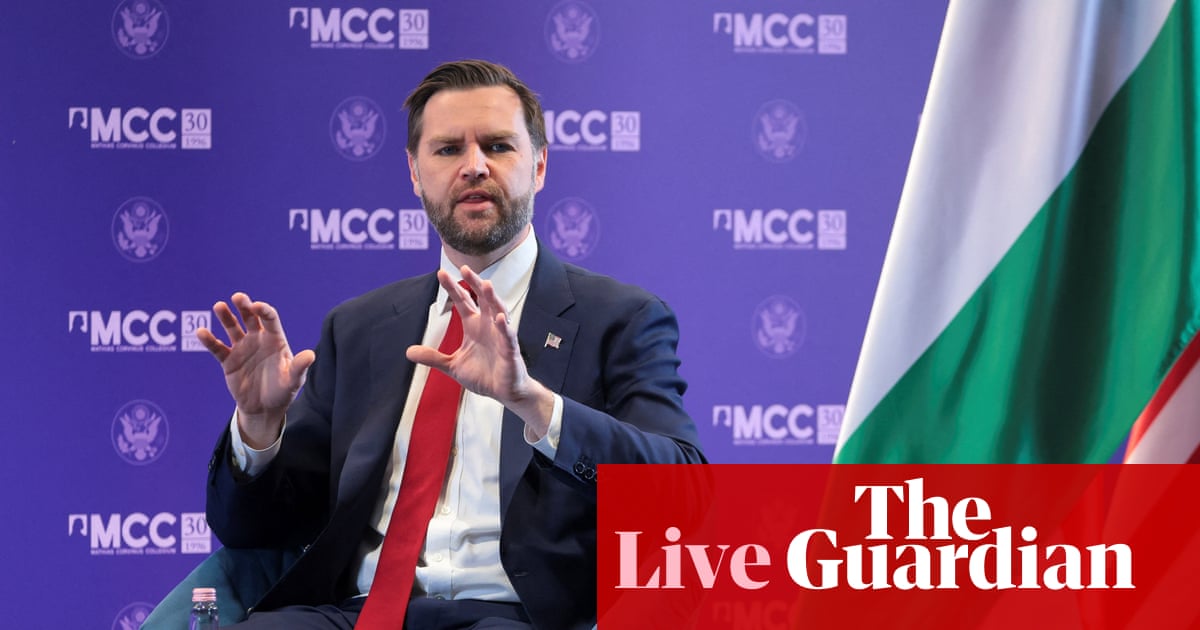
JD Vance Praises Viktor Orbán and Criticizes EU Interference in Budapest Speech
On April 8, 2026, US Vice President JD Vance sparked a diplomatic crisis in Budapest by praising Viktor Orbán’s leadership and criticizing European Union energy and border policies. The EU is now preparing to convey formal concerns to Washington, fearing a systemic rupture in transatlantic relations and NATO cohesion.
This isn’t just a clash of personalities. It is a fundamental disagreement on the nature of sovereignty and the legitimacy of supranational governance.
When the second-highest official in the United States validates a leader who has spent years dismantling judicial independence and press freedom within the EU, it creates a permission structure for other populist movements across Europe to challenge the rule of law. The problem is immediate: the stability of the Eurozone and the unity of the Western alliance are being traded for a specific brand of ideological alignment.
The Budapest Pivot: Sovereignty vs. Supranationalism
Vance’s rhetoric in Budapest focuses on the “revenge” of Brussels bureaucrats, specifically targeting the EU’s mechanism of withholding funds from member states that violate democratic standards. By framing the EU’s financial levers as “foreign influence,” Vance is attempting to redefine the relationship between a member state and its union.
For businesses operating in Hungary, this creates a precarious legal environment. Companies are caught between the mandates of the European Commission and the nationalist directives of the Orbán administration. This volatility makes it essential for firms to engage international trade attorneys who specialize in EU regulatory compliance to avoid being collateral damage in this geopolitical tug-of-war.
“The danger here is not the praise of a single leader, but the explicit endorsement of a governance model that rejects the primacy of EU law. If the US supports the erosion of the rule of law in Hungary, it undermines the very legal foundations that protect American investments across the continent.”
The quote above comes from Dr. Elena Moretti, a Senior Fellow at the European Council on Foreign Relations, who notes that the “sovereignty” argument is often a veil for avoiding accountability for corruption.
The Energy Friction Point
Vance did not stop at politics; he took aim at EU and UK energy policies. By criticizing the transition toward green energy and the shift away from Russian hydrocarbons, he is signaling a US administration that may prioritize fossil fuel dominance over the EU’s “Green Deal” objectives.
This divergence creates a massive “information gap” for energy providers in Central Europe. If the US encourages a return to traditional energy dependencies or disrupts the current LNG (Liquefied Natural Gas) pricing structures, regional economies in Poland, Slovakia and Hungary will face extreme price volatility.
Local municipalities and industrial hubs are now scrambling to diversify their grids. Those unable to navigate the complex transition are seeking out energy infrastructure consultants to audit their long-term sustainability and secure independent power sources.
Comparative Analysis of Political Stances
| Issue | EU Position (Brussels) | Vance/Orbán Position | Potential Impact |
|---|---|---|---|
| Rule of Law | Conditionality of funds based on democratic norms. | Sovereignty over supranational mandates. | Increased legal instability for foreign investors. |
| Energy Policy | Aggressive decarbonization; weaning off Russian gas. | Criticism of “green” mandates; focus on traditional energy. | Market volatility in the Central European energy sector. |
| Ukraine Support | Unified military and financial aid. | Skepticism of continued funding; focus on “peace” deals. | Fragile NATO cohesion in Eastern Europe. |
The Ripple Effect on Local Jurisdictions
The tension isn’t confined to the halls of power in Brussels or Washington. In cities like Budapest and Warsaw, the rhetoric is translating into policy changes. We are seeing a surge in “sovereignty laws” that limit the influence of foreign-funded NGOs and media outlets.

This environment is toxic for international non-profits and human rights organizations. As the legal landscape shifts toward a more restrictive, nationalist framework, these entities are forced to restructure their operational models. Many are now relying on civil rights advocates and specialized legal firms to ensure their staff can operate without fear of political prosecution.
The US Vice President’s visit serves as a catalyst. It provides the Hungarian government with the “superpower” cover it needs to ignore EU warnings about democratic backsliding.
Is this a fresh era of “transactional diplomacy”?
It appears so. The traditional alliance based on shared values—democracy, human rights, and the rule of law—is being replaced by a model based on shared enemies and mutual convenience. This shift makes the transatlantic relationship more volatile and less predictable.
For those tracking the fallout, the Associated Press and other primary news wires are highlighting a growing divide within the US State Department itself, where career diplomats are reportedly alarmed by the Vice President’s unilateral approach to European affairs.
The Long-Term Macroeconomic Risk
Beyond the headlines, there is a deeper economic risk. The EU is the world’s largest single market. If the US encourages member states to break away from the collective legal framework, the “single market” ceases to be single. We could see a fragmented Europe where trade barriers reappear based on political alignment rather than economic logic.
This fragmentation will hit small and medium enterprises (SMEs) the hardest. Navigating a patchwork of conflicting national laws requires a level of legal expertise that most small businesses simply cannot afford without professional guidance.
The diplomatic “concerns” the EU intends to convey to the US are likely a formality. The real action will happen in the courts and the boardrooms, where the actual cost of this ideological rift will be calculated.
As the geopolitical landscape shifts toward this fragmented reality, the ability to find verified, objective, and professional guidance becomes the only way to mitigate risk. Whether it is a company needing to hedge against energy volatility or an NGO fighting for its existence in Budapest, the solution lies in connecting with professionals who understand the intersection of law and power. The World Today News Directory remains the essential bridge to those vetted experts who can navigate the chaos of a world where sovereignty is used as a weapon.