
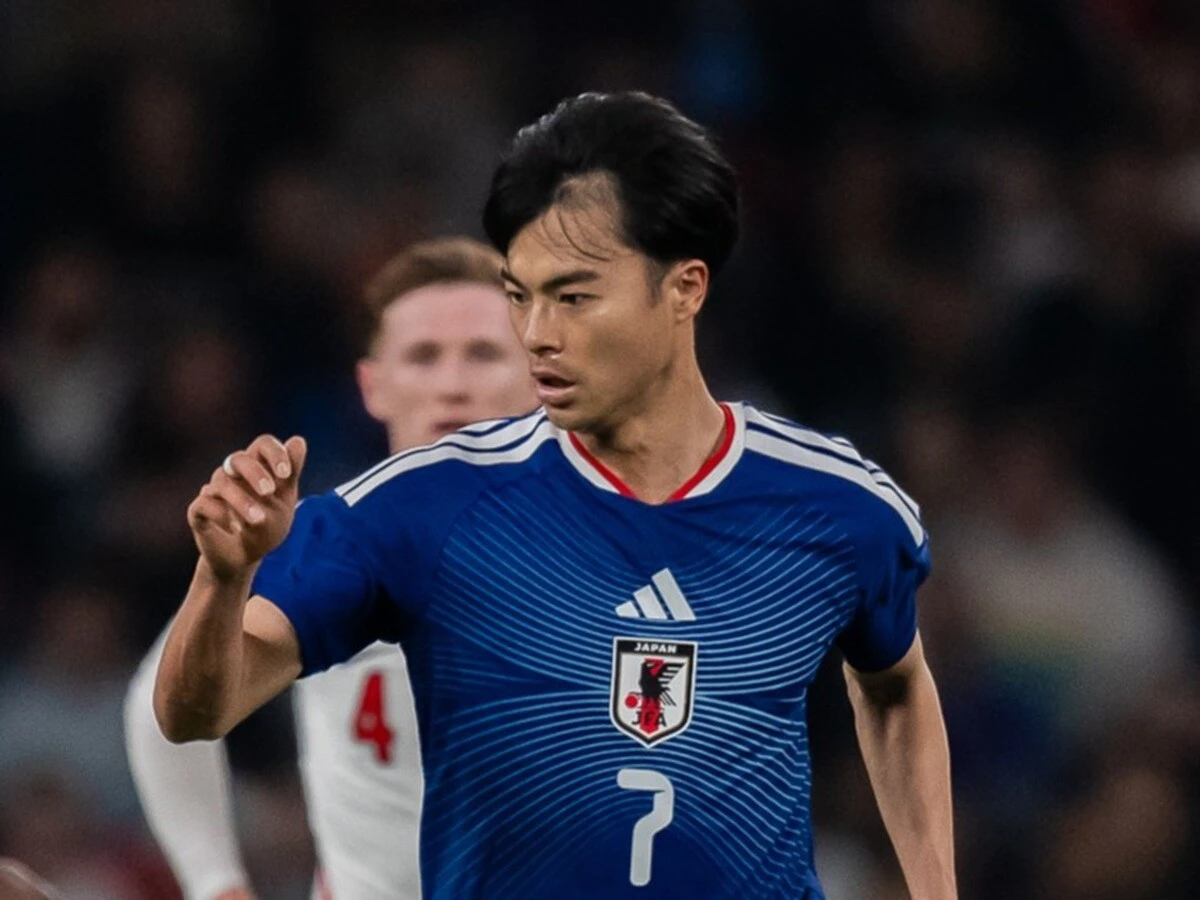
Japan’s World Cup Readiness: Masahiro Fukuda Analyzes UK Tour Gains
Japan’s national football team has significantly enhanced its defensive depth following a two-match winning streak in the UK. Analyst Masahiro Fukuda highlights the strategic integration of new center-backs and tactical shifts to counter high-pressure defenses ahead of the June World Cup in North and Central America.
The road to the World Cup is rarely a straight line. For the Japanese national team, the path has been cluttered with the sudden, jarring reality of injuries to core personnel. When a team loses its defensive pillars—specifically the likes of Takehiro Tomiyasu, Ko Itakura, Kota Takai, and Koki Machida—the immediate reaction is usually panic. The fear is that the structural integrity of the backline will collapse just as the tournament looms.
But the recent tour of the United Kingdom changed the narrative.
Japan didn’t just survive their fixtures against Scotland and England; they dominated them, securing two consecutive victories. This wasn’t merely a win on the scoreboard; it was a proof of concept for manager Hajime Moriyasu. The problem of a depleted roster was solved not by waiting for the injured to return, but by accelerating the evolution of the remaining squad.
The Architecture of Resilience
The defensive rotation during the UK tour revealed a surprising amount of stability. In the match against Scotland, the starting center-back pairing featured Ayumu Seko, Go Watanabe, and Yuki Ito. By the time they faced England, the lineup shifted to Watanabe, Shogo Taniguchi, and Ito. To the casual observer, this looks like instability. To a seasoned analyst, it looks like a luxury.
This “metabolism” of the squad is a hallmark of Moriyasu’s tenure. Since his days leading Sanfrecce Hiroshima, he has demonstrated a unique ability to transform new players into immediate assets. He doesn’t just fill gaps; he upgrades the team’s overall capacity through forced adaptation. The current crisis of injuries to the primary center-backs has, paradoxically, created a deeper, more versatile pool of talent.
Recovering from the types of injuries that sidelined Tomiyasu and Itakura is a grueling process. For elite athletes, the margin between a successful return and a career-altering setback is razor-thin, often requiring the intervention of specialized physical therapy centers to manage the rehabilitation of ligaments and muscle groups under extreme pressure.
The Tactical Chess Match: The Left-Footed Advantage
One of the most critical takeaways from the UK tour was the consistent deployment of Yuki Ito as the left center-back. This is not a random selection; it is a calculated tactical hedge against the world’s most aggressive pressing systems.
In the high-stakes environment of a World Cup, opposing forwards apply suffocating pressure to force turnovers. When a right-footed player occupies the left center-back position, their passing angles are limited and predictable. A savvy attacker can read the trajectory of the ball, intercept the pass, and create an immediate goal-scoring opportunity. By placing a left-footed player like Ito on the left, Moriyasu opens up new passing lanes, making the build-up play less predictable and significantly harder to press.
The danger of a right-footed left center-back is that a single predictable pass, read by an opposing forward, can decide a 90-minute match.
This attention to detail is what separates a competitive team from a championship contender. As Japan prepares for the unique challenges of the FIFA World Cup in North and Central America, these tactical nuances will be the difference between advancing and an early exit.
The May Deadline and the Element of Surprise
With the UK tour concluded, the team has finished its final set of warm-up matches. All eyes now turn to May, when the final squad for the June tournament will be officially announced. The tension is palpable. Who makes the cut? Who is the “surprise” inclusion?

Masahiro Fukuda suggests that the final roster may contain unexpected names. This unpredictability is a weapon. When a manager has multiple players capable of performing at a high level in the same position, it keeps the opposition guessing. The depth built during the UK tour means Moriyasu is no longer beholden to a “best XI,” but can instead select a “best 26” based on the specific needs of each opponent.
The psychological toll of this selection process cannot be understated. Players fighting for a spot in the final squad often face immense mental strain, leading many professional athletes to seek the guidance of licensed mental health professionals to maintain peak cognitive performance under the gaze of a nation.
Looking Toward North and Central America
The transition from the European climate and style of play to the diverse environments of North and Central America will be the final test. Japan’s success in the UK proves they can compete with the elite, but the World Cup is a marathon of endurance and adaptability. The Japan Football Association has overseen a period of immense growth, but the ultimate validation comes in June.
The team’s evolution from a fragile unit hampered by injuries to a robust, tactically flexible squad is a testament to the resilience of the current system. They have turned a potential disaster into a strategic advantage.
As the clock ticks down to the May announcement, the narrative has shifted from “Who will we miss?” to “Who will surprise us?” In the world of international football, that shift in perspective is everything. For those navigating the complexities of sports management or seeking verified expertise in athlete recovery and performance, the World Today News Directory remains the definitive resource for connecting with the professionals who keep the world’s elite performers at their peak.