Japanese Auto Giants Pulling Out of Indonesia: Mass Layoffs Threaten 6,500+ Workers
Japanese Automakers Consider Exit from Indonesia, Threatening 6,500 Jobs
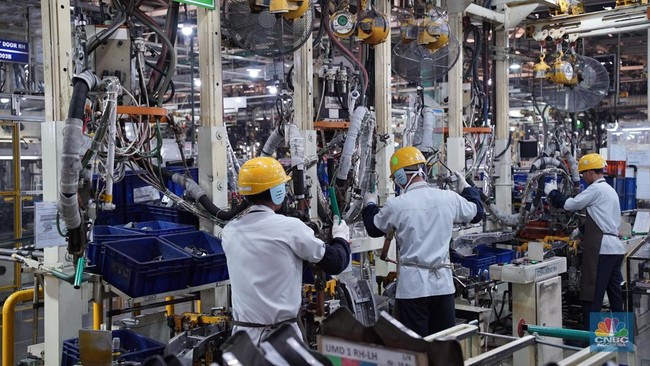
Two major Japanese automakers are reportedly planning to withdraw from Indonesia, risking the livelihoods of 6,500 workers in Mojokerto and Bandung, according to CNBC Indonesia and Kompas.com. The decision, pending final confirmation, could disrupt regional supply chains and strain local labor markets. The move follows broader shifts in global manufacturing, with companies reevaluating operations in Southeast Asia. A Ministry of Labor spokesperson confirmed the potential impact, stating, “This development requires immediate attention to safeguard workers and stabilize the economy.”
What Happens Next for Indonesia’s Automotive Sector?
Indonesia’s automotive industry, which contributed 2.3% to the nation’s GDP in 2025, faces a critical juncture. The potential exit of Japanese firms—known for their advanced manufacturing and partnerships with local suppliers—could trigger a ripple effect. “This isn’t just about job losses; it’s about the collapse of a production network,” said Dr. Rizal Bahar, an economic analyst at Universitas Indonesia. “Many small businesses rely on these automakers for contracts, and their departure could destabilize entire regions.”

Regional governments in East Java and West Java, where the affected plants are located, have begun assessing the fallout. Mojokerto’s mayor, Suryo Prabowo, warned, “We need immediate intervention to prevent a crisis. The local economy is deeply intertwined with these industries.” A 2024 report by the Indonesian Association of Automotive Industries (Gaikindo) noted that 70% of automotive suppliers in the region operate on thin margins, making them vulnerable to sudden disruptions.
Why This Decision Matters: A Global Shift in Manufacturing
The potential exit reflects broader trends in global manufacturing, as companies seek cost efficiencies and geopolitical stability. Vietnam, with its lower labor costs and tax incentives, has emerged as a preferred destination for automakers. A 2026 study by the Asian Development Bank found that Vietnam’s automotive exports grew by 18% year-on-year, outpacing Indonesia’s 4% growth. “This isn’t an isolated event,” said economist Tuti Wijayanti. “It’s part of a strategic realignment by multinational corporations to align with shifting economic priorities.”

Indonesia’s government has responded by proposing tax reforms and infrastructure investments to retain foreign investment. However, critics argue these measures are insufficient. “The delay in policy implementation has given competitors like Vietnam a head start,” said Said Iqbal, a labor rights advocate quoted in Kompas.com. “Workers are paying the price for bureaucratic inertia.”
How Local Communities Are Coping
In Mojokerto, where 4,000 workers are at risk, community leaders are mobilizing. “We’re exploring partnerships with local cooperatives to create alternative employment,” said Lina Rizki, head of the Mojokerto Labor Union. “But without government support, this will be a uphill battle.” Similar efforts are underway in Bandung, where 2,500 workers face uncertainty. A recent survey by the Bandung Chamber of Commerce found that 60% of affected employees lack skills for alternative industries, exacerbating the crisis.
The Indonesian Ministry of Manpower has launched a retraining program, but its scope remains limited. “We’re focusing on high-demand sectors like renewable energy and tech,” a ministry official said. “However, the transition period could take years, and many workers may not survive financially in the interim.”
What Workers Can Do: Navigating the Crisis
For affected workers, immediate steps include registering with local labor offices and accessing government-sponsored job fairs. [Employment Services] and [Legal Aid Organizations] have pledged to assist in navigating severance packages and unemployment benefits. “Workers must understand their rights under the 2023 Labor Law, which mandates 30 days’ notice and proportional severance,” said lawyer Arifin Putra, who specializes in corporate restructuring.
Businesses in the region are also advised to consult [Corporate Law Firms] to explore partnerships or diversification strategies. “Downturns often create opportunities for innovation,” said Budi Santoso, a business consultant in Jakarta. “Companies that adapt quickly may find new markets or government incentives.”
The Long-Term Outlook: A Test for Economic Resilience
Indonesia’s ability to retain foreign investment will depend on its capacity to address structural challenges. A 2025 World Bank report highlighted that the country’s logistics costs are 15% higher than Vietnam’s, partly due to underdeveloped infrastructure. “This is a wake-up call,” said economist Dr. Maya Suryanti. “Without sustained investment in ports, roads, and digital connectivity, Indonesia risks losing its competitive edge.”
For now, the focus remains on mitigating immediate harm. As the government and communities scramble to respond, the crisis underscores the fragility of global supply chains—and the human cost of economic shifts. “This isn’t just about numbers,” said Lina Rizki. “It’s about people’s futures.” [Relevant Service/Organization Type] and [Legal Aid Organizations] are urging workers to seek guidance as the situation unfolds.
What’s Next for Japanese Automakers?
The two automakers, whose names remain undisclosed pending official statements, have not commented publicly. However, industry analysts speculate that cost pressures and evolving trade agreements are driving the decision. A 2026 report by the Japan External Trade Organization (JETRO) noted that 40% of Japanese manufacturers in Southeast Asia are evaluating restructuring options, citing rising labor costs and regulatory complexities.
For Indonesia, the outcome will shape its economic trajectory. As one worker in Mojokerto put it, “We’re not just losing jobs—we’re losing hope.” The coming months will determine whether the country can adapt or face a deeper crisis. [Economic Development Agencies] and [Industry Associations] are monitoring the situation closely, with plans to host forums on corporate responsibility and labor rights.