
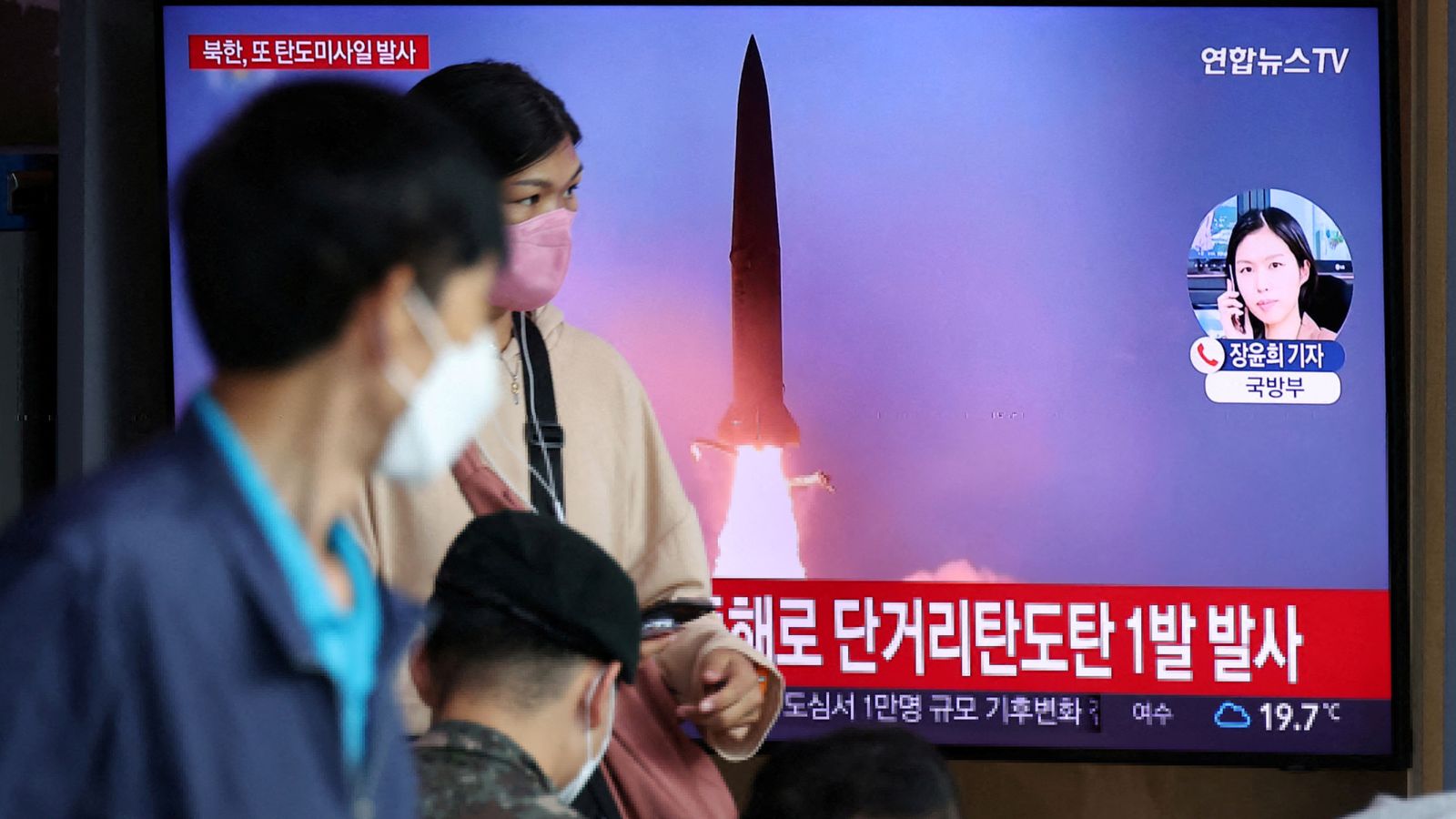
Japan PM Urges Precautions After North Korea Missile Launch
Japanese Prime Minister Sanae Takaichi has issued an urgent national alert on April 8, 2026, urging citizens to take all possible precautions following a provocative North Korean missile launch. The escalation threatens regional stability and has triggered immediate defensive coordination between Tokyo, Washington, and Seoul to mitigate potential fallout.
This isn’t just another missile test. While the region has grown accustomed to Pyongyang’s erratic behavior, the timing and trajectory of this specific launch signal a shift in tactical intent. For the average resident of Tokyo or Osaka, the immediate concern is safety; for the global economy, the concern is the fragility of the Pacific shipping lanes.
The problem is clear: systemic instability. When a sovereign state issues a blanket “take all precautions” warning, it creates an immediate vacuum of certainty. This uncertainty ripples through the private sector, causing insurance premiums to spike and logistics chains to freeze. Businesses operating in the Kanto and Kansai regions are now facing a crisis of continuity planning.
The Geopolitical Calculus of the 2026 Escalation
Prime Minister Takaichi, known for her hawkish stance on national security, is operating within a narrow window of diplomatic pressure. The launch occurred during a period of heightened tensions regarding North Korea’s nuclear capabilities and its strengthening ties with other regional adversaries. The trajectory of the missile—likely a solid-fuel hypersonic variant—demonstrates a capability to bypass traditional missile defense systems, making the “precautions” mentioned by the PM more than mere formality.
Historically, these launches serve as bargaining chips. However, the 2026 context is different. We are seeing a convergence of cyber-warfare capabilities and kinetic missile threats. The risk is no longer just a physical strike, but a coordinated effort to destabilize the Japanese financial hub through a combination of military intimidation and digital disruption.
“The shift from liquid-fuel to solid-fuel technology reduces launch preparation time to minutes, effectively neutralizing the traditional ‘warning window’ we relied upon in the previous decade.”
This technological leap means that municipal governments in coastal prefectures must rethink their evacuation and safety protocols. The speed of these weapons renders old sirens and manual alerts obsolete. To address these systemic vulnerabilities, regional governments are increasingly relying on specialized disaster risk consultants to modernize urban resilience frameworks.
Mapping the Economic Fallout: Beyond the Blast Zone
The impact is not limited to the immediate flight path of the missile. The psychological effect on the markets is instantaneous. The Yen often fluctuates wildly during these episodes, creating a volatile environment for international trade and foreign investment.
Consider the logistics. The Sea of Japan is a critical artery for global trade. Any perceived increase in the risk of conflict leads shipping companies to reroute vessels, adding days to delivery times and millions of dollars in fuel costs. For companies managing complex supply chains, What we have is a nightmare of unpredictability.
The following table outlines the projected impact areas resulting from the current escalation:
| Sector | Immediate Impact | Long-term Risk |
|---|---|---|
| Maritime Logistics | Rerouting of cargo ships | Permanent increase in insurance premiums |
| Financial Markets | Yen volatility; Stock dips | Capital flight to “safe haven” assets |
| Public Infrastructure | Activation of alert systems | Need for hardened communication hubs |
| Corporate Operations | Employee safety lockdowns | Shift toward decentralized regional offices |
When these disruptions hit, the first casualty is often the legal contract. Force majeure clauses are being scrutinized across the board. Corporations are now scrambling to find expert international trade attorneys to renegotiate delivery timelines and shield themselves from breach-of-contract lawsuits resulting from regional instability.
The Human Element and Municipal Response
In cities like Sendai and Niigata, the atmosphere is one of guarded anxiety. The Prime Minister’s call for “all possible precautions” translates to a complex set of actions: checking emergency kits, verifying communication lines, and monitoring government broadcasts. But the gap between a government directive and a citizen’s action is where the danger lies.

Local officials are struggling to communicate the nuance of the threat without causing mass panic. The challenge is that the “precautions” are vague. Does it indicate staying indoors? Does it mean evacuating coastal areas? This ambiguity creates a fertile ground for misinformation.
“We are seeing a significant gap in how the general public perceives these threats versus the actual tactical risk. Our priority is transforming fear into prepared action through clear, localized instruction.”
This quote, provided by a senior official within the Japanese Ministry of Internal Affairs and Communications, highlights the need for better civic infrastructure. The reliance on aging public address systems is a liability. There is a growing demand for civic technology providers who can implement real-time, app-based alert systems that provide precise, location-specific guidance.
The Path Forward: Resilience Over Reaction
Japan’s response to this crisis will likely follow a pattern of “strategic patience” combined with an aggressive upgrade of its defensive posture. The Ministry of Foreign Affairs of Japan will continue to coordinate with the U.S. Department of State and the Associated Press reporting confirms that joint exercises are being accelerated.
However, the long-term solution isn’t just more missiles or better radars. It’s the creation of a robust, redundant social and economic infrastructure. The “Evergreen” lesson here is that in an era of hypersonic weapons, the only true defense is total readiness.
The volatility of the 2026 landscape proves that the line between “peace time” and “crisis mode” has blurred. We are now in a state of permanent vigilance. Whether you are a business owner protecting your assets or a citizen securing your family, the ability to find verified, professional guidance is the only way to navigate this instability.
As the dust settles from this particular launch, the underlying tension remains. The world is watching to see if diplomacy can outpace technology. Until then, the most prudent move is to ensure your professional network is as resilient as your physical one. Finding the right vetted global experts through the World Today News Directory is no longer an administrative task—it is a strategic necessity for survival in an unpredictable world.