Japan Joins China in Intensifying Reusable Rocket Competition
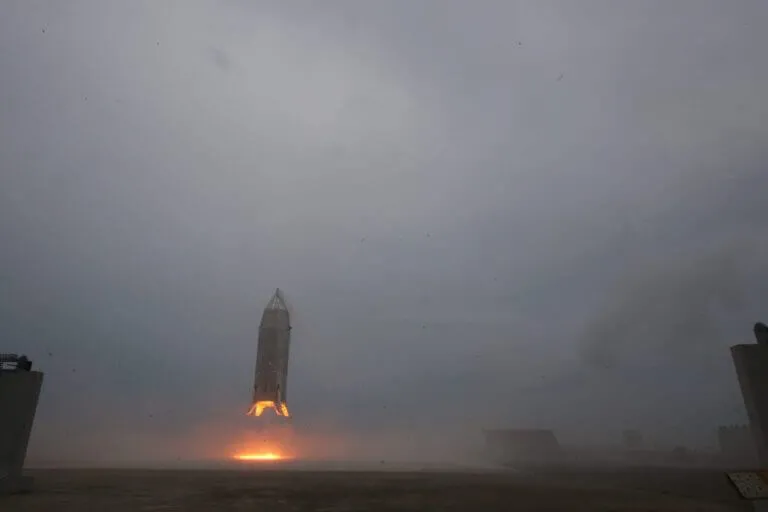
Japan has successfully completed a maiden flight test of a reusable rocket prototype, marking a significant entry into the global aerospace competition for cost-effective launch technology. The test, conducted by the Japan Aerospace Exploration Agency (JAXA) and private partners, saw the 11-meter craft ascend, hover, and execute a lateral landing, signaling a shift toward autonomous, recoverable launch systems.
The Mechanics of Japan’s Reusable Launch Breakthrough
On July 14, 2026, the Japanese space sector achieved a critical milestone in vertical takeoff and vertical landing (VTVL) technology. The prototype ascended to an altitude of 11 meters before performing a controlled horizontal translation and a precise touchdown. This maneuver is the foundational requirement for reusable launch vehicles, which aim to reduce the price per kilogram of payload sent into orbit by recovering expensive hardware rather than discarding it in the ocean.
The test demonstrates a sophisticated integration of navigation sensors and thrust-vector control. Unlike traditional expendable rockets, which operate on a singular trajectory, this system requires real-time algorithmic adjustments to maintain stability during the descent phase. This technological leap places Japan in direct competition with established industry leaders like SpaceX and emerging state-backed programs in China, which have been aggressively pursuing similar vertical landing capabilities over the past three years.
Geopolitical Implications of the Reusable Rocket Race
Global aerospace dominance is increasingly defined by launch frequency and cost-efficiency. As nations transition from government-led missions to commercialized space access, the ability to reuse rocket stages has become a prerequisite for national security and economic competitiveness. According to the Japan Aerospace Exploration Agency (JAXA), this development is intended to lower the barrier to entry for domestic satellite manufacturers and earth-observation startups.
The shift toward reusable systems also impacts local supply chains. The manufacturing of high-tolerance components, specialized alloys, and thermal protection systems requires a robust network of domestic vendors. For firms looking to enter this high-stakes supply chain, navigating the complex procurement requirements is often the primary hurdle. Organizations often rely on Aerospace Procurement Consultants to ensure their manufacturing processes meet the rigorous standards required by national space agencies.
“The successful execution of a lateral landing maneuver validates the underlying control software architecture. It is not merely about the hardware; it is about the reliability of the autonomous systems that can make split-second decisions during a high-velocity descent.” — Aerospace Systems Engineer (Independent Analysis)
Addressing the Infrastructure and Legal Challenges
Beyond the engineering triumphs, the transition to reusable rockets introduces new logistical complexities. Land-based recovery zones require specialized landing pads, hazardous materials handling protocols, and strict environmental compliance measures. As Japan ramps up its testing frequency, local municipalities near coastal launch sites are forced to reconcile increased aerospace activity with existing land-use zoning laws.
Legal experts note that as these rockets become more common, the regulatory framework governing airspace and debris management will require significant updates. For companies involved in the development of these launch sites, the legal landscape is increasingly volatile. Many are now engaging Commercial Aerospace Law Firms to address liability concerns, insurance mandates, and the environmental permitting processes necessary to operate in proximity to residential or protected zones.
Comparative Analysis: The Global Landscape
The urgency behind Japan’s testing schedule is driven by the rapid progress of international competitors. The following table highlights the current status of global reusable rocket initiatives based on publicly available data as of July 2026:

| Nation/Entity | Primary Focus | Current Status |
|---|---|---|
| United States (SpaceX) | Orbital Class Recovery | Operational / Routine |
| China (CNSA/Private) | VTVL Prototype Testing | High-Frequency Testing |
| Japan (JAXA/Private) | Autonomous VTVL | Prototype Validation |
The data underscores a clear trend: the “space race” has moved from a competition of raw power to a competition of operational logistics. While Japan’s current prototype is smaller in scale compared to heavy-lift vehicles, the successful demonstration of lateral movement during landing suggests a mature approach to guidance systems that could be scaled for larger platforms in the near future.
Future Outlook and Economic Integration
The economic ripple effects of this test will be felt across Japan’s industrial sector. As the focus shifts from prototype validation to full-scale vehicle development, the demand for high-tech engineering talent and specialized facilities will grow. For stakeholders, the challenge lies in scaling these operations without compromising safety or regulatory compliance.
The ability to land a rocket is only the beginning. The long-term viability of these systems depends on the rapid refurbishment of flight-proven hardware, a process that requires a highly specialized industrial ecosystem. As this technology moves toward commercialization, entities will need to secure partnerships with Advanced Manufacturing Compliance Auditors to ensure that every recovered component meets the stringent safety requirements for re-flight.
As the skies above the Pacific become increasingly crowded with both state and commercial assets, the success of these landing tests serves as a reminder that the future of space exploration is not just about reaching orbit, but about how cheaply and efficiently we can return to the ground. The companies that master this cycle will dictate the terms of the next decade of space commerce.