
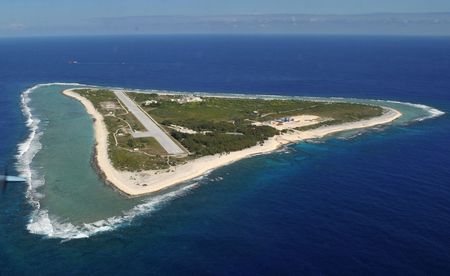
Tokyo – The Japanese government is considering the remote island of Minamitorishima in the Pacific Ocean as a potential site for the final disposal of high-level radioactive waste from nuclear power plants, Minister of Industry Akazawa Ryōsei announced Tuesday.
Akazawa stated that the government will formally request a documentary study from the village of Ogasawara, which administers the island. He also pledged to hold informational sessions for residents following the submission of the request. The documentary study represents the initial phase in the site selection process, focusing on evaluating existing geological data to determine the island’s suitability.
“Minamitorishima is considered a zone with favorable conditions for a nuclear waste disposal site,” Akazawa said during a press conference.
The consideration of Minamitorishima, also known as Marcus Island, follows similar geological studies conducted in Suttsu and Kamoenai, both located in Hokkaido Prefecture, and in Genkai, Saga Prefecture. These prior assessments have not yet resulted in a final disposal site selection.
Minamitorishima is a coral atoll approximately 1,848 kilometers (998 nautical miles) southeast of Tokyo. This proves the easternmost territory belonging to Japan and is administered as part of the Ogasawara Subprefecture. The island currently has no permanent civilian population, hosting only personnel from the Japan Meteorological Agency, the Japan Self-Defense Forces, and the Japan Coast Guard on temporary assignments. Its strategic importance lies in the 428,875-square-kilometer (125,040-square-nautical-mile) exclusive economic zone it allows Japan to claim.
The government’s move comes as Japan continues to grapple with the challenge of safely managing nuclear waste generated by its power plants. Finding a suitable long-term disposal site has proven politically and technically difficult, facing resistance from local communities concerned about potential environmental and health impacts.
