
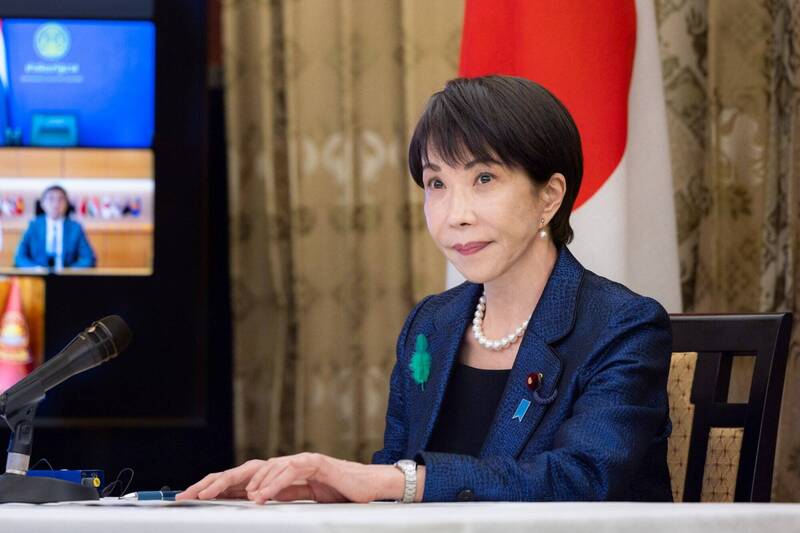
Japan and Philippines Elevate Relations to Comprehensive Strategic Partnership
On May 28, 2026, Japan and the Philippines formally elevated their bilateral relationship to a “Comprehensive Strategic Partnership,” a landmark upgrade announced during a summit between Japanese Prime Minister Sanae Takaichi and Philippine President Ferdinand Marcos Jr. In Tokyo. The move—finalized after months of high-level negotiations—signals a pivot toward deeper military, economic, and technological cooperation in the Indo-Pacific, directly countering China’s expanding influence in Southeast Asia. The partnership includes joint infrastructure projects, expanded semiconductor supply chain collaboration, and a framework for coordinated responses to regional security threats, including maritime disputes in the South China Sea.
The Geopolitical Reckoning: Why This Partnership Matters Now
This upgrade isn’t just symbolic. It’s a calculated response to three converging pressures:

- China’s gray-zone aggression: The Philippines’ recent territorial clashes with Chinese coast guard vessels in the Spratly Islands have forced Manila into a corner. Japan’s military and intelligence assets—particularly its expanded defense cooperation—now provide a critical counterbalance.
- The semiconductor supply chain crisis: With TSMC’s Taiwan operations under constant threat, Japan’s advanced manufacturing ecosystem (including semiconductor R&D hubs in Kyushu) and the Philippines’ emerging tech workforce create a strategic backup for global chip production.
- The U.S. Pivot’s limitations: While Washington remains the Philippines’ primary security guarantor, Japan’s upgrade offers operational depth—something the U.S. Can’t always deliver due to domestic political constraints.
Economic Ripple Effects: Who Wins, Who Loses
The partnership’s economic pillars are already sparking realignments:

| Sector | Japanese Commitments | Philippine Gains | Global Impact |
|---|---|---|---|
| Infrastructure | ¥500 billion (≈$3.4B) in soft loans for Manila’s “Build, Build, Build 2.0” program | Reduced reliance on Chinese Belt and Road Initiative funding. priority for renewable energy projects | Displaces Chinese contractors in Southeast Asian port/rail projects—bad news for Chinese state-backed firms already facing U.S. Sanctions |
| Semiconductors | Joint R&D with Philippine tech universities; potential semiconductor assembly plants | New high-skilled jobs in Clark Freeport Zone; tax incentives for Japanese FDI | Creates a second-tier supply chain node outside Taiwan/Hong Kong—attracting global semiconductor consultants to advise on risk diversification |
| Defense | Transfer of coastal patrol vessels; joint cybersecurity drills | Enhanced maritime surveillance in the West Philippine Sea | Forces China to divert naval assets—opportunity for regional risk analysts specializing in gray-zone conflicts |
“This isn’t just about balancing China—it’s about creating an alternative economic architecture in Southeast Asia. The Philippines is the bridge between Japan’s capital and the region’s labor. If this works, we’ll see a domino effect in Vietnam and Indonesia.”
Security Implications: The South China Sea as a Testing Ground
The partnership’s most immediate impact will be in the South China Sea, where Japan’s upgraded role could redefine the rules of engagement:

- Maritime Domain Awareness (MDA) Sharing: Japan will provide real-time satellite and ISR (Intelligence, Surveillance, Reconnaissance) data to the Philippines, effectively creating a de facto alliance monitoring Chinese naval movements. This forces Beijing to recalculate its cost-benefit analysis of gray-zone tactics.
- Port Access Agreements: The Philippines has granted Japan rotational access to military facilities in Subic Bay and Clark Air Base—mirroring U.S. Basing rights but with Japanese operational control. This is a direct challenge to China’s “nine-dash line” claims.
- Cybersecurity Collaboration: With Chinese state hackers increasingly targeting Philippine critical infrastructure, the partnership includes a joint cyber defense task force. Multinational corporations operating in the region are now scrambling to update their cybersecurity protocols to comply with both Tokyo and Manila’s new data-sharing requirements.
The Corporate Opportunity: Who Stands to Gain?
The partnership creates three distinct business opportunities for global firms:
- Trade Compliance & Supply Chain Restructuring
As Japan and the Philippines align customs regulations under the new partnership, companies with operations in both countries will need to navigate overlapping trade compliance frameworks. The Philippines’ existing free trade agreements (FTAs) with Japan, ASEAN, and the U.S. Will now be harmonized—creating both efficiencies and new red tape for exporters.
- Defense & Dual-Use Technology Exports
Japanese firms like Mitsubishi Heavy Industries and NEC are poised to win contracts for coastal defense systems and cybersecurity infrastructure. Meanwhile, Philippine startups in AI and maritime surveillance will seek export licensing assistance to sell into Japan’s defense market.
- Infrastructure Financing & Risk Mitigation
The ¥500 billion infrastructure fund will require project finance specialists to structure loans with sovereign guarantees. Given Manila’s history of debt defaults, firms with expertise in contingent liability management will be in high demand.
The Long Game: What Happens Next?
The real test will be whether this partnership evolves into a triangular alliance with the U.S. Already, leaks suggest Washington is exploring trilateral defense exercises by late 2027. If successful, this could:
- Accelerate the WTO’s Indo-Pacific Trade Pact negotiations, marginalizing China’s regional economic dominance.
- Force China to either escalate (risking broader conflict) or de-escalate (losing face).
- Attract FDI consultants to position clients for the next wave of Japanese-Philippine joint ventures in semiconductors and renewable energy.
The chessboard is shifting. For businesses, the question isn’t if they need to adapt—but how fast. The firms that move first to understand this partnership’s economic and security contours will dictate the next decade of Indo-Pacific trade flows. And in a region where geopolitics and commerce are increasingly indistinguishable, that’s not just an advantage. It’s survival.