
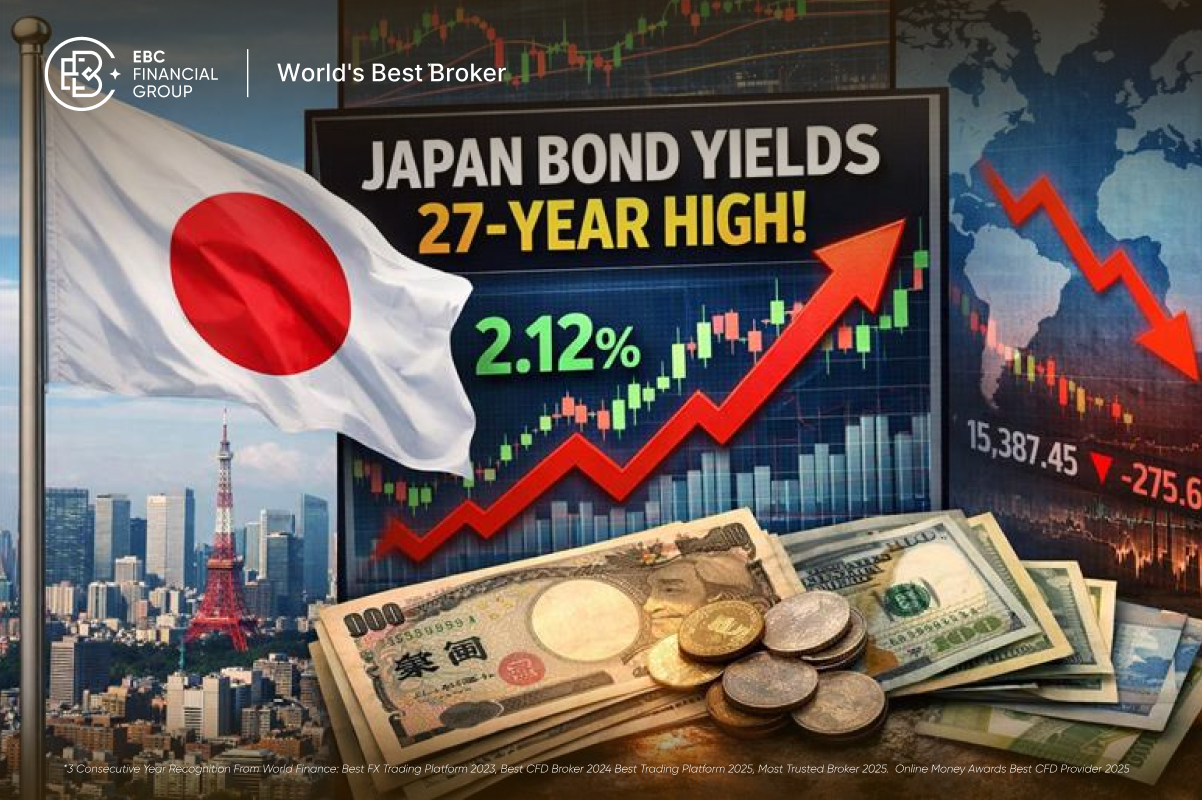
Japan 10-Year Bond Yield Hits 27-Year High Of 2.385% Amid Inflation Concerns
Tokyo’s bond market faces a liquidity shock as 10-year JGB yields spike to 2.385%, driven by crude oil inflation and Bank of Japan tightening signals. Corporate treasurers must immediately reassess debt servicing costs and hedging strategies against a steepening yield curve before Q2 earnings close.
This volatility transcends a single trading session. It represents a structural break in the cost of capital for Asia-Pacific enterprises. For decades, Japanese debt served as a stable funding anchor. That era is terminating. Companies holding variable-rate debt or planning significant CAPEX in the next fiscal quarter face immediate margin compression. The problem is not merely higher interest payments; it is the sudden evaporation of predictable long-term financing models. Corporate finance teams are now scrambling to lock in rates before the window closes, turning to specialized treasury management firms to restructure exposure and mitigate balance sheet risk.
The Mechanics of the Yield Curve Shock
Trading data from the Ministry of Finance confirms the 10-year benchmark yield climbed to 2.385%, a level unseen since 1999. This move was not organic growth; it was a violent repricing of inflation expectations. Crude oil prices have surged, feeding directly into input costs for manufacturing and logistics. When energy costs rise, the real yield on fixed-income assets deteriorates unless nominal rates adjust upward. The market is pricing in a more aggressive normalization path for the Bank of Japan. Per the latest BOJ Monetary Policy Statement, the central bank is signaling a departure from yield curve control, forcing institutional holders to dump ultra-long-term bonds.

Liquidity is drying up in the secondary market. Bid-ask spreads are widening, meaning it costs more to enter or exit positions. For CFOs, this translates to higher hedging costs. A company that relied on cheap yen funding for overseas acquisitions now faces a double whammy: a potentially stronger yen due to rate hikes, but significantly higher domestic borrowing costs. The arbitrage opportunity that fueled cross-border M&A for the last five years is vanishing. Strategic planners need to pivot from growth-at-all-costs to capital preservation.
“We are seeing a fundamental disconnect between equity valuations and bond market reality. The cost of debt is rising faster than EBITDA growth projections in the industrial sector.”
That assessment comes from the Head of Fixed Income Strategy at a leading Tokyo-based asset manager, speaking on condition of anonymity regarding client positioning. The sentiment reflects a broader institutional anxiety. When bond yields rise this quickly, equity multiples usually contract. Investors demand higher returns for holding riskier assets when risk-free rates offer nearly 2.4%. This compression hits high-growth tech firms hardest, but traditional manufacturers with heavy debt loads are equally vulnerable.
Inflationary Pressures and Supply Chain Resilience
Oil prices are the primary catalyst here. Energy costs permeate every layer of the supply chain, from raw material extraction to final delivery. A sustained rise in crude forces producers to either absorb the cost, crushing margins, or pass it to consumers, risking demand destruction. Neither option is palatable for public companies guiding earnings for 2026. Procurement departments are under immense pressure to secure long-term supply contracts at fixed prices to insulate against commodity volatility. This requires sophisticated contract negotiation and legal oversight.
Many mid-cap firms lack the internal legal infrastructure to handle complex commodity hedging agreements. They are increasingly outsourcing this function to commodity risk advisory firms that specialize in energy derivatives. These providers offer the structural expertise needed to lock in fuel costs without exposing the firm to counterparty risk. Without such protection, a sudden spike in oil could wipe out a quarter’s profit in a single week. The market is punishing uncertainty. Firms that demonstrate controlled exposure to energy prices will retain investor confidence; those that do not will spot their cost of capital skyrocket.
Three Structural Shifts for Corporate Strategy
The bond market turmoil is not a temporary glitch. It dictates a new operational reality for the remainder of the fiscal year. Treasury departments must move from passive management to active defense. The following shifts are already becoming mandatory for survival in this high-yield environment:
- Debt Refinancing Acceleration: Companies with maturities coming due in 2027 or 2028 should consider refinancing immediately, even at current elevated rates, to avoid potential further hikes. Waiting for a dip is a speculative gamble most corporates cannot afford.
- CAPEX Prioritization: Capital expenditure budgets must be audited. Projects with long payback periods become less viable when the discount rate rises. Only high-IRR initiatives should proceed; everything else faces deferral.
- M&A Valuation Resets: Acquisition targets priced on low-interest-rate assumptions are now overvalued. Buyers must renegotiate terms or walk away. Due diligence processes now require stress-testing target cash flows against a 3% yield environment.
These adjustments require external validation. Internal finance teams often lack the bandwidth to model these scenarios under stress. Engaging M&A advisory firms becomes critical not just for deals, but for defensive valuation analysis. They provide the independent data needed to justify budget cuts or strategic pivots to the board. In a volatile market, third-party verification adds credibility to tough financial decisions.
The Path Forward for Q2 2026
Volatility is the new baseline. The 2.385% yield on the 10-year JGB is likely a floor, not a ceiling, if oil prices remain entrenched above key resistance levels. The Bank of Japan will not pivot back to easing unless inflation data collapses, which seems unlikely given the global energy context. Corporations must assume rates will grind higher throughout the second quarter. Cash flow management becomes the primary KPI. Burn rates must be reduced. Liquidity reserves need to be bolstered.
Investors are rotating out of growth and into value, seeking companies with strong free cash flow and low leverage. The narrative has shifted from expansion to efficiency. Firms that adapt quickly will secure better financing terms and maintain market share. Those that hesitate will find themselves locked out of capital markets when they need funding most. The World Today News Directory connects leadership with the vetted partners required to navigate this transition. Finding the right financial counsel is no longer optional; it is a fiduciary necessity.