
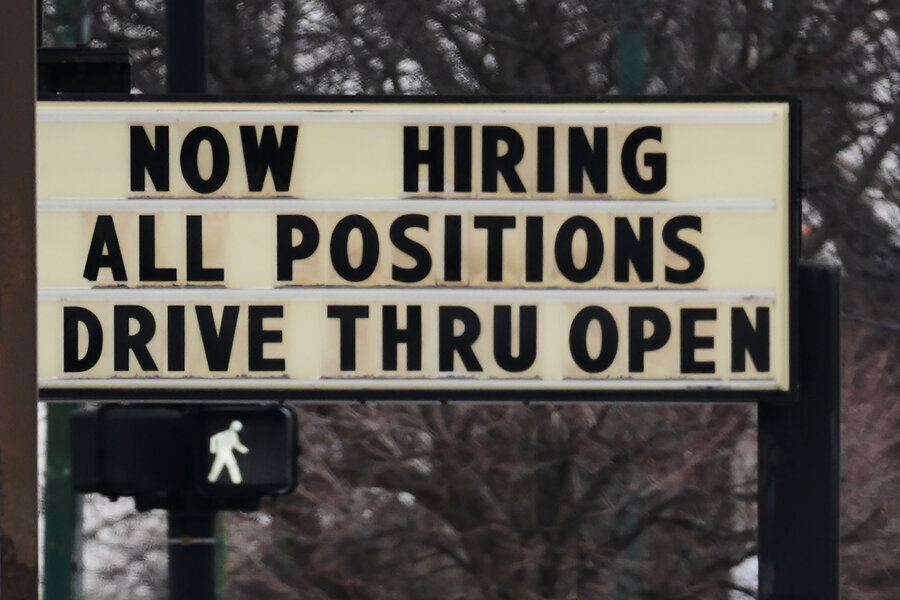
WASHINGTON — The U.S. Economy added 130,000 jobs in January, marking the strongest monthly gain of President Donald Trump’s second term and a potential signal of recovery after a sluggish 2025. The unemployment rate edged down to 4.3% from 4.4%, according to data released Wednesday by the Bureau of Labor Statistics.
The White House quickly hailed the report as evidence of the success of the administration’s economic policies. “Today’s blockbuster, expectation-shattering jobs report proves that President Trump’s economic agenda continues to pay off,” said White House deputy press secretary Kush Desai.
However, economists remain cautious, citing lingering uncertainties surrounding trade policy, the impact of artificial intelligence on employment and the administration’s immigration policies. “I’ll take the number,” said Mark Zandi, chief economist of Moody’s Analytics, “But I don’t take any solace in it.” He added that “too much uncertainty reigns.”
The January report arrives as the political stakes surrounding the economy rise ahead of the midterm elections. A continued economic improvement could bolster Republican efforts to retain their slim majority in the House of Representatives, but voters are closely monitoring inflation and job growth. A recent Fox News poll found that 54% of Americans believe the country is worse off than it was a year ago, compared to 31% who feel it has improved.
One potential tailwind for the economy is the tax cuts enacted under the “One Substantial Beautiful Bill Act,” which the Tax Foundation estimates will put an additional $300 to $1,000 in taxpayers’ pockets this year. The Tax Foundation also suggests that easing supply chain disruptions, following the initial shock of President Trump’s tariff campaign, could contribute to a further reduction in inflation, which has hovered around 3% in recent months.
Despite these positive factors, significant headwinds remain. The administration’s ongoing threats of new tariffs, including a potential withdrawal from the USMCA trade agreement with Mexico and Canada, continue to create uncertainty. The House is scheduled to vote Wednesday on a measure to reject some of President Trump’s existing tariffs, a move supported by some Republicans joining with Democrats. FactCheck.org has previously reported on the economic impact of these tariffs, estimating they cost American households $1,000 last year and are projected to cost $1,300 this year.
The potential for job displacement due to the increasing adoption of artificial intelligence also looms large. While some researchers believe companies will redeploy workers to new roles, others warn of significant job losses and increased productivity-driven profits.
The administration’s restrictive immigration policies are further contributing to labor shortages, which could constrain long-term economic growth. While a tighter labor market may benefit some American workers in the short term, economists warn of the potential for long-term economic drag.
A closer look at the January employment report reveals a mixed picture. The White House highlighted that private sector job gains – 172,000 – exceeded the overall number, while government employment fell by 42,000 as the administration continues its efforts to reduce federal payrolls. However, revisions to previous months’ data revealed that job growth in 2025 was significantly weaker than initially reported, with employment increasing by only 181,000 jobs, or 0.23%. This represents the worst performance in any administration’s first 12 months since President Barack Obama took office in 2009 during the Great Recession. Common Dreams reported on the revised data, highlighting its implications for the administration’s economic claims.
nearly all of January’s job gains were concentrated in two sectors – health care and construction – according to Nancy Vanden Houten, lead economist at Oxford Economics. “The January employment report surprised to the strong side,” she noted, “But [it] overstates any emerging strength in the labor market.”
