
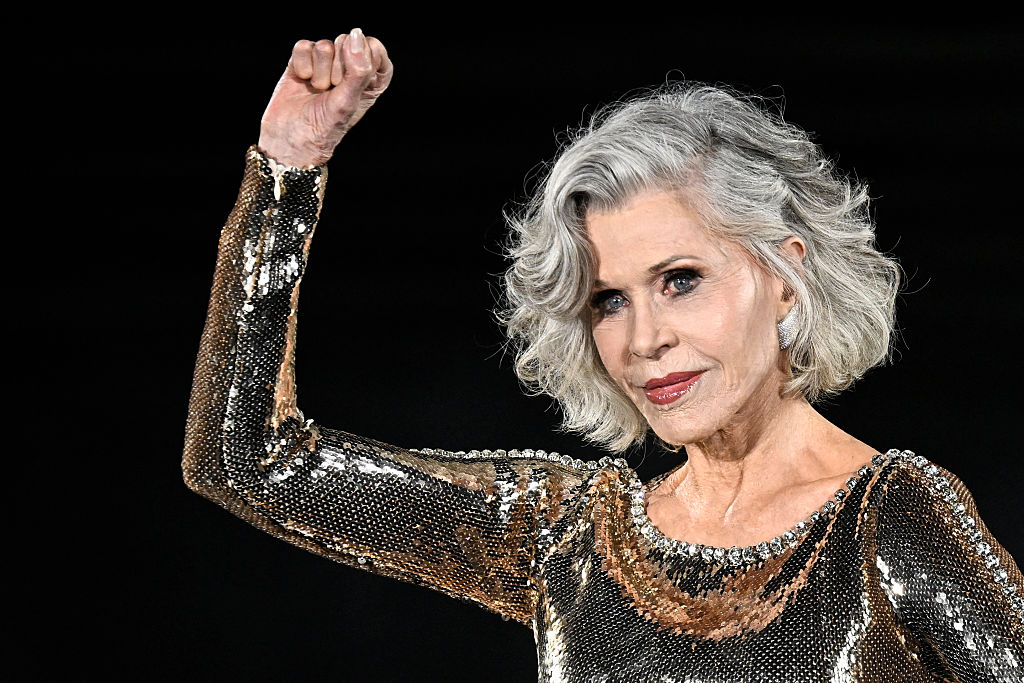
Jane Fonda Revives Hollywood’s First Amendment Defense Committee Amid Contemporary Free Speech Concerns
LOS ANGELES, CA – Actress and activist Jane Fonda has reactivated the Committee for the First Amendment, originally formed in 1947 too defend colleagues targeted during the Red Scare, signaling a renewed commitment to protecting artistic expression in the face of perceived censorship.The revival comes as debates surrounding free speech intensify, highlighted by recent controversies including ABC’s suspension of Jimmy kimmel.
The committee’s re-emergence underscores a growing anxiety within the entertainment industry regarding pressures on creative freedom. Established during a period of intense anti-communist scrutiny, the original committee-comprising luminaries like Henry Fonda, Lucille ball, Judy Garland, Humphrey Bogart, Gene Kelly, and Frank Sinatra-directly confronted government overreach. Today, the group aims to address what it views as contemporary threats to free expression, though it has not specified all targets of its concern.
In 1947, the original committee members journeyed to Washington D.C. to protest congressional hearings investigating alleged communist influence in Hollywood. Garland, during a 1947 radio broadcast titled “Hollywood Fights Back!”, powerfully articulated the distinction between artistic critique and attacks on fundamental rights, stating, “It’s one thing if someone says we’re not good actors.That hurts. But we can take that. it’s something again to say we’re not good Americans.” A restored version of this broadcast has been recirculated by organizers alongside the committee’s reactivation.
The White House responded to the committee’s recent statement, though it wasn’t directly addressed to President Trump, with spokesperson Abigail Jackson asserting President Trump’s support for free speech.Jackson stated, “As someone who actually knows what it’s like to be censored, President Trump is a strong supporter of free speech, and Democrat allegations to the contrary are so false, they’re laughable.”
The committee’s renewed activity suggests a willingness to engage in what organizers are calling “protest through participation,” as exemplified by the Kimmel suspension. The group’s future actions and specific areas of focus remain to be seen, but its revival signals a determination to uphold the principles of artistic freedom in a rapidly evolving political and social landscape.
