
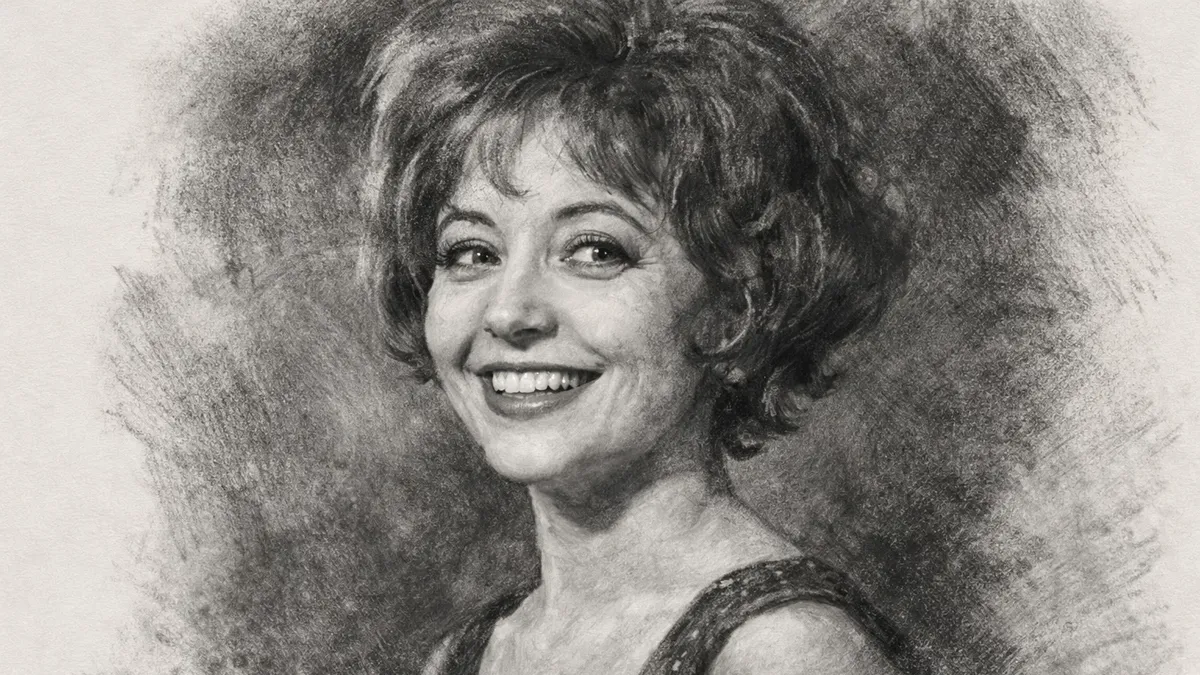
Jana Petrů: The Tragic Fate of Karel Gott’s “Beautiful Day” Duet Partner
The iconic duet “Den je krásný” (It’s a Beautiful Day) from the beloved Czech film musical Starci na chmelu (Old Men at the Hops) captivated audiences in 1964, but the story of one of its singers, Jana Petrů, faded from public view decades ago. Whereas Karel Gott remains a household name in the Czech Republic, Petrů’s life took a tragic turn, her promising career cut short by personal tragedy and a quiet and largely unnoticed death.
Born on July 14, 1938, in Prague, Petrů began her professional singing career in 1962 as a vocalist with the Julia Fučík Park Culture and Recreation Dance Orchestra, led by conductor Kamil Lochman. She quickly distinguished herself with her charming appearance and a warm, versatile voice. Unlike many of her contemporaries, Petrů wasn’t confined to a single genre, performing pop, swing, jazz, rock ‘n’ roll, and folk songs with equal skill. Josef Zíma, a fellow singer, recalled her “great rhythm and feeling for swing,” emphasizing that she “insisted on singing swing – and she really sang it well.”
Petrů’s early career saw her collaborate with leading Czech orchestras, including the Czechoslovak Radio Dance Orchestra, and those led by Karel Vlach, Karel Duby, and Ferdinand Havlík. The early 1960s witnessed the emergence of a constellation of female stars on the Czech music scene – Eva Pilarová in jazz and swing, Yvetta Simonová in dance pop, and Hana Hegerová in chanson – but Petrů stood out for her stylistic breadth. She maintained a degree of privacy, rarely granting interviews despite her growing fame.
In 1964, Petrů reached a career peak with Starci na chmelu. Though actors Vladimír Pucholt and Ivana Pavlová lip-synced the song on screen, it was Gott and Petrů who provided the vocals for “Den je krásný,” composed by Jiří Bažant, Jiří Malásek, and Vlastimil Hála, with lyrics by Vratislav Blažek. The song became a national hit, embodying the optimistic spirit of the era and cementing Gott and Petrů as romantic icons.
The film’s success propelled Petrů to national prominence. She had already achieved success with songs like “Páni rodičové” (Parents, Gentlemen) and “U nás v podkroví” (In Our Attic), but “Den je krásný” elevated her to a new level of recognition. Her repertoire also included bosanovas, twist songs like “Sentimentální” (Sentimental), and even folk and brass band music, a stylistic diversity uncommon among singers of the time.
1964 proved to be a landmark year. Petrů placed third in the Zlatý slavík (Golden Nightingale) music awards, surpassing established stars like Marta Kubišová, Helena Vondráčková, and Yvonne Přenosilová. Only Eva Pilarová and Yvetta Simonová ranked higher. She continued to perform well in the following years, finishing sixth in the 1965 Zlatý slavík awards, and frequently collaborated with popular male singers like Milan Chladil and Josef Zíma.
However, Petrů’s ascent was abruptly halted at the end of the 1960s. In January 1969, her husband, Pavel Staněk, a jazz drummer with the Karel Vlach Orchestra, was found dead in the Vltava River under unclear circumstances. The cause of death remains unresolved, with speculation ranging from accident to suicide. The loss devastated Petrů, and she began to withdraw from public life.
Colleagues described Petrů as a reserved and introspective woman, and her grief following Staněk’s death led to a gradual disappearance from the music scene. While some speculated about political reasons for her withdrawal, particularly in the context of the increasing repression following the 1968 Soviet invasion, her niece, Jana Bejdová, later stated that the decision stemmed from political factors. However, no evidence of conflict with the communist regime has been found in the archives of the StB, the Czechoslovak secret police. Josef Zíma noted that she struggled with personal issues and, later, alcohol.
There were attempts to revive Petrů’s career in the 1980s, but they proved unsuccessful. She reportedly began rehearsals with Jiří Slavík’s dance orchestra, but failed to appear for a tour. By the early 1970s, Petrů had effectively vanished from the public eye, ceasing to record new music and make public appearances.
Jana Petrů died on May 6, 1990, at the age of 51, in a fire at her apartment. The cause of the fire remains unknown. Her death went largely unnoticed, overshadowed by the political changes sweeping Czechoslovakia following the Velvet Revolution.