Jammu and Kashmir policy backfires, says Crisis Group report
Seven years after New Delhi revoked Jammu and Kashmir’s semi-autonomous status in August 2019, ostensibly to curb militant activity and bring peace, bitterness and disaffection fester among Kashmiri Muslims. While the policy has succeeded in some ways, it has backfired in others, fueling resentment of the Indian state and failing to uproot militant groups that have gone underground while evolving in their tactics and targets, according to a report published by the International Crisis Group.
BJP Security Measures Spark Militant Response
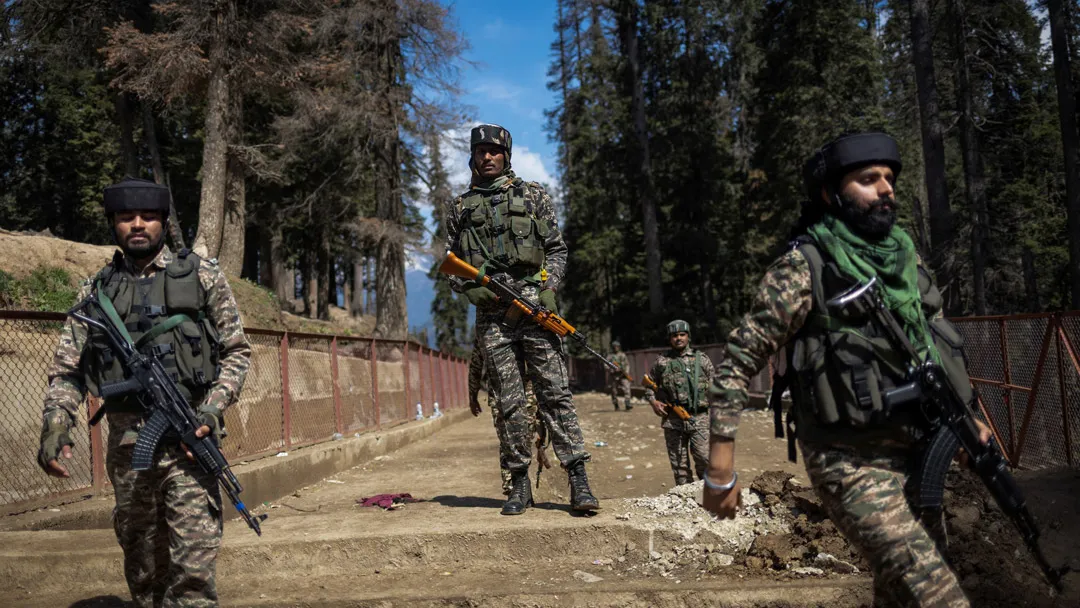
Following the 2019 constitutional changes, Prime Minister Narendra Modi’s Hindu nationalist Bharatiya Janata Party (BJP) government moved aggressively to pre-empt unrest by locking down public spaces, restricting communications and religious practices, and arresting politicians and activists. While these measures stymied opposition, they also disrupted traditional political dialogue, sealed shut channels for airing grievances, and sparked a militant response. A deadly terrorist attack and massacre of tourists in April 2025 in Baisaran near Pahalgam in south Kashmir’s Anantnag district triggered a four-day conflict between India and Pakistan after New Delhi blamed Islamabad. Although a ceasefire ended that clash in a stalemate, another incident in Jammu and Kashmir or elsewhere in India could once again trigger conflict between the two nuclear powers.
New Delhi’s tough security approach to the region failed to uproot militant groups which retain the capability to strike. India and Pakistan should seek to revive quiet diplomacy through high-level back channels to prevent future confrontations. https://t.co/alSg0MroDg
Pathways to Peace and Statehood
To prevent future confrontation and bring peace to the region, the report outlines that New Delhi will need to shift tack and reconsider its heavy-handed approach to governance. Recommendations include pushing forward plans to restore Jammu and Kashmir’s statehood, handing powers back to regional authorities to strengthen local rule and deprive insurgents of their main rallying cry, and reining in the harsh, counterproductive use of anti-terror laws. India and Pakistan, with the support of foreign governments, should seek to revive high-level back channels to defuse the potential for conflict and support détente.
More on Jammu
Seven years after New Delhi revoked the semi-autonomous status of Jammu and Kashmir, Indian-held Kashmir is quieter on the surface but increasingly bitter underneath. A new International Crisis Group (ICG) report, 'A Trigger in Jammu and Kashmir: Militant Violence under Indian… pic.twitter.com/mTvJfgKbgW
Seven years after India revoked Jammu and Kashmir’s semi-autonomous status and ushered in sweeping reforms, ostensibly to bring peace to the Himalayan region, bitterness festers. Our new report unpacks why New Delhi should push forward plans to restore Jammu and Kashmir’s…
Seven years after the Indian government revoked Jammu and Kashmir’s special autonomous status, the threats to local and regional security from the restive Himalayan region persist. The Indian government should do more to ensure that this unresolved conflict does not become the…
– @CrisisGroup’s new report on Jammu & #Kashmir is being read in headlines as a one-sided attack on India.Read the full 30 pages and it's more nuanced. A thread on what it actually says 🧵The report concedes India's security gains. Terror attacks are down, active militant… pic.twitter.com/oECEZkyMvC