
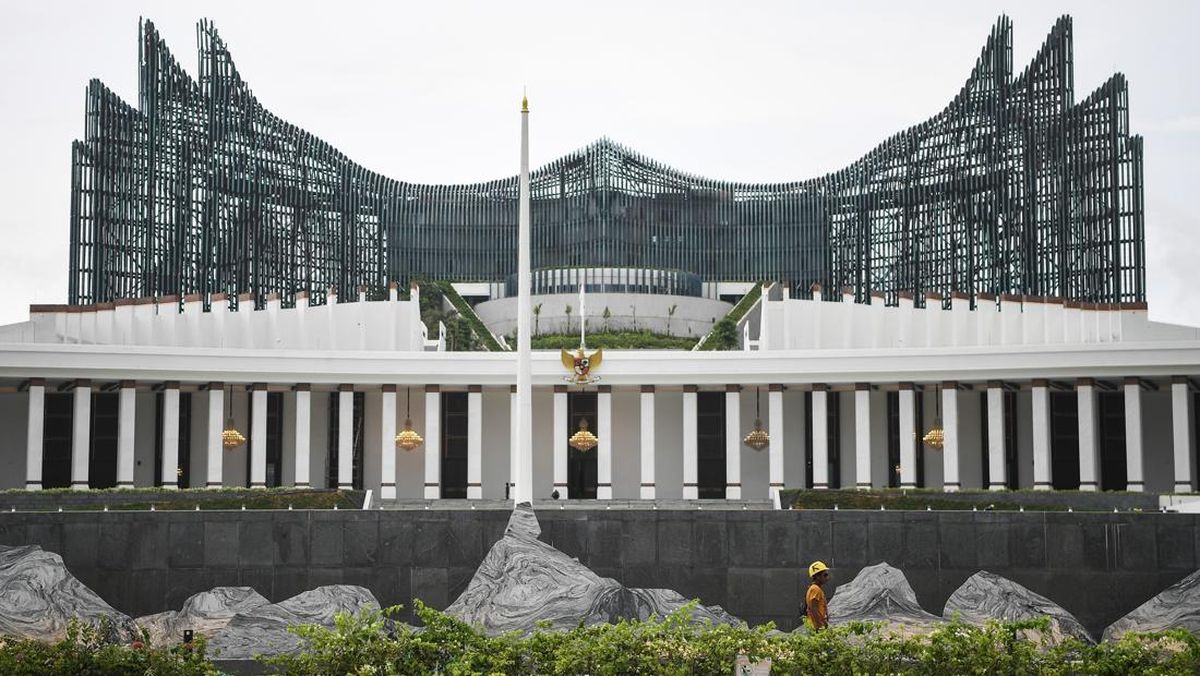
Jakarta Remains Indonesia’s Capital Following Constitutional Court Ruling
Indonesia’s Constitutional Court on May 14, 2026, ruled Jakarta remains the nation’s capital until a presidential decree formally transfers the status to Nusantara (IKN), rejecting a petition challenging the 2022 capital relocation law. The decision—while legally preserving Jakarta’s status—accelerates pressure on President Prabowo Subianto to issue the decree, setting a critical deadline for IKN’s operationalization. Meanwhile, lawmakers demand the new capital begin functioning immediately, exposing a legal and logistical tug-of-war with economic and administrative stakes for both cities.
The Legal Labyrinth: Why This Ruling Matters Now
The Constitutional Court’s decision in Case No. 71/PUU-XXIV/2026 hinges on a technicality: the 2022 law (Law No. 3/2022) established Nusantara as the capital, but its activation requires a presidential decree. The Court affirmed Jakarta’s status remains valid “until the decree is issued,” creating a legal limbo that could stretch for months—or indefinitely if political will stalls.
Key Implications:
- Presidential Authority: The decree is the sole trigger for IKN’s activation. Without it, Jakarta retains all capital functions, including government ministries, diplomatic missions, and legislative bodies.
- Economic Duality: Both cities now operate as de facto capitals, with Jakarta’s GDP ($120 billion in 2023) and IKN’s projected $100 billion infrastructure investment creating parallel administrative costs.
- Public Trust: Delays risk undermining confidence in IKN’s $32 billion development plan, already facing criticism over construction delays and corruption allegations.
“The Court’s ruling is a legal reset, not a rejection. It forces the president to act—or face accusations of inaction while billions in taxpayer funds sit idle in Kalimantan.”
Jakarta vs. Nusantara: The Economic and Political Divide
Jakarta’s status as Indonesia’s economic engine—home to 32% of the nation’s corporate headquarters—contrasts sharply with IKN’s planned role as a “green, modern capital.” The Court’s decision exposes a fracture between political rhetoric and practical governance. While the Nusantara Capital Authority (OIKN) insists construction is “on track,” lawmakers like Fadli Zon (Golkar Party) are pushing for immediate functional use of IKN’s government buildings, despite unfinished infrastructure.

| Metric | Jakarta (2023) | Nusantara (Projected 2030) |
|---|---|---|
| GDP Contribution | $120 billion (30% of Indonesia’s GDP) | $100 billion (target, post-relocation) |
| Population | 11 million (metro: 42 million) | 1.5 million (planned) |
| Infrastructure Spend | $80 billion (2014–2024) | $32 billion (2022–2024) |
| Diplomatic Presence | 180+ embassies | 0 (as of May 2026) |
The economic disparity underscores why lawmakers like Zulkifli Hasan (PKB Party) argue for IKN’s immediate use: “There’s no legal vacuum. The capital is already Nusantara—we must stop treating it as a symbolic project.” Yet, without the presidential decree, ministries risk legal challenges if they relocate prematurely.
Local Impact: Jakarta’s Infrastructure and Political Fallout
In Jakarta, the ruling triggers a cascade of municipal and economic effects. The city’s government must now prepare for prolonged capital status, including:
- Budget Reallocation: Jakarta’s 2026 budget allocates $1.2 billion for capital-city functions. Delays in IKN’s activation could force reallocations, straining public services.
- Real Estate Market: Commercial property values in Jakarta’s “Golden Triangle” (Kemang, SCBD) may stabilize, but IKN’s delayed activation could deter foreign investors seeking “capital city” premiums.
- Diplomatic Logistics: Embassies and multinational corporations face extended uncertainty. The Indonesian Foreign Ministry has already begun quietly relocating non-essential staff to IKN’s temporary offices.
“Jakarta’s economy is resilient, but this ruling creates a ‘two-capital’ scenario that no city has successfully managed. The longer the delay, the higher the risk of economic bifurcation.”
The Path Forward: What Happens Next?
The next 90 days are critical. President Prabowo Subianto must decide whether to:
- Issue the Decree: Activating IKN immediately, risking legal challenges from Jakarta-centric factions.
- Delay Indefinitely: Maintaining Jakarta’s status, but facing accusations of abandoning IKN’s $32 billion investment.
- Phase the Transition: A hybrid approach, relocating ministries incrementally—a strategy that could take years.
Regardless of the choice, the legal and logistical hurdles are immense. For businesses and citizens, the uncertainty creates risks that demand immediate mitigation:
Problems Created by This Ruling—and How to Solve Them
- Legal Uncertainty for Corporations:
Companies with Jakarta-based operations face ambiguity over tax incentives, regulatory oversight, and labor laws. Corporate law firms specializing in Indonesian constitutional law are advising clients to diversify operations between both cities to hedge risks.

Jakarta city skyline - Infrastructure Gaps in IKN:
Despite $32 billion in spending, IKN lacks critical utilities (water, power) and transport links. Specialized infrastructure contractors with experience in remote development (e.g., Waskita Karya) are being engaged to accelerate projects.
- Diplomatic and Security Transition:
Relocating embassies and military headquarters requires coordination between the Foreign Ministry, TNI, and local governments. Public sector advisory firms are assisting in drafting transition protocols.
- Public Communication Crisis:
The mixed messaging risks social unrest. Crisis communication agencies are working with local governments to clarify the timeline and benefits of the relocation.
The Long Game: What This Means for Indonesia’s Future
This ruling is more than a legal technicality—it’s a referendum on Indonesia’s ability to execute large-scale national projects. The IKN relocation, initially framed as a 20-year endeavor, now faces a 12-month window for credibility. If the presidential decree isn’t issued by late 2026, the project risks becoming a symbol of bureaucratic failure, with economic and political consequences rippling across Southeast Asia.
For now, Jakarta remains the heartbeat of Indonesia. But the clock is ticking. The question isn’t whether Nusantara will become the capital—it’s whether it will do so in time to avoid becoming another white-elephant megaproject.
Need to navigate this uncertainty? Whether you’re a business, government agency, or citizen, the World Today News Directory connects you with verified professionals equipped to handle Indonesia’s capital transition—from legal experts to infrastructure specialists.