
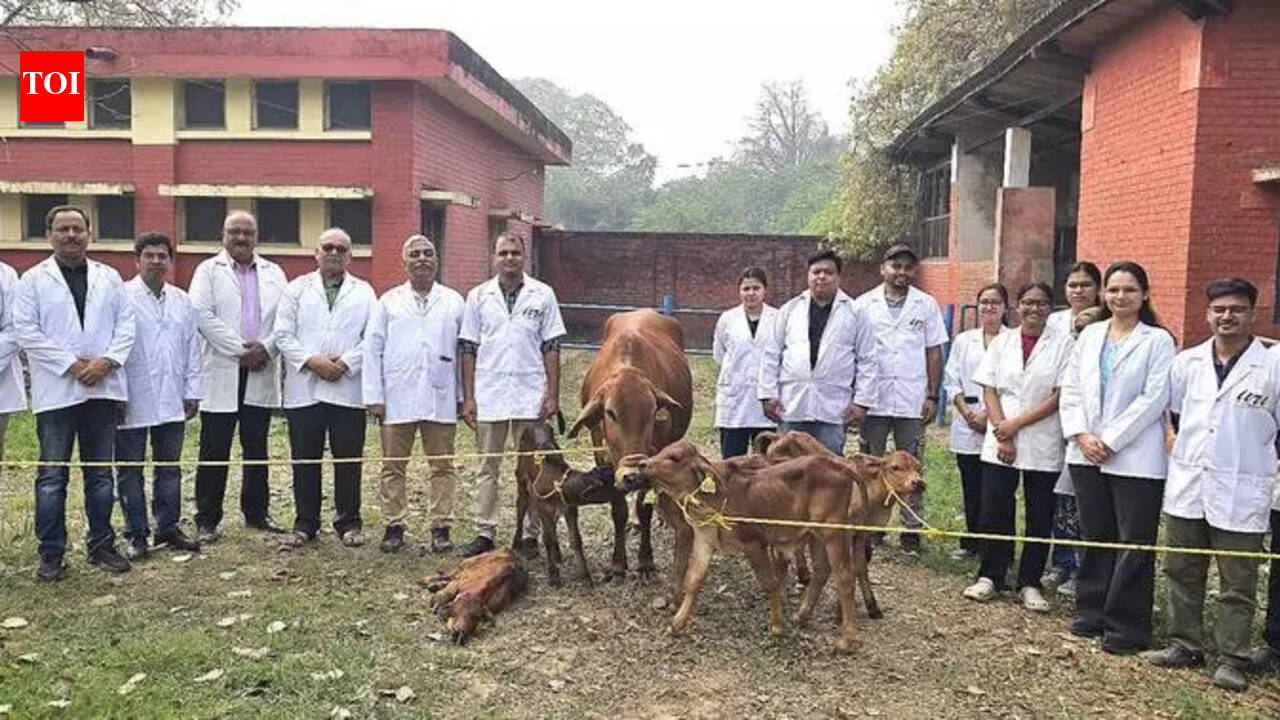
IVF Success: 5 Indigenous Sahiwal Calves Born in Bareilly | IVRI
Scientists at the Indian Veterinary Research Institute have achieved a significant milestone in assisted reproductive technology, successfully delivering five indigenous Sahiwal calves through a single in vitro fertilisation attempt. This breakthrough, finalized in February 2026, underscores the growing efficacy of ovum pick-up and embryo transfer protocols in large animal models. While the immediate application targets agricultural productivity, the underlying biological mechanisms mirror those used in human reproductive medicine, offering critical data on embryo viability and genetic selection.
- Key Clinical Takeaways:
- Researchers achieved a 31.25% delivery rate (5 calves from 16 subjects) using advanced ovum pick-up and IVF protocols.
- The study utilized high-quality germplasm to enhance milk production traits and breed resilience.
- Success in veterinary IVF models provides translational data for human assisted reproductive technology efficiency.
The procedure represents a refinement of existing biotechnological frameworks, moving beyond traditional embryo transfer methods that often yield lower success rates per cycle. By integrating ultrasound-guided ovum pick-up with laboratory-based fertilisation, the team minimized invasive procedures while maximizing genetic output. This approach addresses a persistent clinical gap in reproductive biology: optimizing the ratio of viable embryos to successful live births. In human medicine, similar challenges persist among board-certified reproductive endocrinologists who manage complex infertility cases where embryo quality remains a primary variable.
The Clinical Mechanism of OPU-IVF-ET
The protocol employed by the IVRI team follows a strict sequence known as OPU-IVF-ET. First, ultrasound guidance facilitates the retrieval of oocytes from donor cows. These gametes undergo fertilisation in a controlled laboratory environment before resulting embryos are transferred into surrogate animals. This method reduces the physiological stress on the donor compared to superovulation techniques, which require heavy hormonal stimulation. The reduction in hormonal load parallels efforts in human fertility treatments to mitigate ovarian hyperstimulation syndrome, a significant morbidity risk in patients undergoing IVF.
Statistical efficiency remains the core metric for evaluating such interventions. In this cohort, 16 cows underwent the procedure, resulting in five healthy deliveries. While the sample size is limited, the consistency of the outcome suggests a robust protocol. Historical data from similar veterinary studies often show variable success rates depending on breed specificity and laboratory conditions. The employ of superior germplasm, including semen from high-yield breeds, acted as a control variable to ensure genetic potency. This mirrors the selection criteria used in preimplantation genetic testing for human embryos, where genetic screening aims to reduce miscarriage rates and improve live birth outcomes.
Expert consensus in reproductive biology emphasizes the importance of embryo quality over quantity. Dr. Zev Rosenwaks, a leading figure in reproductive medicine, has previously noted in peer-reviewed discussions that “the competence of the embryo is the single most critical determinant of implantation success.” This principle applies universally across mammalian species. By focusing on high-quality germplasm rather than mass production, the IVRI team aligns with best practices established in human clinical trials. Researchers and clinics analyzing these outcomes can reference broader data available through PubMed indexed studies on embryo viability to contextualize these veterinary results within the wider scope of reproductive science.
Public Health Implications and Food Security
Beyond the laboratory, this development addresses a macro-level public health concern: food security. The Sahiwal breed is renowned for heat tolerance and milk yield, traits essential for sustainable agriculture in changing climatic conditions. Enhancing the population of such breeds through biotechnology reduces the reliance on less efficient stock, thereby improving nutritional output per animal. The Food and Agriculture Organization of the United Nations highlights that livestock productivity is directly linked to community health and economic stability in agrarian societies. Increasing milk production through genetic improvement supports nutritional intake, particularly in regions where dairy is a primary protein source.
However, scaling this technology requires rigorous oversight. The transition from research to widespread agricultural application involves complex regulatory hurdles. Biotech innovations in livestock must comply with safety standards to prevent unintended genetic consequences or ecological disruptions. Agricultural biotech firms and research institutes often require healthcare compliance attorneys or regulatory specialists to navigate the intersection of veterinary science and public health law. Ensuring that embryo transfer technologies do not compromise animal welfare or food safety is paramount for maintaining public trust.
The funding for this initiative stems from institutional support under the Indian Council of Agricultural Research, reflecting a government-led commitment to agricultural modernization. Transparency in funding sources is critical for validating scientific claims. Unlike private sector trials where profit motives may influence reporting, publicly funded research undergoes stricter accountability measures. This aligns with global standards for clinical transparency, where disclosure of financial interests is mandatory to prevent bias. Stakeholders reviewing this data should consider the source integrity when evaluating the potential for commercial adoption.
Regulatory Frameworks and Biotech Compliance
The integration of IVF into livestock management introduces questions regarding genetic diversity and long-term herd health. Rapid propagation of specific genetic lines can lead to bottlenecks, increasing susceptibility to disease. To mitigate this risk, geneticists recommend maintaining a broad gene pool alongside improved stock. Genetic counselors and specialists in human medicine face analogous challenges when advising patients on hereditary conditions. The principles of managing genetic risk are consistent across species, requiring a balance between improvement and diversity.

Regulatory bodies such as the World Health Organization monitor the intersection of animal health and human disease, particularly regarding zoonotic risks. While IVF itself does not increase zoonotic transmission, the movement of genetic material across regions requires biosecurity protocols. The World Health Organization provides guidelines on One Health approaches that integrate animal, human, and environmental health. Adhering to these frameworks ensures that technological advancements in veterinary medicine do not inadvertently compromise public health safety.
Looking forward, the success of this trial suggests a pathway for more efficient livestock breeding programs. However, the translation of these methods to commercial farms requires validation through larger cohort studies. The current N-value of 16 subjects provides preliminary evidence but lacks the statistical power of a Phase III clinical trial. Future research must focus on long-term health outcomes of the calves and the metabolic impact on surrogate mothers. For healthcare providers and biotech investors monitoring this space, understanding the regulatory landscape is as crucial as the biological data.
The convergence of veterinary science and human reproductive technology offers a unique opportunity for cross-disciplinary learning. As methods for embryo selection and transfer improve in animal models, human medicine may adopt refined protocols to enhance success rates. Conversely, ethical standards from human clinical trials can guide veterinary practices to ensure animal welfare. Stakeholders seeking to implement similar biotechnologies should engage with vetted professionals who understand both the clinical and regulatory dimensions of reproductive science. This ensures that innovation proceeds without compromising safety or ethical standards.
Disclaimer: The information provided in this article is for educational and scientific communication purposes only and does not constitute medical advice. Always consult with a qualified healthcare provider regarding any medical condition, diagnosis, or treatment plan.