Italy Approves Antisemitism Bill Incorporating IHRA Definition Amid Free Expression Concerns
Italy approved a contentious new antisemitism bill on Tuesday that incorporates the International Holocaust Remembrance Alliance definition into domestic law, drawing immediate criticism from human rights groups over free expression concerns.
The legislation passed in the Italian Parliament’s lower house with 147 votes in favour, 93 votes against, and five abstentions, according to the South African Jewish Report. The measure codifies the IHRA working definition as a reference framework to guide national anti-discrimination efforts.
Prime Minister Giorgia Meloni’s right-wing government backed the initiative as an essential tool to protect vulnerable communities. The law creates a three-year national strategy overseen by a newly established national coordinator, aiming to monitor incidents, tackle online hate, and boost educational programs.
Proponents point to a sharp escalation in hostility to justify the legislative push. Antisemitism Observatory recorded 963 incidents across Italy in 2025, which is roughly four times higher than the total recorded in 2022.
Opposition Parties Split over Antisemitism Bill
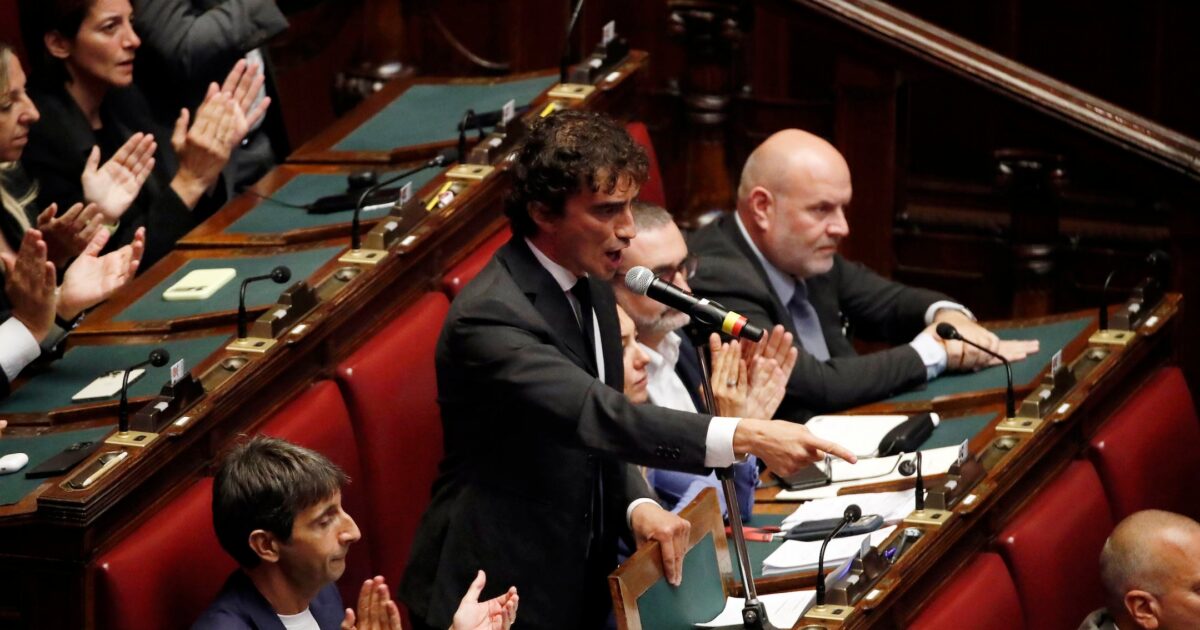
The legislative process exposed deep rifts within Italy’s centre-left opposition. Lawmakers from parties including the Five Star Movement and the Green-Left Alliance strongly opposed the measure, arguing it targets legitimate political discourse.

“The right is exploiting the antisemitism bill to stifle criticism.”
said Angelo Bonelli, co-leader of the Green-Left Alliance, as reported by TimesLIVE.
Other opposition figures attempted to alter the text. Laura Boldrini, a member of the centre-left Democratic Party, backed an unsuccessful amendment that would have substituted the IHRA framework with the Jerusalem Declaration on Antisemitism. “The majority does not really want to fight antisemitism,” Laura Boldrini, a member of the centre-left Democratic Party, said on X, arguing that the adopted framework serves to censor criticism of the Israeli government.
Despite official party opposition, a small bloc of lawmakers within the Democratic Party abstained from voting rather than joining the total rejection. Supporters within the governing coalition insisted that standard political criticism remains fully protected under the country’s constitutional guarantees.
Amnesty International Warns Definition Chills Free Expression
Outside the Italian parliament, human rights organizations condemned the final vote. Erika Guevara Rosas, Amnesty International’s senior director for research, advocacy, policy, and campaigns, called the decision a bleak day for freedom of expression, warning that the legally referenced definition risks chilling peaceful assembly and public advocacy.
Italy approves law to combat antisemitism that references IHRA definition of antisemitismhttps://t.co/2uBiMveQnn
The Amnesty International reporting on the vote emphasized that the framework could be instrumentalized to penalize criticism of state policies. Similar concerns have been raised globally regarding how governments balance protections against bigotry with the right to criticize foreign governments.
Conversely, international officials welcomed the legislative step. Israeli Foreign Minister Gideon Sa’ar praised the development, stating that Italy is sending a clear message of zero tolerance as antisemitism surges worldwide.
Domestic community leaders similarly defended the measure’s broader social utility. Livia Ottolenghi, the president of the Union of Italian Jewish Communities, said she was very satisfied with the law, describing it in the SA Jewish Report as a vital strengthening of democratic civil society.
Implementation and Monitoring in Italy
The legislation does not establish new criminal offences or financial penalties, functioning instead as a guiding framework for national strategy. The newly appointed national coordinator will manage monitoring efforts and educational outreach over the next three years.
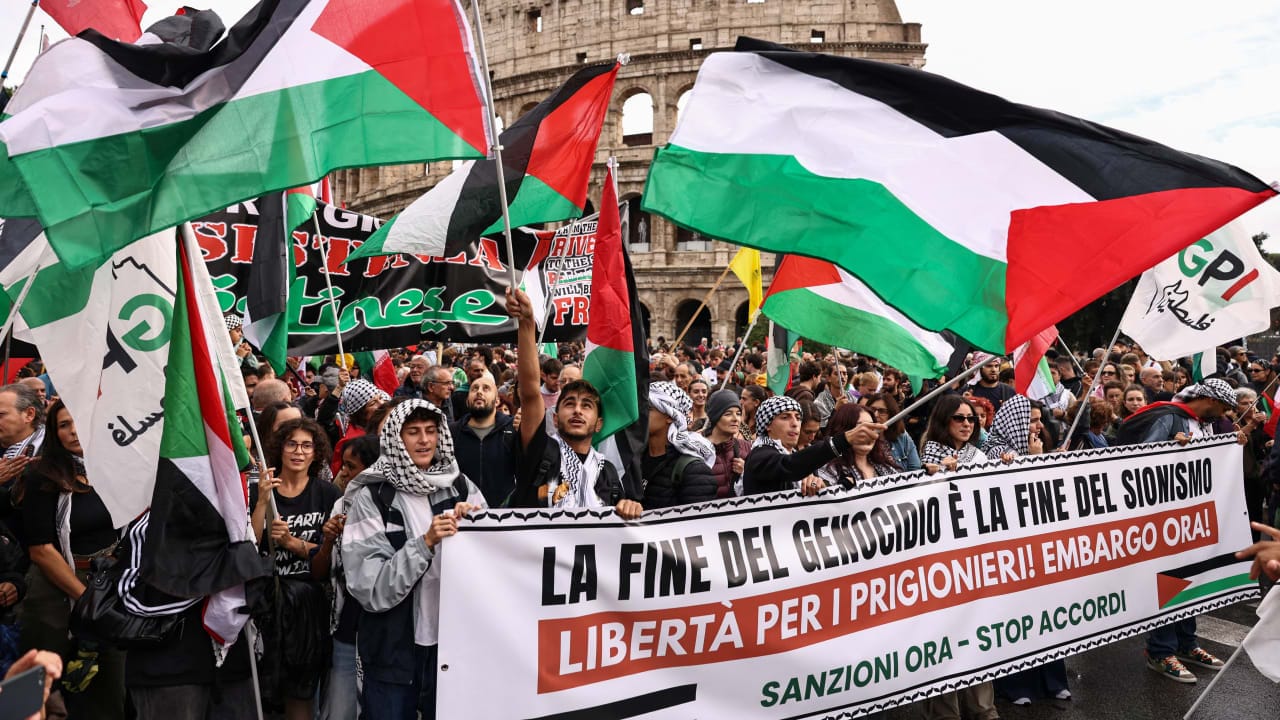
Monitoring organizations report that physical assaults remain a persistent issue alongside online vitriol. Gadi Luzzatto Voghera, director of Milan’s Jewish Contemporary Documentation Centre, told Reuters that researchers recorded 18 physical confrontations in 2025 and an additional 10 incidents during the first six months of this year.
Prime Minister Giorgia Meloni, born in Rome in 1977, became Italy’s first woman to hold the office when she took power in October 2022. She leads Brothers of Italy, a party with roots in the post-fascist National Alliance and the neo-fascist Italian Social Movement, which she joined as a teenager in 1992. Her government is the longest-serving in the history of the Italian Republic.
The debate in Rome mirrors parallel legislative struggles across Europe and North America over how to define and address anti-Jewish prejudice amid heightened geopolitical tensions linked to the conflict in the Middle East. As Italy prepares for national elections in 2027, the political fallout from the divide over free expression and anti-discrimination policy continues to shape alliances across the political spectrum.