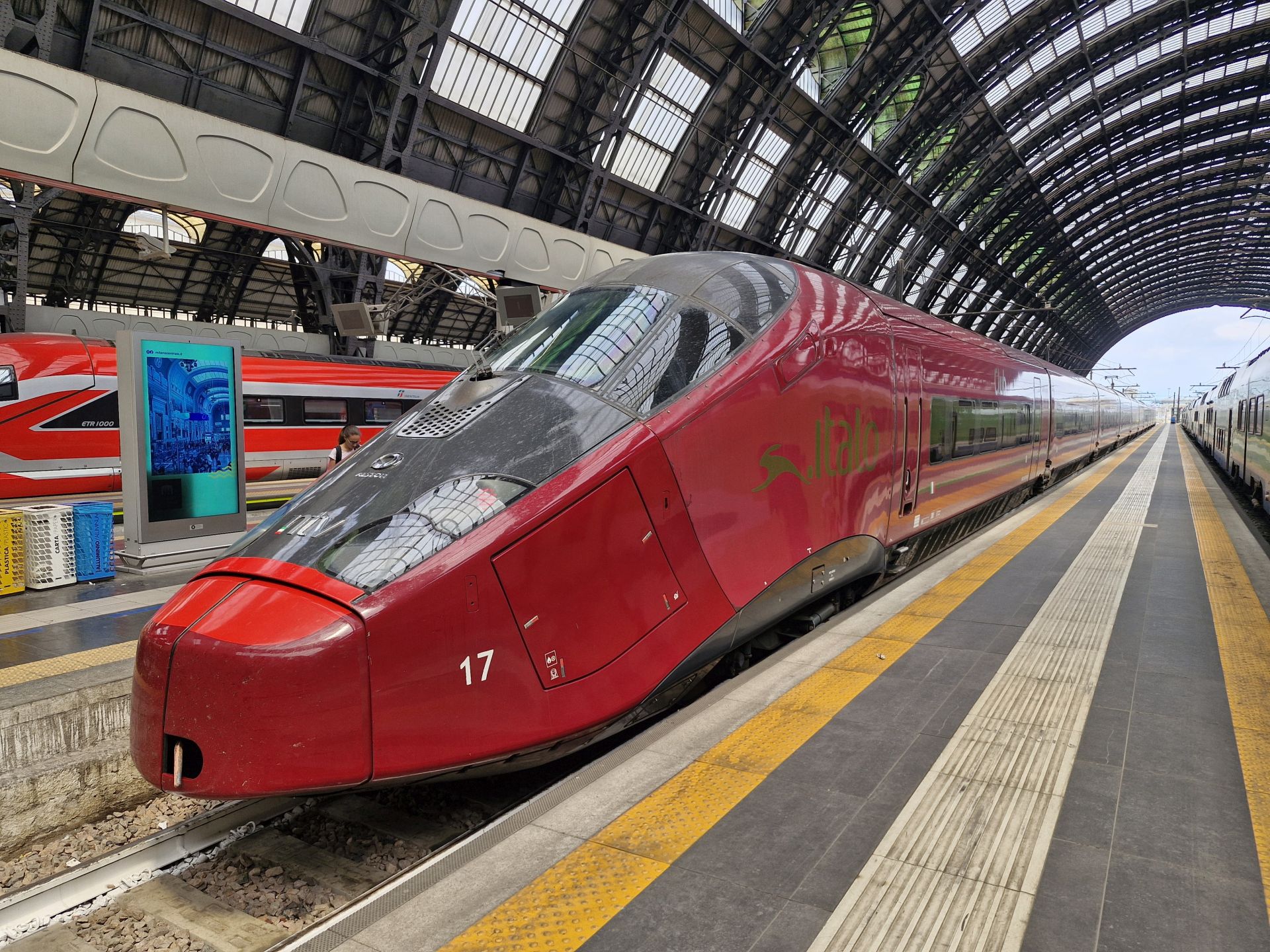
Italo Aims for German High-Speed Rail Market Amid Local Opposition
Italian rail operator Italo-Nuovo Trasporto Viaggiatori (NTV) has announced plans to expand its high-speed service into the German market, a move currently facing organized opposition from German railway labor unions. The EVG (Eisenbahn- und Verkehrsgewerkschaft) union has launched a public awareness campaign, including paid advertisements, to caution potential passengers and stakeholders against the entry of new competition on German long-distance rail routes.
Union opposition to market entry

The EVG union, which represents a significant portion of German rail workers, has taken a formal position against the expansion of foreign private operators into Germany’s high-speed network. According to reports from Zdopravy.cz, the union has financed a targeted campaign designed to highlight the risks of market liberalization. The labor organization argues that the introduction of private competitors like Italo could lead to a degradation of working conditions and service standards across the national rail infrastructure.
This campaign marks a shift in the discourse surrounding the ongoing liberalization of European passenger rail. While the European Union’s Fourth Railway Package aims to lower barriers to entry for cross-border operators, the EVG maintains that such competition does not necessarily equate to improved efficiency for the consumer. The union’s public messaging emphasizes that the current model, dominated by the state-owned Deutsche Bahn, remains the most viable framework for maintaining stable employment and safety standards.
Italo’s strategic expansion
Italo, which has operated as a private competitor to Italy’s state-owned Trenitalia since 2012, views the German market as a logical next step in its international growth strategy. The company has utilized a fleet of Alstom-built high-speed trainsets to capture significant market share on Italy’s primary north-south corridors.
The expansion into Germany would involve navigating complex regulatory requirements, including the certification of rolling stock for German rail infrastructure and the negotiation of track access rights. Unlike the Italian market, where Italo currently operates, the German high-speed network is characterized by higher density and a more integrated—albeit heavily strained—operating environment.
The regulatory and competitive landscape

The tension between Italo’s expansion plans and the EVG’s campaign highlights a broader debate regarding the role of private capital in public infrastructure. Proponents of rail liberalization, such as the European Commission, argue that new entrants force incumbents to improve service frequency and pricing. Conversely, rail unions argue that the fragmented nature of competition can lead to “social dumping,” where operators minimize costs by reducing staff pay and benefits to compete with larger, state-subsidized entities.
As of the latest reports, Italo has not yet secured the necessary operational permits to commence service on German tracks. The company remains in the planning stages of its international rollout, while the EVG continues to use its platform to lobby both the public and policymakers against the entry of private, for-profit rail operators into the German long-distance sector.
No date has been set for the commencement of cross-border services, and negotiations regarding technical compatibility and regulatory approval remain ongoing.