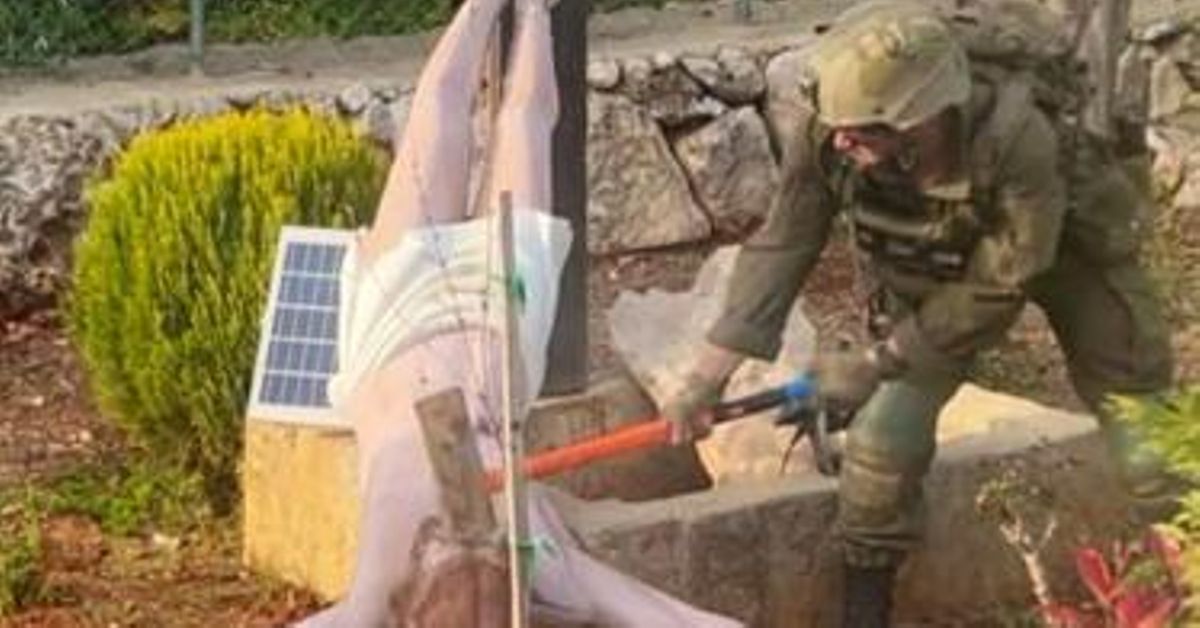
Israeli Soldier Destroys Christ Figure in Southern Lebanon
On April 19, 2026, an Israeli soldier was filmed destroying a crucifix with a hammer in the Christian village of Debel in southern Lebanon, an act occurring during Israel’s 46-day occupation of the region following ceasefire violations, raising urgent concerns about religious desecration, military conduct, and the erosion of interfaith stability in a historically pluralistic border zone where Christian, Muslim, and Druze communities have coexisted for centuries.
The Sacred and the Shattered: Religious Symbols in Conflict Zones
The destruction of religious icons during military occupation is not merely an isolated act of vandalism—it is a deliberate erasure of cultural memory that fractures community trust and complicates postwar reconciliation. In Debel, a village where Maronite Catholics have maintained a continuous presence since the 18th century, the targeted destruction of a crucifix represents a profound violation of spiritual heritage. Such acts, even when condemned by military leadership, signal a breakdown in rules of engagement that protect non-combatant symbols under international humanitarian law. The 1949 Geneva Conventions and its Additional Protocols explicitly prohibit attacks on objects indispensable to the survival of the civilian population, including places of worship and religious artifacts, unless they are being used for military purposes—a condition not indicated in available evidence from the scene.
This incident occurs amid broader patterns of infrastructure degradation in southern Lebanon, where Israeli military operations have damaged over 200 civilian structures since October 2023, according to UNIFIL assessments. The village of Debel, located in the Marjayoun District near the Israeli border, relies on agrarian livelihoods and small-scale commerce, both now disrupted by military checkpoints, restricted movement, and the psychological toll of living under occupation. Local municipal services, already strained by Lebanon’s ongoing economic crisis, face compounded pressure as displaced residents seek shelter and basic utilities remain intermittently available due to damaged power and water lines.
Voices from the Ground: Legal and Religious Perspectives
“When a soldier attacks a crucifix, he is not just destroying wood and stone—he is attacking the soul of a community that has prayed before that image for generations. This requires accountability not just under military law, but under international human rights frameworks that protect freedom of religion.”
Legal experts emphasize that while the Israeli military has pledged an investigation, accountability remains elusive without independent oversight. International humanitarian law holds commanding officers responsible for failing to prevent or punish war crimes under their jurisdiction, including acts that may constitute persecution based on religious identity—a prosecutable offense under the Rome Statute of the International Criminal Court when part of a widespread or systematic pattern.
“Isolated incidents must be investigated, but when they occur within a context of prolonged occupation and systemic property destruction, they point to a deeper failure in command culture and rules of engagement. The international community must demand transparency—not just promises of inquiry.”
The Ripple Effect: Economic and Social Consequences
The desecration of religious sites has tangible economic repercussions. Southern Lebanon’s tourism sector, though modest, historically drew visitors to Christian monasteries like Mar Moussa and the shrine of St. Theodora in nearby villages. Perceived instability and religious intolerance deter pilgrims and aid workers alike, reducing income for guesthouses, artisan cooperatives, and transport services. Christian families—already experiencing emigration due to economic hardship—may accelerate departure if they perceive their religious identity as under threat, further weakening the demographic fabric of the region.
These dynamics underscore the need for specialized support systems. Communities affected by religious or cultural property damage require rapid access to heritage restoration specialists who can assess and repair sacred artifacts using culturally appropriate techniques. Simultaneously, international human rights lawyers are essential for documenting violations, filing complaints with UN mechanisms, and advocating for protective measures under occupation law. Long-term stability also depends on interfaith mediation councils that can rebuild trust between religious groups and monitor early warning signs of sectarian tension.
A Test of Moral Authority
The Israeli military’s public condemnation of the act—while necessary—falls short if not paired with transparent disciplinary action and concrete reforms to prevent recurrence. True accountability requires more than statements; it demands visible consequences, independent monitoring, and a renewed commitment to the principle that military strength must never justify the humiliation of a people’s faith. As southern Lebanon remains a flashpoint of regional tension, the protection of religious and cultural sites is not a peripheral concern—it is central to any sustainable peace.
the strength of a society is measured not by how it treats its allies in victory, but by how it guards the dignity of its most vulnerable symbols in times of control. For those seeking to understand, document, or respond to such violations, the World Today News Directory offers access to verified professionals—restorers, advocates, and mediators—who stand ready to turn moments of destruction into opportunities for reckoning and repair.