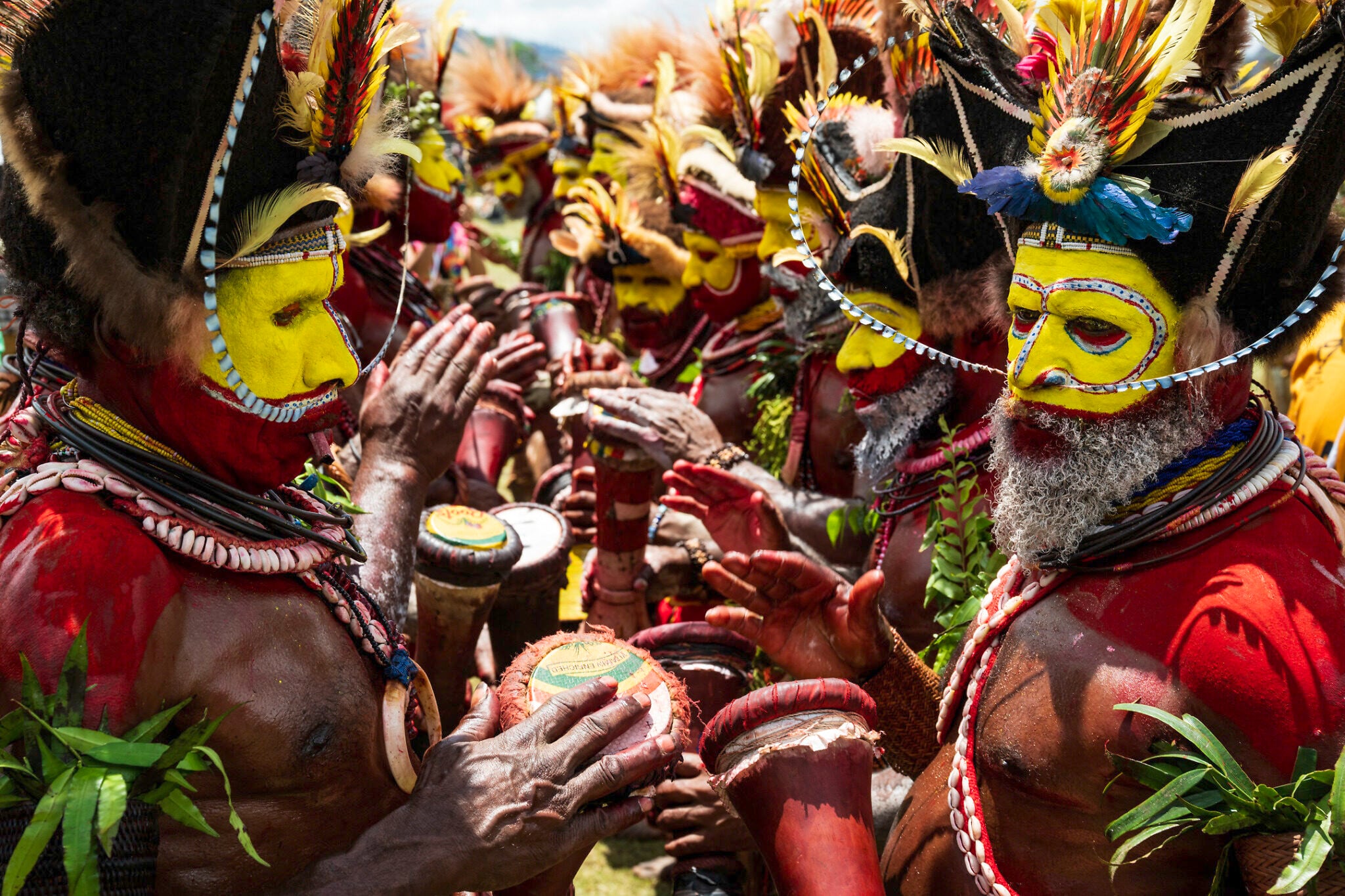
Israeli Researcher Finds Jewish Traditions in Remote Papua New Guinea Tribes
Travelling through remote Papua New Guinea late last year, Israeli researcher Naftali Hilger tracked down isolated tribal communities that observe Jewish traditions and claim ancient roots tied to Jerusalem, The Times of Israel reported.
About 15 years ago, Hilger first heard about the Gogodala tribe from a friend, following initial research by British scholar Prof. Tudor Parfitt. Tribal leaders told Hilger they left Jerusalem in the 11th century, according to their oral history.
“I was told they spent 406 years in Spain and have been in Papua for the same amount of time — reason enough to return to Jerusalem,” Hilger said.
Oral History and Local Rites
Tribal elders claim their ancestors lived in Barcelona for 406 years before returning to Jerusalem following the 1492 expulsion of Jews from Spain. Their accounts also place them near the Sea of Galilee and the Red Sea before setting off in canoes for Papua New Guinea.
“There’s no historical proof, but they feel Jewish, and it passes from generation to generation,” Hilger said. “They observe the Sabbath. They celebrate the Jewish New Year and Passover and fast on the Day of Atonement. They don’t eat pork, and they circumcise their sons.”
While the exact population of the Gogodala is unknown, estimates place their total number between 25,000 and 50,000. Hilger heard that around 30% of the Gogodala actively practice Judaism while the rest cite Jewish roots but practice Christianity.
Synagogues and Self-Conversions
In Balimo, Hilger encountered the most cohesive group practicing Jewish rites, where a jungle synagogue hosted a reception complete with Hebrew songs. He also visited a small synagogue in Kawito and a group praying in private homes in Baru.
Other groups have formed independently across the country. In Lae, a man known as Rabbi Shlomo taught himself Judaism after meeting Jewish people while studying at a Texas university, subsequently establishing a synagogue and converting himself and dozens of his clan members.
“You meet people who say they’re Jewish, Christians that also observe Jewish festivals, and Christians that say they’re Jews but are more like Christian missionaries,” Hilger said.
Historical Encounters and Logistical Risks
The first Christian missionary arrived in Papua in 1901 and never returned — tribal members consumed him, according to Hilger. “The second one had more success, but reported that some tribesmen prayed only on the Sabbath and made a huge noise when he tried to get them to pray on Sunday instead,” he said.
There have been documented incidents of cannibalism in the Western Papua region where the tribe lives, with the last recorded one occurring in 2016.
Hilger’s month-long expedition required navigating a region home to thousands of tribes speaking 840 languages. After flying into Port Moresby, he took a domestic flight — which he dubbed Air Maybe (“it was 24 hours late”) — to Balimo along the Aramia River floodplains, then traveled onward by canoe.
“The mystery for me was the stories about Yabi Saba and the sojourn in Spain,” Hilger said.
Keep reading