
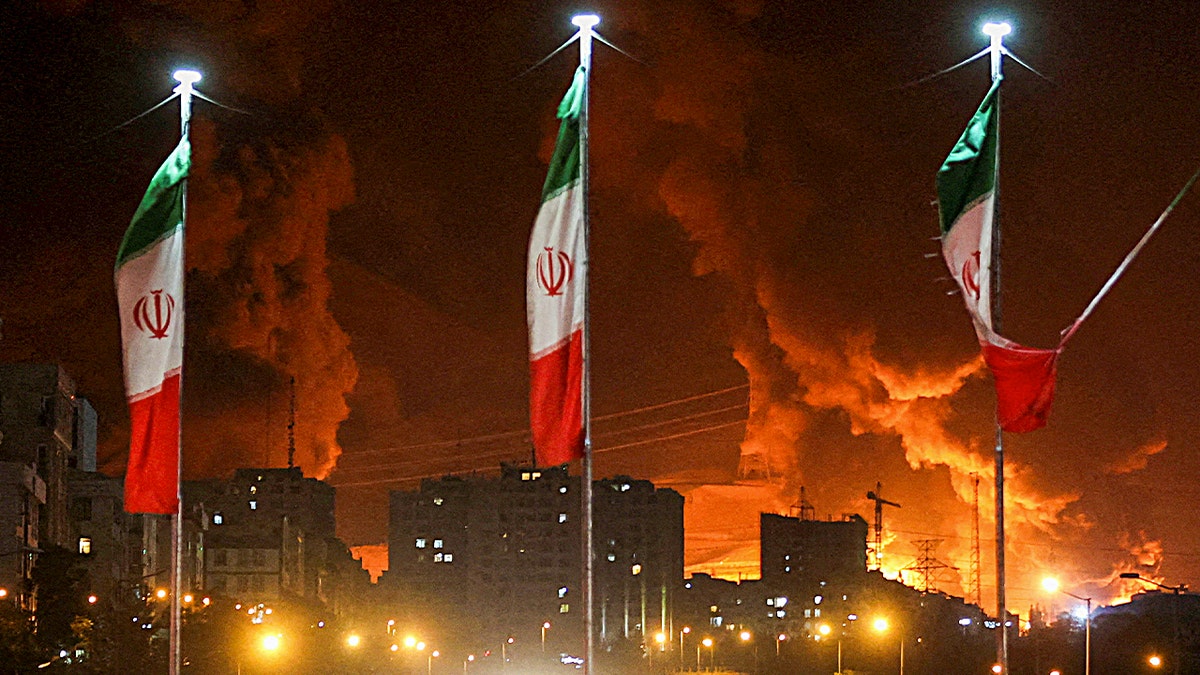
Israel Strikes Iran’s Largest Petrochemical Complex
On April 6, 2026, Israel launched targeted airstrikes against the South Pars petrochemical complex in Iran, neutralizing a facility that reportedly accounts for half of the nation’s petrochemical output. This escalation targets Iran’s primary economic engine to degrade its funding for regional proxies and disrupt its strategic industrial capacity.
This isn’t just a tactical strike; it is a direct assault on the Iranian treasury. By hitting South Pars, Israel has moved beyond the “shadow war” of cyber-attacks and targeted assassinations, opting instead for a strategy of economic strangulation. The South Pars/North Dome field is the largest gas field in the world, and its petrochemical derivatives are critical for both domestic stability and foreign currency reserves.
The global market is now staring at a volatility spike that transcends simple oil prices.
The Petrochemical Domino Effect
When a facility of this magnitude goes offline, the ripple effects move faster than the missiles. South Pars is not merely a factory; it is a hub for polymers and fertilizers that feed into global supply chains. The immediate result is a supply vacuum in the plastics and agricultural chemical sectors, which will inevitably drive up costs for manufacturers across Europe and Asia.
We are seeing a classic “risk premium” surge. As the Strait of Hormuz becomes a flashpoint for potential Iranian retaliation, maritime insurance premiums for tankers are skyrocketing. Global firms are now forced to choose between absorbing these costs or passing them to consumers.
For the C-suite, this is a logistical nightmare. Companies relying on just-in-time delivery of chemical precursors are suddenly finding their pipelines severed. To mitigate these shocks, multinational corporations are urgently engaging supply chain consultants to diversify their sourcing away from the Persian Gulf.
“The strike on South Pars is a calculated move to shift the cost of conflict from the battlefield to the balance sheet. By targeting the petrochemical core, Israel is attempting to create an internal economic crisis within Iran that outweighs the political utility of escalation.” — Dr. Aris Xenopolous, Senior Fellow at the Institute for Strategic Energy Studies.
Framework: The Macro-Economic Impact
To understand the gravity of this event, one must look at the intersection of energy dominance and state survival. Iran has historically used its energy assets as a shield, betting that the world’s dependence on Gulf oil would prevent a full-scale industrial assault.
That shield is cracking. With the U.S. Shifting focus toward “friend-shoring” and the expansion of LNG (Liquefied Natural Gas) capacity in the Americas and Qatar, the global economy is slightly more resilient to an Iranian shutdown than it was a decade ago. However, the suddenness of this strike creates an immediate liquidity crisis for those with open futures contracts on petrochemicals.
| Metric | Pre-Strike Status | Post-Strike Projection (Q2 2026) | Global Impact |
|---|---|---|---|
| South Pars Output | ~50% of Iran’s Petrochem | Significant Reduction/Zero | Global Polymer Shortage |
| Hormuz Transit Risk | Moderate/Managed | High/Critical | Surge in Freight Insurance |
| Brent Crude Volatility | Stable Range | High Volatility (+$10-15/bbl) | Inflationary Pressure on Transport |
| FDI in Region | Cautious Growth | Immediate Freeze | Capital Flight to Safe Havens |
The geopolitical logic here is clear: degrade the capability to fund the “Axis of Resistance.” But the collateral damage is a destabilized energy market that threatens the World Bank’s growth projections for emerging markets.
The Trump Factor and the Fresh Westphalian Order
The timing coincides with a highly aggressive posture from the Trump administration, which has used public rhetoric to isolate Tehran further. This synergy between Israeli kinetic action and U.S. Diplomatic hostility creates a pincer movement. Iran is now faced with a binary choice: accept a degraded industrial base or risk a total war that could see the Foreign Affairs of the region rewritten entirely.
The risk of “miscalculation” is at an all-time high. If Iran attempts to close the Strait of Hormuz in retaliation, the conflict ceases to be a regional skirmish and becomes a global economic blockade.
In this environment, the legal landscape is as volatile as the military one. International trade agreements are being shredded in real-time. Firms operating in the region are scrambling to find international trade lawyers capable of navigating the sudden imposition of “secondary sanctions” and the complexities of force majeure clauses in energy contracts.
“We are witnessing the end of the ‘strategic patience’ era. The transition from sanctions to kinetic industrial destruction marks a new phase of geopolitical competition where economic viability is the primary target.” — Ambassador Marcus Thorne, Former NATO Envoy to the Middle East.
The Security Vacuum and Private Intelligence
Beyond the oil rigs, the strike signals a sophisticated intelligence breach. To hit a facility as secure as South Pars requires precise, real-time telemetry and likely internal infiltration. This exposes a massive vulnerability in Iranian state security, which will likely lead to a domestic purge.
For global enterprises, the lesson is that no “secure” zone is truly insulated from state-level aggression. The spillover into the digital realm is inevitable. As Iran seeks asymmetric revenge, the target will not be another refinery, but the digital infrastructure of Western financial hubs.
This is why we are seeing a surge in demand for global risk consultants. Companies are no longer asking *if* a conflict will affect them, but *how* to pivot their entire operational footprint in under 48 hours.
The board has been reset. The strike on South Pars is not an isolated event; it is a signal that the era of “managed tension” is over. We have entered an era of “industrial attrition,” where the ability to maintain a supply chain is as critical as the ability to defend a border. As the smoke clears over the Persian Gulf, the winners will not be those with the most firepower, but those with the most agile networks of legal, financial, and logistical support. To navigate this new volatility, the World Today News Directory remains the essential gateway for connecting with the elite firms capable of managing the chaos of a fragmenting global order.