Israel/OPT: Siege of Palestinian Homes in Qusra Marks Relentless Escalation in State-Backed Settler Violence
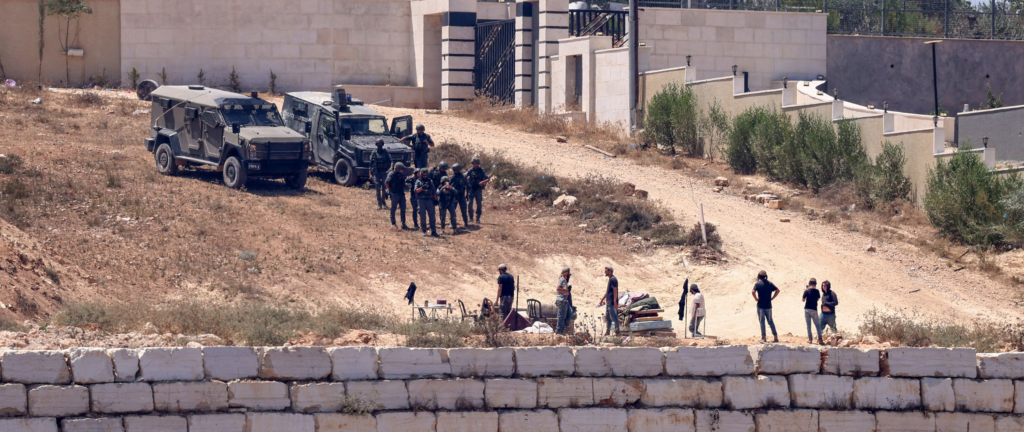
Global condemnation has rapidly mounted following the surrounding of three Palestinian households by Israeli settlers in the northern occupied West Bank village of Qusra, located southeast of Nablus.
For several months, the three targeted families have faced persistent threats, harassment, and attacks from Israeli settlers originating from nearby outposts. Reports indicate they are rapidly running out of food and lack basic necessities, including running water.
Jurisdictional Breakdown and Humanitarian Obstruction
The homes under siege are situated in Area B of the West Bank. Under the classification of the Oslo Accords, this zone is supposedly under Palestinian administrative control and Israeli military control. Despite this administrative designation, humanitarian relief has been actively blocked on the ground.
Palestinian Red Crescent ambulances attempting to deliver emergency food and water to the besieged properties were physically attacked by settlers. Compounding the crisis, Israeli forces permitted the aggressors to remain in close proximity to the residential structures throughout the ordeal.
Local sources in Qusra told Amnesty International that the Israeli military forced two of the besieged families, alongside six neighboring families, to evacuate their dwellings for several hours on Thursday. Troops reportedly used the evacuated residences as military outposts. A local resident summarized the dynamic by stating that instead of removing the attackers, the Israeli forces removed the attacked families while allowing the settlers to stay.
Legal Obligations and International Demands
As the occupying power, the State of Israel holds a strict legal obligation to protect the civilian Palestinian population under its control. Amnesty International emphasizes that authorities must not stand by—or stand with settlers—while families are cut off from healthcare, electricity, and water.
Human rights advocates are urging the international community to move beyond treating such events as isolated anomalies.
Global capitals are facing mounting pressure to dismantle direct and indirect support for Israel’s unlawful occupation and settlement enterprise. Policy recommendations from human rights monitors include:
- Banning trade and investment that contribute to the maintenance of Israeli settlements.
- Ending cooperation and assistance to entities and individuals involved in the settlement enterprise.
- Imposing targeted sanctions on senior officials allegedly responsible for international crimes, including apartheid and forcible transfer.
- Increasing protective measures for Palestinian communities at risk of displacement.
- Using diplomatic and political leverage to secure the return of forcibly displaced residents to their properties.
Broader Context of Displacement Across the West Bank
This incident does not happen in a vacuum. In June, Amnesty International published a comprehensive report titled “Erasing anything Palestinian: Israel’s ethnic cleansing of West Bank Bedouin and herding communities”. That documentation revealed that formal annexation has become an explicit policy objective of the Israeli government.

By implementing a religious nationalist agenda, the state has accelerated settlement expansion, increased financial and logistical backing for outposts, and armed civilian settlers. Recent military raids and settler attacks in Tell, Taybeh, and Qusra demonstrate that these unlawful tactics extend far beyond Area C and are no longer confined strictly to herding communities.
Failure to act decisively will only embolden state-backed actors to continue their actions against a population left entirely unprotected and without judicial recourse.