
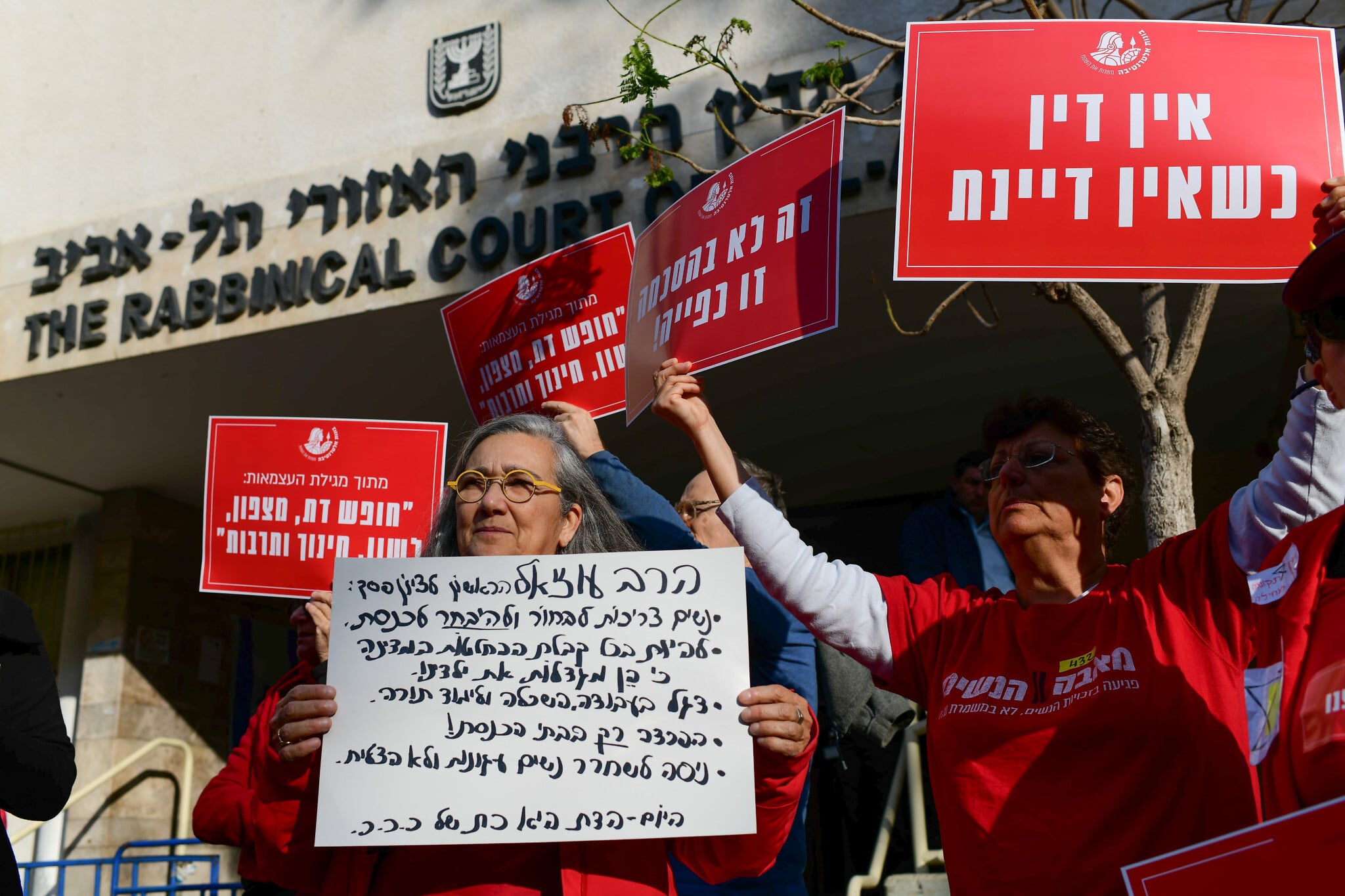
Israel: Knesset Expands Rabbinical Courts’ Authority in Civil Disputes
Following an extended opposition filibuster, a government-backed law significantly expanding the authority of Israel’s rabbinical and Sharia court systems was passed by the Knesset in the early hours of Tuesday morning, with 65 lawmakers voting in favor and 41 against. The legislation allows the religious tribunals to arbitrate certain civil disputes previously handled exclusively by the secular court system.
The bill, sponsored by the ultra-Orthodox United Torah Judaism and Shas parties, revives a power previously held by religious courts until a 2006 court decision curtailed their ability to act as arbitrators in civil matters. While the initial proposal centered on granting the courts authority over child custody disputes, amendments during the legislative process removed that provision. The final version stipulates that religious courts will not be able to rule on cases involving married or formerly married couples, or labor law cases initiated by employers.
Rabbinical courts are an established part of Israel’s judiciary, currently handling legal matters such as divorce, wills, inheritances, and conversions. The system consists of 12 regional courts nationwide, with the Great Rabbinical Court in Jerusalem serving as the highest appellate body. The president of the Great Rabbinical Court, currently Sephardic Chief Rabbi David Yosef, oversees the entire system.
The law mandates that rulings reached through religious arbitration must adhere to the Women’s Equal Rights Law and other civil rights statutes, and requires the consent of all parties involved. Yet, critics argue these safeguards are insufficient, citing potential pressures faced by litigants within religiously conservative communities and the risk of creating a power imbalance detrimental to vulnerable populations, particularly women.
During Monday evening’s debate, Yesh Atid MK Merav Cohen voiced concerns about the lack of female representation within the rabbinical court system. “There are no female rabbinic court judges, there’s not even a word for it” in Hebrew, she stated, arguing that a system excluding women cannot guarantee equal treatment.
Democrats MK Merav Michaeli characterized the law as “another step toward a halachic state, which is not a democratic state,” employing the Hebrew term for Jewish religious law. Opposition Leader Yair Lapid echoed this sentiment, declaring that the law had effectively dismantled Israel’s religious status quo, calling it “dead, buried, eliminated [and] canceled.” Lapid pledged that a future government led by his party would reinstate a full core curriculum in all schools, including civics and democratic studies, cut off government assistance to draft evaders, empower mayors to appoint Reform and Conservative rabbis, institute civil marriage, and allow public transportation on Shabbat in secular areas.
Yisrael Beytenu chairman Avigdor Liberman also condemned the law, criticizing its passage during a period of heightened security concerns. “Passing such a law when millions of citizens are running to shelters several times a day is absolute madness and moral bankruptcy,” he said.
Seth Farber, director of the ITIM nonprofit, which assists Israelis navigating the religious bureaucracy, expressed concern that the law “could further alienate large segments of Israeli society from Judaism itself.” He emphasized the need for religious institutions to serve the public with “compassion, transparency and respect for individual rights — not coercion,” adding that the law’s passage during wartime was particularly insensitive.
Uri Keidar, chair of the Israel Hofsheet religious freedom advocacy group, called for the immediate repeal of the legislation by the next government within its first 100 days.
Ultra-Orthodox lawmakers countered these criticisms, asserting that the law merely restores the status quo ante, accusing the High Court of Justice of overstepping its bounds by initially restricting rabbinical court arbitration. United Torah Judaism MK Yitzhak Pindrus argued that the law simply returns the system to how it functioned for the first 50 years of the state’s existence. UTJ MK Moshe Gafni framed the law as beneficial during wartime, suggesting that allowing religious arbitration for financial matters, with mutual consent, could be seen as a positive development.
Knesset Constitution, Law and Justice Committee chairman Simcha Rothman (Religious Zionism) hailed the law’s passage as “a correction of an injustice of many years,” characterizing it as a “simple and trivial proposal” that should have garnered universal support by allowing consenting adults to resolve disputes according to Torah law. Last year, the Knesset passed a separate law expanding rabbinical courts’ authority to rule on child support payments.