Israel Detains Activists: International Law Violations & Global Backlash
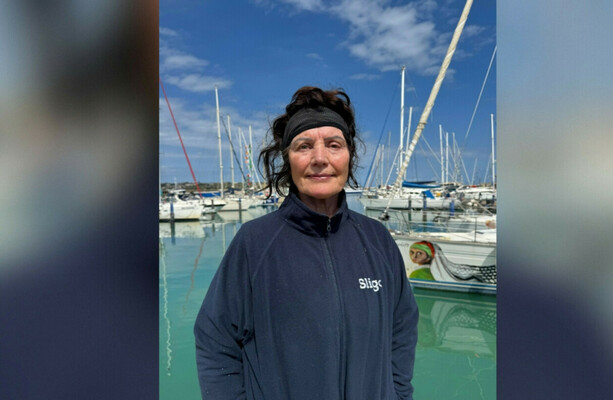
Dr. Margaret Connolly, sister of Irish President Michael D. Higgins, was detained by Israeli forces on May 18, 2026, while aboard a Gaza-bound humanitarian flotilla. The Irish government calls her detention a breach of international law, escalating diplomatic tensions as 41 boats were intercepted and 11 activists remain missing. This incident underscores the legal and humanitarian gray zones of Israel’s maritime blockade, raising questions about sovereign rights, free navigation, and the role of third-party states in enforcing aid access.
Why This Matters: The Legal and Diplomatic Fallout
The detention of Dr. Connolly—an academic and human rights advocate—marks a sharp escalation in Israel’s handling of flotilla activists. While Israel cites its right to enforce a naval blockade (a stance contested under the UN Charter), the interception occurred in international waters, 70 nautical miles off Gaza, a distance widely recognized as beyond coastal state jurisdiction. The Irish government’s response, framed as a “clear breach of international law,” signals potential ramifications for Israel’s diplomatic relations with the EU, particularly as Ireland holds the rotating presidency of the Council of the European Union.
This isn’t the first time such incidents have sparked international outrage. In 2010, the UN Palmer Report condemned Israel’s interception of the Mavi Marmara flotilla, calling it a violation of maritime law. Yet, six years later, the Global Sumud Flotilla—the current operation—faces similar legal challenges, with activists arguing their mission is purely humanitarian and unconnected to Hamas.
“This detention is not just about one individual. It’s about the erosion of international norms that allow states to unilaterally determine who can access humanitarian aid. If Israel can detain an Irish academic without consequence, what message does that send to other states attempting to deliver aid?”
Who’s Affected: The Human and Economic Costs
The flotilla’s interception has immediate consequences for the 11 missing activists, including Australians and Europeans, whose families report no contact. For Ireland, the detention of Dr. Connolly—who holds dual Irish-American citizenship—risks straining relations with the U.S., where Irish-American lobbying groups are already mobilizing. Economically, the incident threatens Ireland’s soft power in the EU, particularly as Dublin seeks to balance its pro-Israel stance with growing domestic sympathy for Palestinian civilians.

Locally, the impact is felt in Dublin, where Irish NGOs and universities (like Trinity College and UCD) are grappling with how to support detained activists. Legal experts warn that Ireland’s international human rights lawyers will face a uphill battle in Israeli courts, where military law often supersedes civilian legal frameworks.
The Flotilla’s Broader Context: A 15-Year Struggle
The Global Sumud Flotilla is the latest in a series of aid missions challenging Israel’s blockade of Gaza, which has been in place since 2007. Here’s how this incident fits into the timeline:
| Year | Event | Outcome | Legal/Geopolitical Impact |
|---|---|---|---|
| 2010 | Mavi Marmara interception | 9 activists killed; UN Palmer Report condemns Israel | Turkey severed military ties; EU criticized Israel’s blockade |
| 2018 | Freedom Flotilla II | Intercepted in Cypriot waters; activists released | Cyprus filed case at ICC (dismissed for lack of jurisdiction) |
| 2025 | Conscience ship explosions | Ship sabotaged off Malta; 12 injured | Malta demanded investigation; EU split on blame |
| 2026 | Global Sumud Flotilla (May) | 41 boats intercepted; 11 activists missing | Irish government invokes ECHR protections; Australia demands consular access |
The Problem: A Blockade Without End
Israel’s naval blockade of Gaza—officially a response to Hamas’s 2007 takeover—has evolved into a de facto siege, restricting the entry of goods, and people. The UN estimates that Gaza’s economy has contracted by over 50% since 2007, with unemployment hovering around 45%. Humanitarian organizations, including the UNRWA, warn that the blockade exacerbates food insecurity, as 60% of Gaza’s population relies on aid.
Yet, the legal basis for the blockade is contested. While Israel argues it’s necessary to prevent arms smuggling, the ICRC has repeatedly stated that blockades must allow for the free passage of humanitarian supplies. The flotilla’s interception forces a reckoning: Can states like Ireland and Australia use diplomatic pressure to enforce aid access, or will Israel’s military control of Gaza’s waters persist unchecked?
“The blockade is a collective punishment of 2.3 million people. When third-party states like Ireland attempt to bypass it, Israel responds with detention—not negotiation. This is a systemic failure of the international community to hold Israel accountable for its blockade policies.”
The Solution: Who Can Help?
As diplomatic tensions rise, several entities are positioned to address the fallout:

- International human rights lawyers: Families of detained activists will need legal representation to challenge detentions under international law. Firms with experience in ECHR cases (e.g., Doughty Street Chambers) are critical.
- Consular assistance networks: Governments like Ireland and Australia must coordinate with local embassies to secure consular access for detained citizens. The Consular Association of the U.S. And Canada offers templates for emergency diplomatic responses.
- Humanitarian logistics providers: NGOs planning future flotillas must work with IFRC-certified maritime security firms to navigate high-risk waters. Companies like SMCS specialize in protecting aid convoys.
The Forward Look: What’s Next?
Three scenarios are likely:
- Diplomatic Escalation: Ireland’s EU presidency could push for a joint EU statement condemning the detention, though Israel’s U.S. Ally may veto stronger measures.
- Legal Challenges: The ICJ could receive a case if Ireland or Australia files a complaint under the Genocide Convention, though progress would be slow.
- Militarized Response: If flotillas persist, Israel may tighten its naval patrols, risking further civilian casualties and international backlash.
The detention of Dr. Connolly is more than a diplomatic spat—it’s a test of whether the international community can enforce humanitarian access in the face of military blockades. For now, the activists remain in limbo, their families left to navigate a legal system where sovereignty and human rights collide. As the world watches, the question lingers: Who will ensure the flotilla’s mission—delivering aid to a besieged population—isn’t lost to the winds of geopolitical storm?
For those seeking verified professionals to navigate this crisis, World Today News’ global directory connects you with human rights attorneys, consular support teams, and NGO logistics experts equipped to act—before the next flotilla sets sail.